Utah lawmakers halt bill to sell ivermectin over the counter

Add Axios as your preferred source to
see more of our stories on Google.
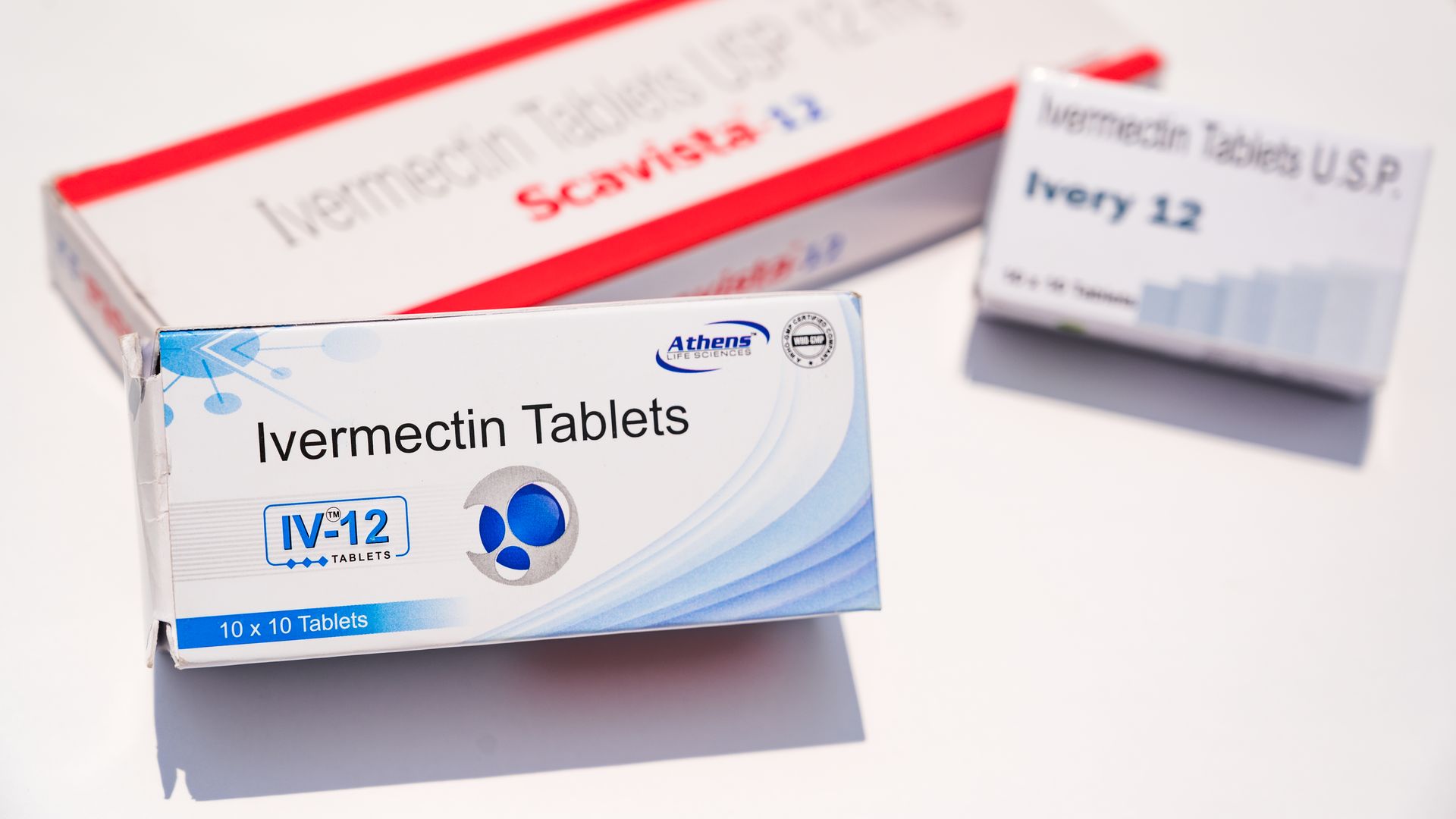
Photo: Soumyabrata Roy/NurPhoto via Getty Images
A bill that would have allowed pharmacies to dispense ivermectin without an individual prescription failed to advance in a House committee on Monday after receiving objections from medical associations.
The big picture: The vote comes amid a red state push to increase access to what some conservatives tout as an alternative treatment for COVID-19 and is more commonly used to treat parasites in livestock in the U.S.
Yes, but: Multiple medical studies have found the antiparasitic drug isn't effective at treating coronavirus and leading medical institutions have warned against its use outside FDA approval.
- The drug is approved for human use to treat parasitic worms and conditions such as head lice and rosacea, per the FDA.
By the numbers: The bill failed in the Utah House Health and Human Services Committee on a 7-5 vote; the panel's Democrats and four Republicans, including South Ogden state Rep. Katy Hall, the committee's chair, voted against it.
- Before her vote, Hall, a registered nurse, questioned the bill sponsor, state Rep. Trevor Lee (R-Layton), about the risk of community-wide drug resistance if ivermectin were made widely available over the counter.
What they're saying: The Utah Medical Association and the Utah Nurses Association opposed Lee's proposal during Monday's hearing.
- "Ivermectin has a role in treatment of specific parasitic diseases, but using it without guidance can harm the people who take it," Utah Medical Association CEO Michelle McOmber said.
Catch up quick: Lee previously told Axios his bill promoted medical freedom and was in line with U.S. Health and Human Services Secretary Robert F. Kennedy Jr.'s "Make America Healthy Again" agenda.
- Lee also likened ivermectin to common painkillers like Advil or Tylenol, despite the drug's known side effects, which range from difficulty moving to trouble breathing and unusual bleeding, in rarer cases, per the Mayo Clinic.