Inversion traps SLC in nation's dirtiest air

Add Axios as your preferred source to
see more of our stories on Google.
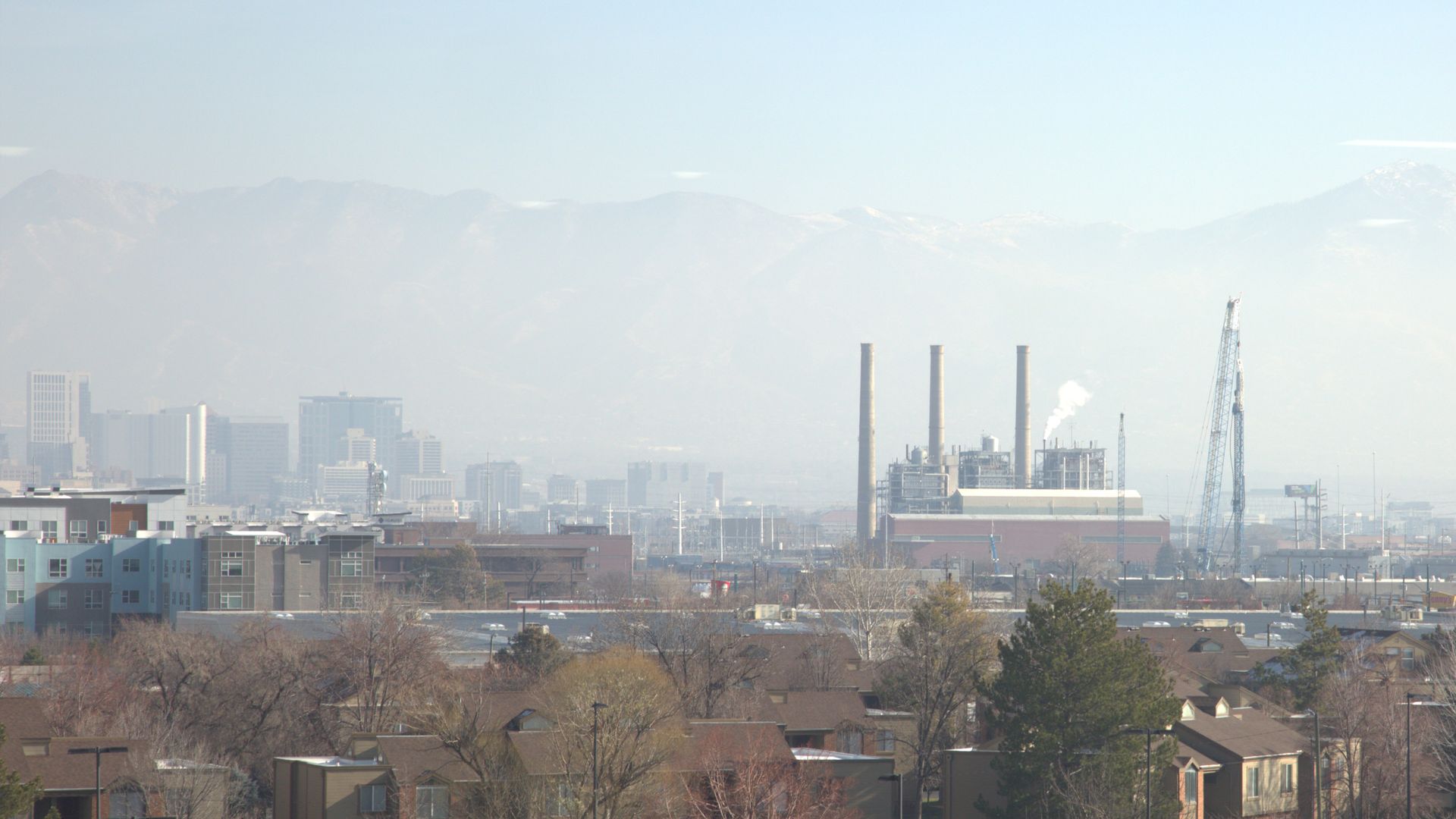
We may be one of the healthiest states, but our air quality is currently the worst in the nation.
Threat level: The inversion that started this week is likely to get worse before it gets better.
- Air quality will continue to deteriorate until the inversion weakens, bringing reduced visibility and higher pollution levels.
- "The inversion acts as a lid," Bryce Bird, director of the Utah Division of Air Quality, told us. "It traps the cold and the pollution in the valley. The longer the inversion lasts, the more the air pollution builds up."
- Bird expects the concentrations to double daily until the inversion breaks.
Reality check: We're used to it.
- This is the first significant episode of the season amid an unseasonably warm winter, but a typical Utah winter sees five to six multi-day inversions, National Weather Service meteorologist Monica Traphagan told Axios yesterday afternoon.
What's next: There's a chance the high-pressure event could "mix out" later this week, most likely Friday, according to Traphagan. That means colder air moves in and disrupts the inversion, or winds are strong enough to push out the trapped air, allowing normal airflow to return.
- Yes, but: That outcome is increasingly unlikely, Traphagan said.
Be smart: Traphagan tells us, and especially those with respiratory sensitivies, to ...
✔️ Stay indoors as much as possible
✔️ Skip outdoor exercise
✔️ Use an air purifier at home
✔️ If you must be outside, wear a mask that filters PM2.5 particles, such as an N95
Find air quality forecasts and updates at Air.Utah.gov.
📸 Got inversion photos you'd like to share? Hit reply to this email and send 'em along.