Hundreds hospitalized as "super flu" hits Utah

Add Axios as your preferred source to
see more of our stories on Google.
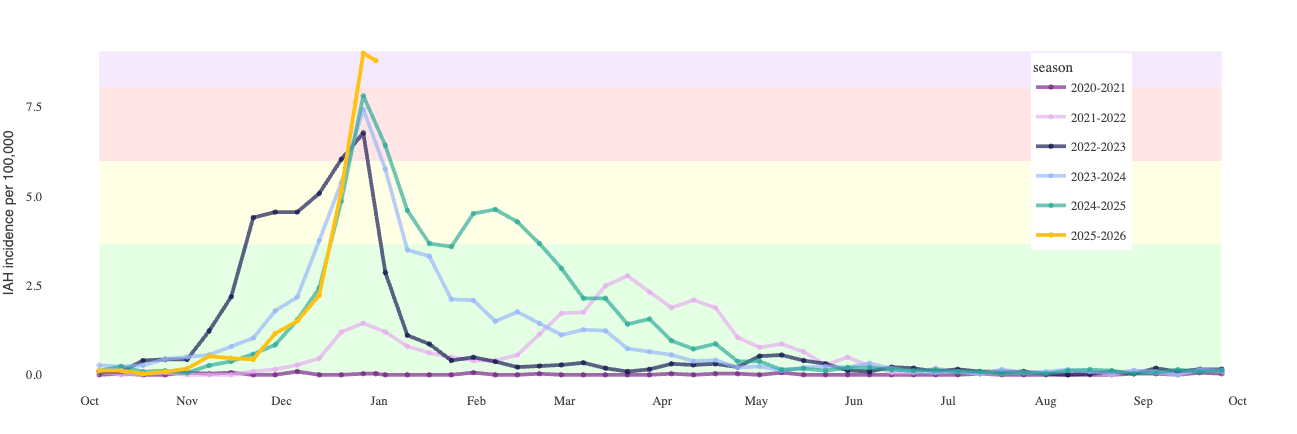
More than 300 Utahns were hospitalized with the flu during each of the last two weeks as the virus swept the nation.
Why it matters: That volume of flu hospitalizations far exceeded any period in Utah in the past six years, per state data since 2020.
Zoom in: Flu activity is especially high in Weber and Morgan counties, per case surveillance.
- Meanwhile, hospitalizations per capita are highest in the three counties around the Uinta Basin: Uintah, Duchesne and Daggett.
The big picture: An unprecedented rise in flu cases comes as other sicknesses — such as the "winter vomiting bug," COVID and whooping cough — are slamming the United States this winter, Axios' Herb Scribner and Jason Lalljee report.
- It arrives as chaos has enveloped the CDC, with many questions about vaccination schedules for children.
Yes, but: There isn't an official "super flu."
- The term emerges every so often, typically when circulating flu strain is more severe than usual, experts say.
By the numbers: New CDC data shows there's been at least 15 million illnesses, 180,000 hospitalizations and 7,400 deaths from the flu so far this season.
- Many of these cases have been tied to "subclade K" — a variant of the H3N2 virus, which is a subtype of influenza A. The most recent CDC tracking data shows that more than 90% of new flu cases in the country were from the variant, which wasn't specifically targeted in this year's flu vaccine.
Yes, but: The flu shots still protect against serious illness from subclade K, and antivirals "are completely effective against it," Amesh Adalja, an infectious disease physician at Johns Hopkins University, told Axios.
- Since subclade K "is a variant to which the population has little immunity and [is] not covered completely by the current vaccine, many people are susceptible and are getting infected," he said.
What they're saying: "While we expect more flu cases this year, we aren't sure if this virus causes more severe disease on a per case basis yet," Andrew Pekosz, a Johns Hopkins virologist told Axios.
- "However, it is spreading so quickly that the increased numbers of influenza cases it causes can swamp a medical center with cases quickly. "
What to watch for: Common colds often begin slowly and emerge over several days, per the Mayo Clinic. But a case of the flu ignites within two or three days of coming into contact with the virus.