How Juanita Brooks' history of the Mountain Meadows Massacre changed Mormon views of the past

Add Axios as your preferred source to
see more of our stories on Google.
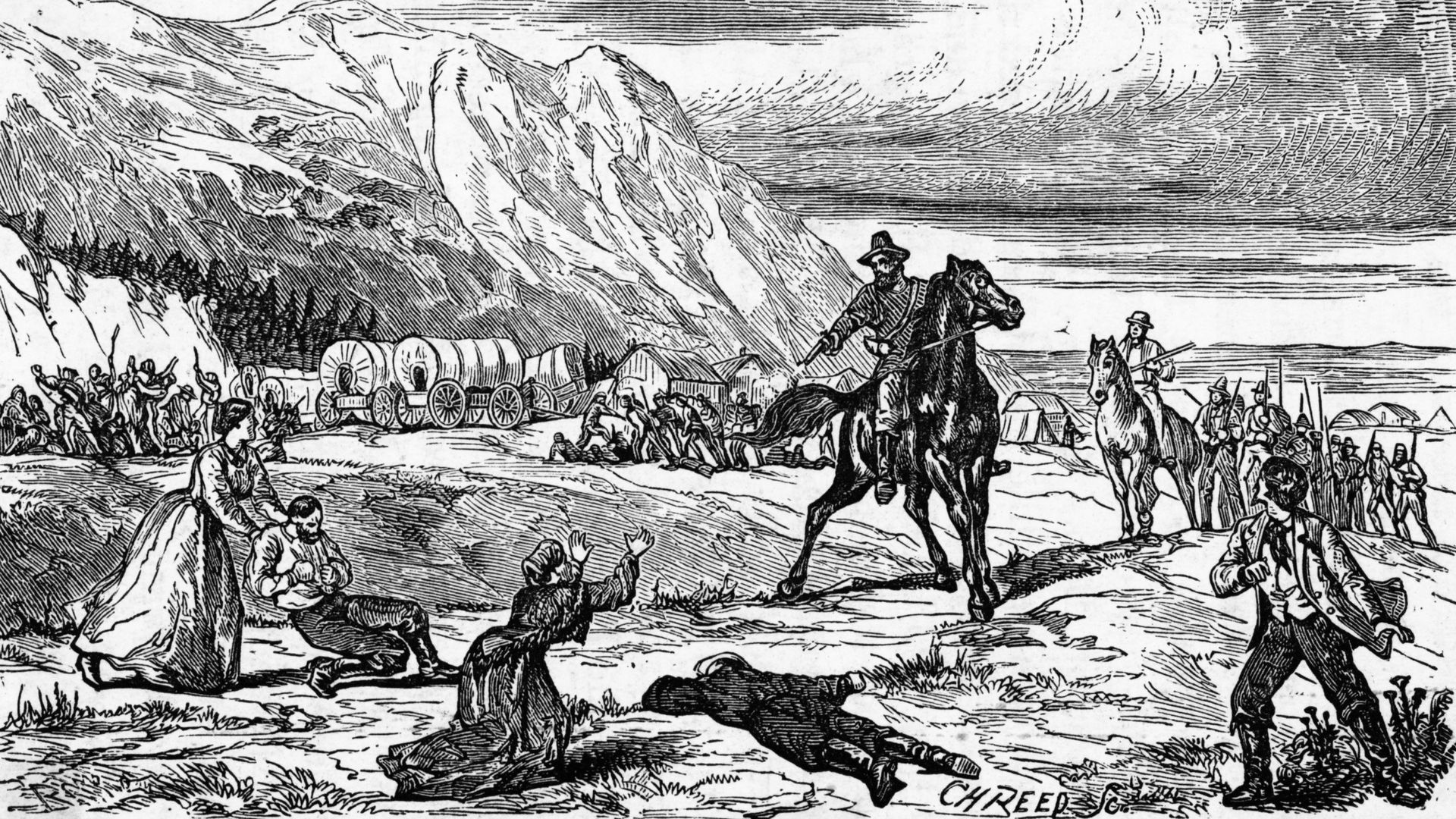
An illustration of the Mountain Meadows Massacre. Image: Getty Images
Seventy-five years ago this month, a new book drastically changed how Latter-day Saints viewed their own history: Juanita Brooks' "The Mountain Meadows Massacre."
- This is Old News, where we recount the history of Utah history.
Why it mattered: It was the first historical work that offered convincing evidence that the Mormon Militia had slain 120 California-bound settlers in a 19th-century attack long blamed primarily on Indigenous people in southern Utah.
Catch up quick: A wagon train of about 140 settlers from Arkansas arrived in Utah in 1857, just as a wave of panic and hostility was sweeping through the territory.
- Brigham Young had declared martial law and warned Mormon pioneers of an imminent invasion by federal troops bent on snuffing out his emerging theocracy.
- Settlers near Cedar City, wearing Indigenous costumes and joined by an unknown number of neighboring Paiute people, attacked and surrounded the Arkansas party.
- Worried their victims may have recognized some of them as white Mormons, the militia promised the party safe passage — and then massacred them all, save 17 children who were deemed too young to inform on the attackers.
By the numbers: It was the nation's deadliest act of domestic terrorism until at least the Tulsa Race Massacre in 1921.
The intrigue: Federal investigators at the time raised suspicions that local church leaders were behind the attack, but only one was tried and convicted. At his execution, he claimed he was a mere scapegoat — an allegation Brooks affirmed, noting church leaders couldn't "acquit him without assuming a part of the responsibility themselves."
- For the next century and a half, church and historical accounts mostly assigned responsibility to the Paiute.
Context: When Brooks' book was published in November 1950, Mormonism was barely on nonmember historians' radar — and members generally learned only flattering narratives of the faith's past.
- "History became a form of uncanonized scripture; challenging accepted history was an assault on both God's word and church leaders' testimony," historian Richard Saunders wrote in 2019.
Zoom in: Brooks found letters, diaries and church records that showed the Mormon militia's true culpability.
- "The book helped create a new climate of openness in Mormon studies," three BYU historians wrote in 2001.
Zoom out: In 2007, a church leader at an anniversary ceremony expressed "profound regret" for the attack, but a spokesperson said the statement didn't amount to an apology.
- The statement focused on "local leaders" and held Young blameless, even though Brooks and other historians have accused him of inflammatory rhetoric and interfering with investigations.
- The leader, Henry B. Eyring, also acknowledged the Paiute "have unjustly borne for too long the principal blame for what occurred during the massacre."
The other side: Utah public school textbooks continued to assign blame largely to the Paiute until at least 1985, per a study at USU.