FanX bans AI art from vendor floor

Add Axios as your preferred source to
see more of our stories on Google.
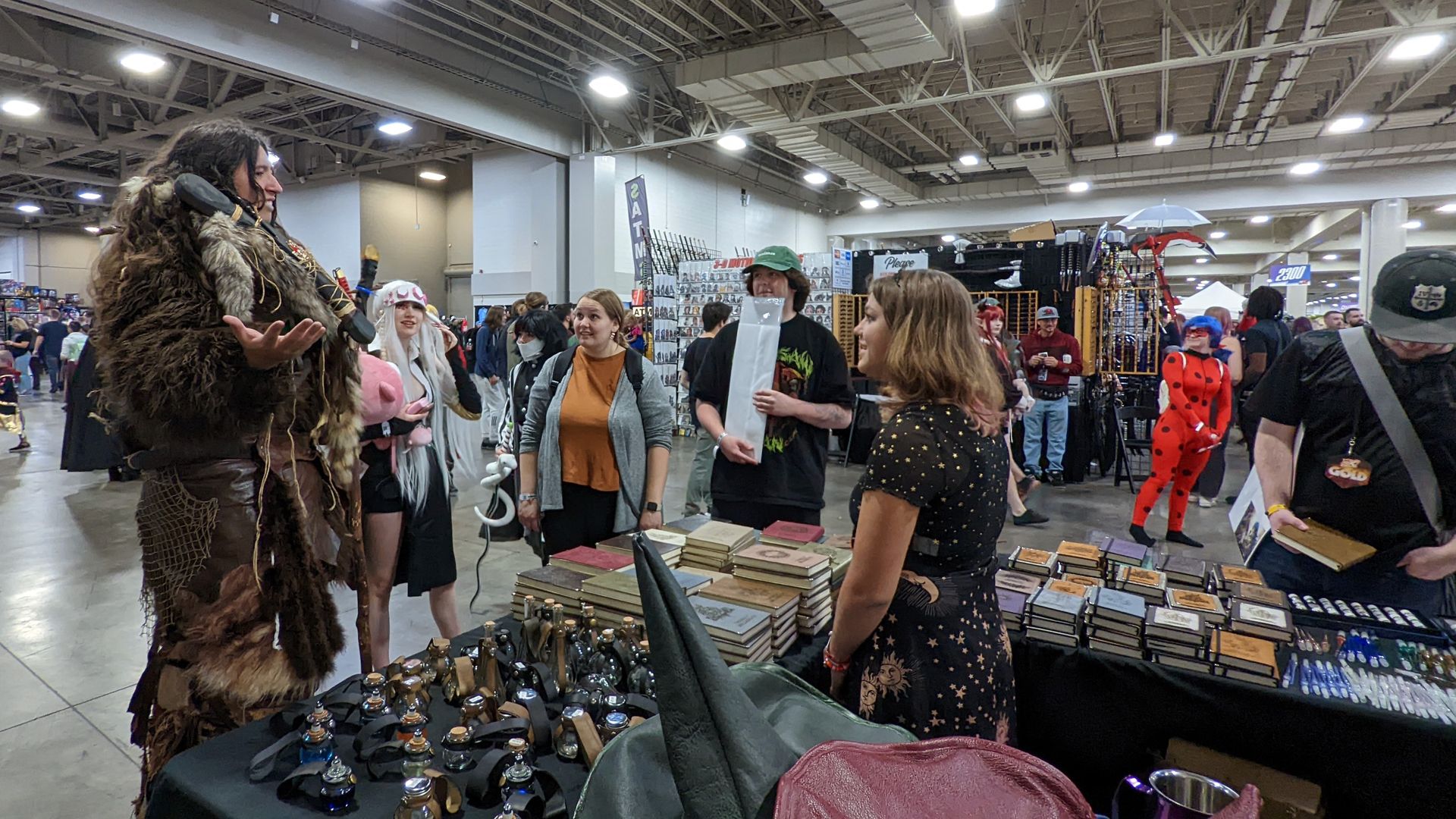
Fans gather around an artist's booth at FanX in 2022. Photo: Erin Alberty/Axios
As artists fill the floor of the Salt Palace for this week's FanX convention, guests and organizers will be on the lookout for the latest contraband: AI slop.
The big picture: AI-generated art has increasingly become a point of contention at fan conventions, with traditional artists calling for a "revolt" against artificial intelligence.
- They say AI threatens to out-compete them — right as it trains on human-made creations that tech companies are accused of using without permission.
Driving the news: FanX earlier this month alerted vendors that AI art would not be allowed and offered refunds for exhibitors who planned to sell it.
- It "does not meet our originality standards and is not permitted out of fairness to artists who create their own work," the convention's guidelines state.
What they're saying: Artists broadly cheered FanX's announcement.
- "I have spent my whole life being the best cartoonist I can be. ... This increase in art theft and AI has been really discouraging," Draper-based Disney artist Adrian Ropp posted on Facebook.
- Ropp, who is showing pieces at FanX, said he has seen his work used as the generative basis for three AI creations in a single week — including one painting that was being sold for thousands of dollars.
Between the lines: It's unclear how FanX will determine whether merchandise is AI-generated; organizers did not immediately respond to Axios' request for comment.
Zoom out: Protests broke out in August at Toronto's FanExpo Canada when a telecom company's booth offered AI-generated portraits of attendees.
- A few days later, police escorted a vendor out of Dragon Con, a fan expo in Atlanta, after organizers found AI-generated merchandise.
The intrigue: Fan art already poses murky questions of intellectual property, with rows of vendors selling prints, figurines and other memorabilia depicting popular characters — including many that originally were created as visual art for, say, anime and video games.
Yes, but: Copyright holders frequently turn a blind eye to fan art because they benefit from the engagement, community-building and celebration of their work.
The bottom line: Some entertainment companies and artists see AI as copying on a different level — or as Disney and Universal worded it in a lawsuit against Midjourney this summer, "a bottomless pit of plagiarism."