How ending the "Roadless Rule" could affect Utah's wild places

Add Axios as your preferred source to
see more of our stories on Google.
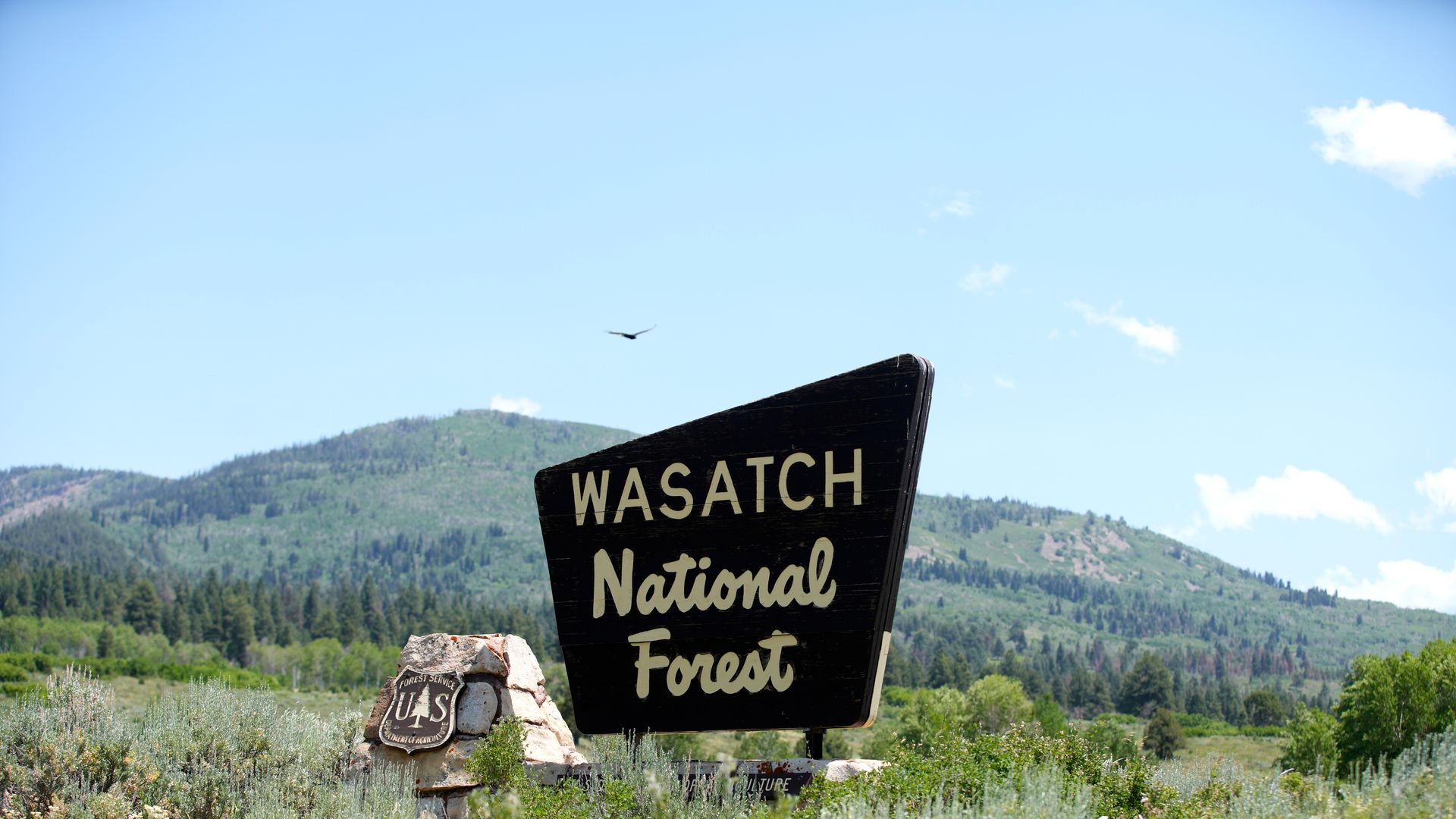
Logging and road construction would be allowed near parts of the Mirror Lake Highway. Photo: George Frey/Bloomberg via Getty Images
The Trump administration's controversial proposal to kill the "Roadless Rule" in national forests is open to public comment for the next two weeks.
Why it matters: The 2001 federal policy has protected millions of acres of wild lands from road development and logging — to the delight of conservationists but the ire of the timber industry.
The big picture: The Trump administration says the rule is blocking crews from wildfire prevention work, including thinning forests and exterminating insects, as well as fighting fires.
- Since 2001, more neighborhoods have been built near roadless areas "alongside increased insect and disease and wildfire activity throughout the National Forest System," the USDA's proposal states.
The other side: Multiple studies have shown that roads are themselves associated with increased risk of wildfires.
- Meanwhile, roadless areas generally aren't practical for forest management work such as thinning trees, said Tim Peterson, cultural landscapes director for Grand Canyon Trust.
- "If we're serious about wildfire mitigation, we need to focus on ... places near where homes are built and where people live," Peterson told Axios. "Roadless areas, for the most part, especially in Utah, are remote backcountry places where spending fire mitigation dollars is … wasteful."
The USDA did not reply to Axios' request for comment.
The fine print: The Roadless Rule allows crews to build roads in protected areas to address any "imminent threat" to public safety, including fires.
- In Utah, regional forest managers have granted every request "to build a temporary road or dozer line to fight fires," Peterson said.
By the numbers: Rescinding the rule would open about 4 million acres of Utah's forests to logging and road construction — about half of the land in its national forests.
Friction point: The Trump administration also says the rule is hindering the logging industry and limiting economic opportunity in rural areas.
- "Utah alone estimates the roadless rule alone creates a 25% decrease in economic development in the forestry sector," the USDA wrote in a June news release.
Reality check: When the Roadless Rule was implemented, the U.S. Forest Service estimated it would cause a statewide loss of 59 jobs related to timber harvesting.
- USDA data shows Utah's timber harvest fell 21.9 million board feet from 2002 to 2012 — almost as much as the 22.4 million decline during the previous decade, when the rule was implemented.
What they're saying: Utah doesn't have much "really valuable, easy-to-access timber with a market asking for it," Peterson said.
- Most of Utah's roadless areas "are high elevation, with very slow-growing timber, a lot of it on steep slopes with unstable soils," he said.
- "If a road hadn't been built in those places and logged by the year 2000, it's honestly unlikely that the reversal in this rule is going to lead to a big push for commercial logging."
What we're watching: Whether the Forest Service can afford to maintain more roads in remote places.
- When the rule was implemented in 2001, federal officials cited a maintenance backlog of $8.4 billion.