When women's suffrage was the least radical cause in Utah

Add Axios as your preferred source to
see more of our stories on Google.
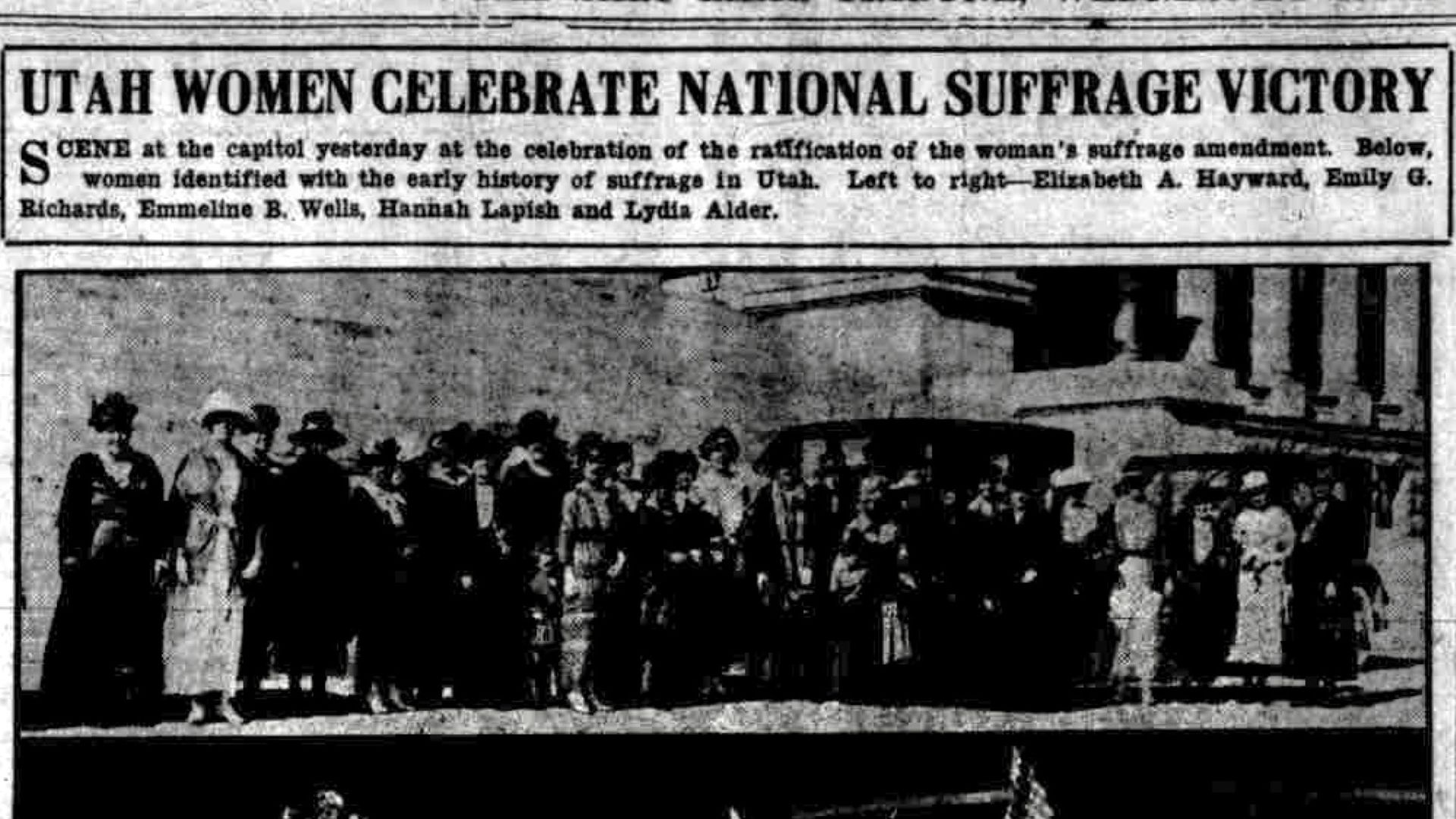
The Salt Lake Tribune, Sept. 1, 1920. Image via Utah Digital Newspapers Archives, the University of Utah
105 years ago this week, Utah celebrated the ratification of the 19th Amendment, which gave women the right to vote nationwide.
- This is Old News, where we tally the rights (and wrongs) of Utah's past.
The intrigue: Although Utah is now frequently ranked as one of the worst states for women's equality, it was a national leader of women's suffrage.
Catch up quick: Utah was the second state to extend the vote to women, following Wyoming's territorial legislature by just a few weeks in 1870. But thanks to our election schedule, Utah women were the first in America's suffrage movement to cast ballots.
- Leaders here hoped voting rights would prove that Mormon polygamy didn't oppress women.
Plot twist: Instead, when the federal government disincorporated the Church of Jesus Christ of Latter-day Saints over polygamy in 1887, it also disenfranchised all Utah women.
- Utah's constitution restored suffrage when it became a state in 1896, and women here have been voting ever since.
When the 19th Amendment reached Utah 23 years later, the Legislature unanimously voted to ratify it.
- After three-quarters of the states approved the amendment, the U.S. secretary of state signed it into law on Aug. 26, 1920.
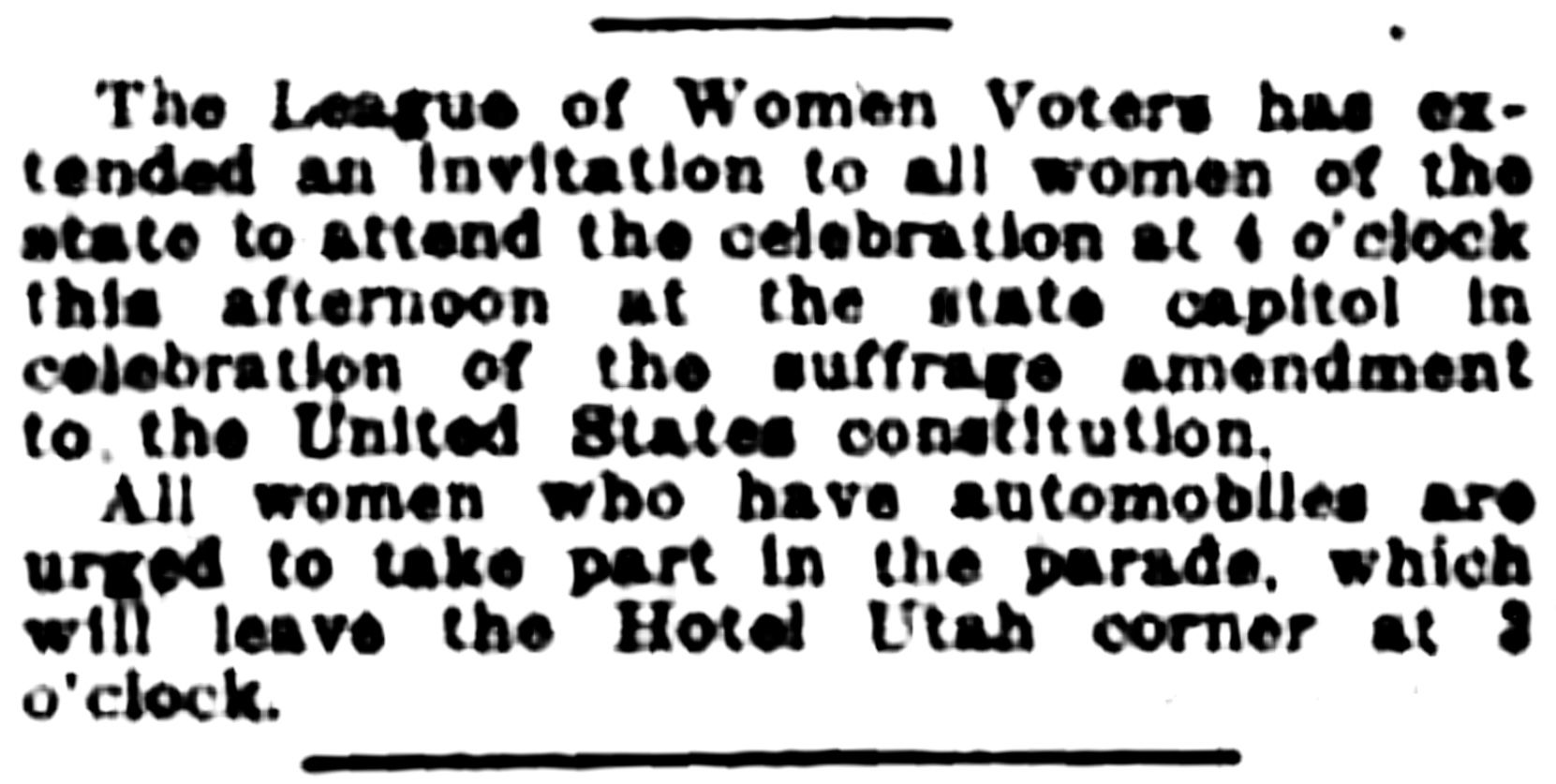
Party time: Utahns threw a parade through downtown SLC, accompanied by "all whistles and bells of the city," leading to a ceremony in which suffragists and state leaders filled the House chamber at the State Capitol.
Between the lines: Although the women's suffrage movement was often confrontational and sometimes violent in other states and countries, it was not seen as remotely radical in Utah.
What they said: "Inexplicable from every standpoint of right and reason has been the attitude of those who have so long resisted and postponed the extension of this simple measure of justice to the gentler sex," the Deseret News wrote in an editorial.
- "The anxiety and hostility of certain baser elements of the national citizenship can be easily accounted for, but respectable people will have no sympathy with it."
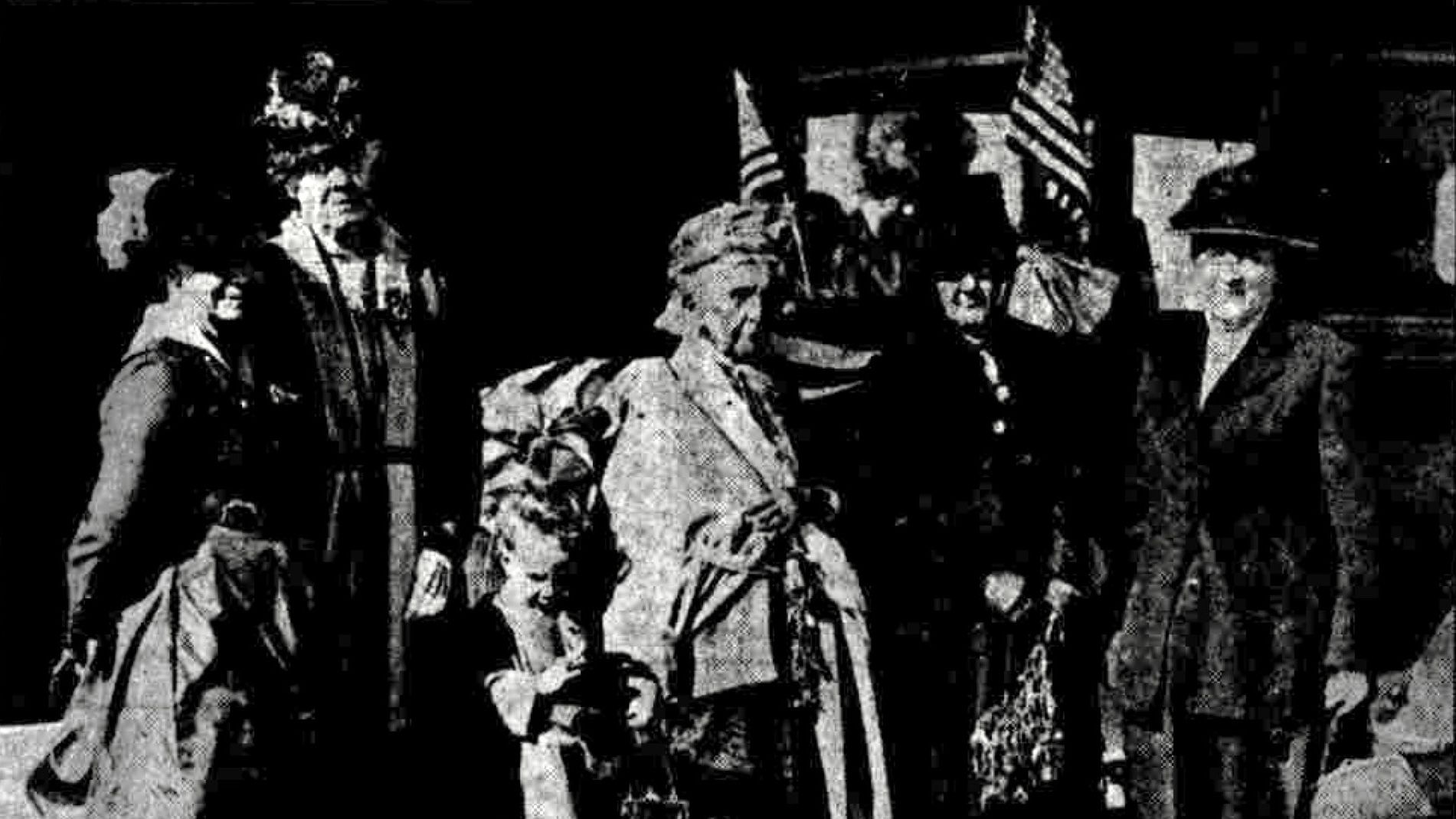
Zoom in: Emmeline B. Wells spent decades fighting for women's rights in Utah and nationally.
- Here she is, at center, celebrating in 1920 on the capitol steps. She was 92.