Utah's birds are disappearing fast


Add Axios as your preferred source to
see more of our stories on Google.
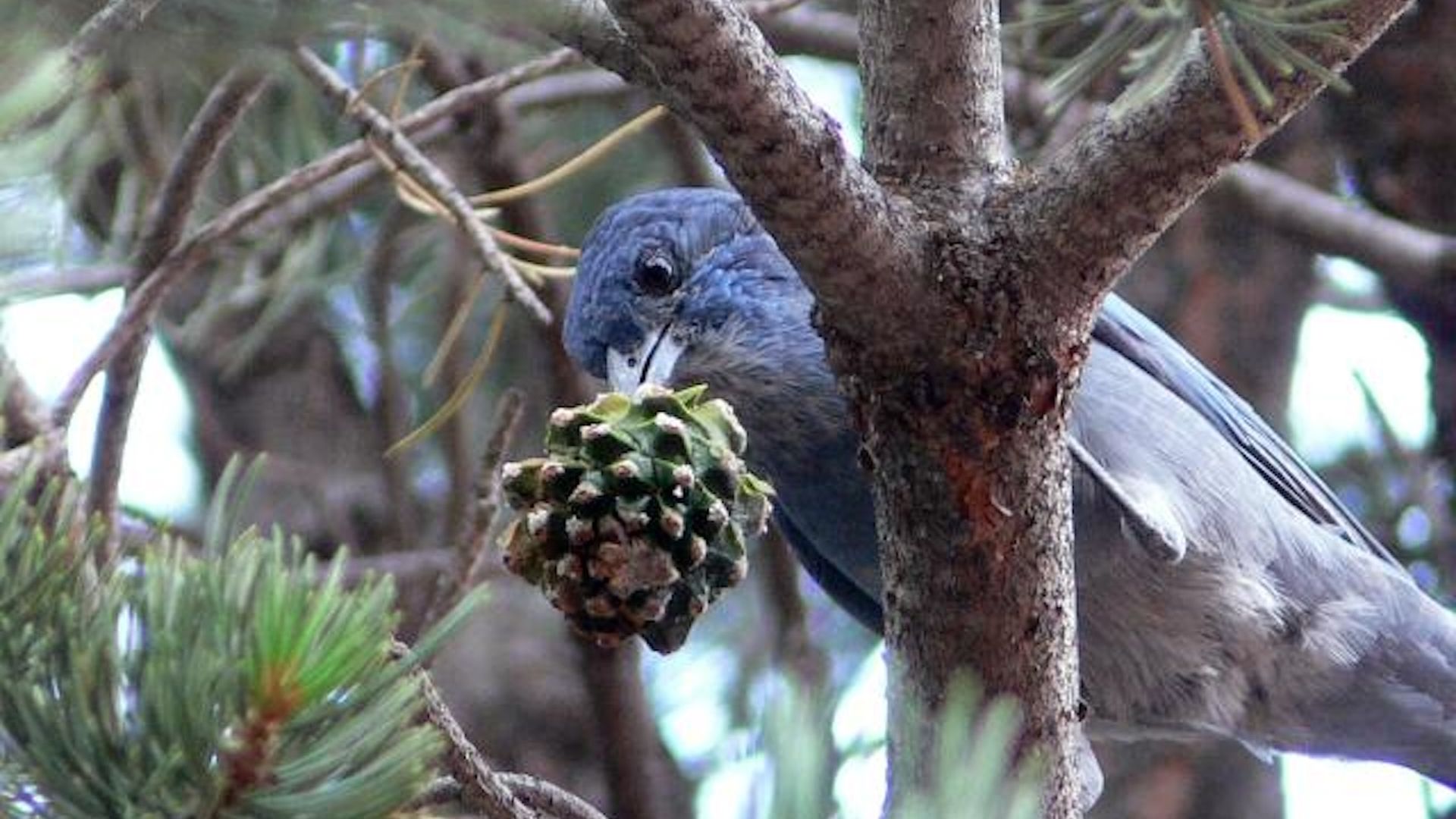
A pinyon jay snacks on pine nuts. Photo: Sally King via BLM
Birds that call Utah's mountains and deserts home are in serious decline, according to a sweeping new conservation report.
Why it matters: Birds are indicators of the overall health of their habitats and signal early warnings of broader trouble. If these habitats can't support birdlife, they probably can't sustain other wildlife — or even humans — for long.
By the numbers: In the past 50 years, Utah species like the greater sage grouse, the desert-dwelling Bendire's thrasher and the sagebrush sparrow have seen their populations cut in half, per the North American Bird Conservation Initiative's 2025 State of the Birds report.
- The pinyon jay — a signature species of our pinyon-juniper woodlands — has lost 70% of its population since 1970. It's now labeled a "tipping point" species, meaning it could vanish unless urgent conservation action is taken.
State of play: In the past 55 years, the West has lost almost half of arid-land bird habitat to drought, wildfires and invasive plants, the report states.
- Nearly a quarter of the 31 arid-land birds included in the analysis are considered tipping point species.
- Over half of western forest birds are declining.
Zoom in: The shrinking Great Salt Lake is a critical hub for migratory birds, including about 21% of North America's endangered snowy plovers — also a tipping point species.
- The lake's long-billed dowitchers and sanderlings are also at the tipping point.
Follow the money: A blow to birds is a blow to the economy. From birding tourism to pest control and pollination, birds generate nearly $280 billion annually for the U.S. economy, the report finds.
What they're saying: "It's a reality check for us, every time we do one of these," Mike Brasher, co-chair of the report's science committee, told Audubon magazine.
- "Threats to birds [and] bird habitat are as great now as they have ever been, and they're accelerating, in most cases," Brasher said.
The big picture: It's not just Utah. Researchers tracked species nationwide and found declines almost everywhere — even among birds once thought resilient, like waterfowl.
- Roughly one-third of U.S. bird species — 229 in total — are now classified as high or moderate conservation concerns.
Yes, but: There are signs of hope. Thanks to wetland protections, dabbling and diving duck populations have jumped 24% since 1970, while waterbirds are up 16%, per the report.