From Ice Age to ice rink: Mammoth would be a nod to Utah's past

Add Axios as your preferred source to
see more of our stories on Google.
Utah's new NHL team could possibly be renamed as the Utah Mammoth. Photo: Timothy A. Clary/AFP via Getty Images
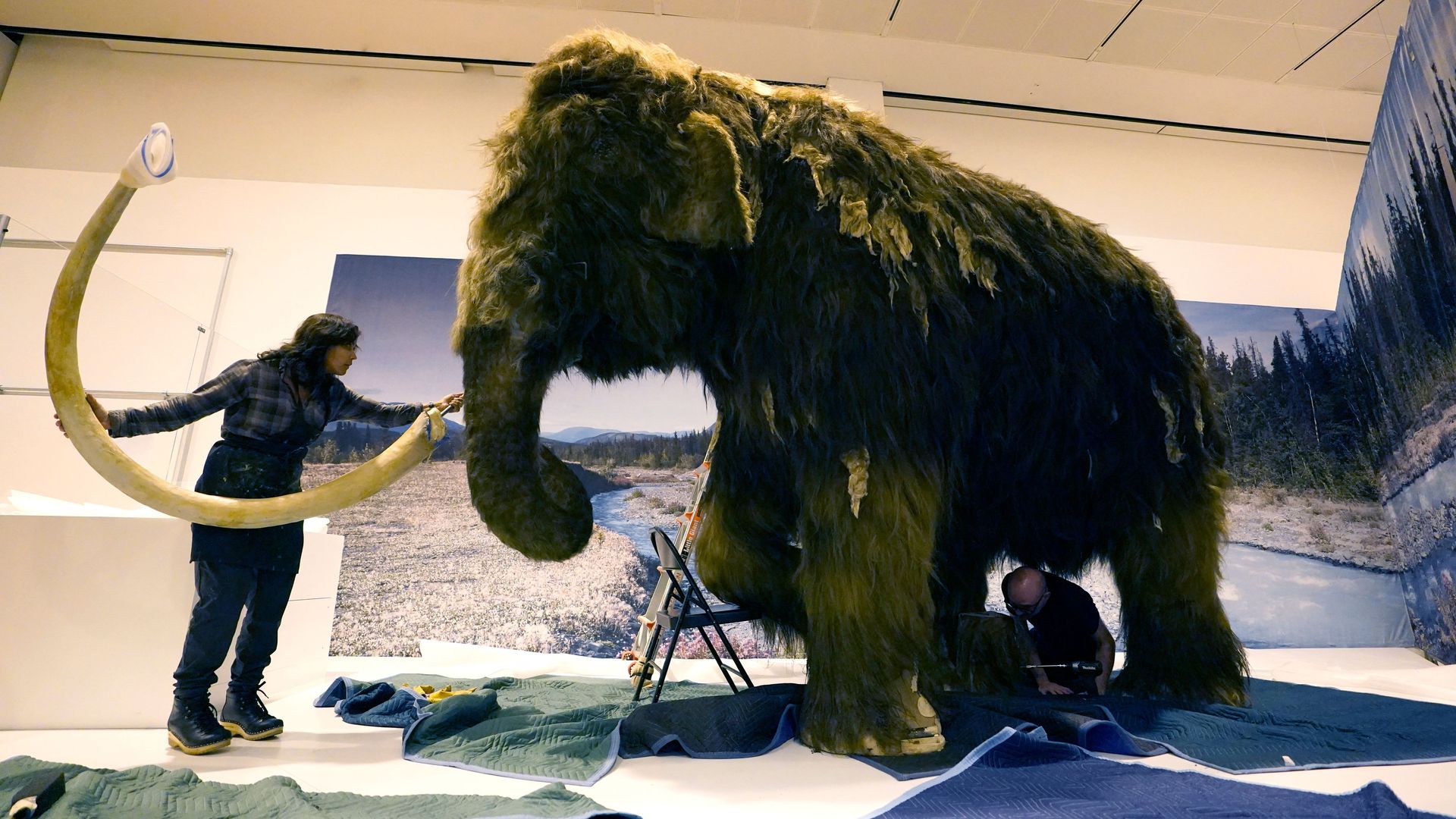
This week's possible name leak suggests the state's new NHL team may be called the Utah Mammoth, a nod to the Ice Age giants that roamed the region over 10,000 years ago.
The big picture: The Utah Hockey Club's official team name and logo could help establish its brand and identity, fuel merchandise sales and generate fan interest.
Zoom in: Utah's most famous mammoth discovery is the Huntington Mammoth, found in 1988 by a dozer operator in Manti-La Sal National Forest.
- Its skeleton was well preserved and nearly complete. Scientists were able to sequence its DNA, giving them a deeper insight into the animal's evolution.
State of play: As we await the team's name announcement ahead of next season, we asked Carrie Levitt-Bussian, the paleontology collections manager at the Natural History Museum of Utah, about the ancient beasts and their connection to the Beehive State.
- Some answers have been edited for length and clarity.
When and where did mammoths live?
"Mammoths during the Ice Age — or what we call the Pleistocene — lived from as old as 300,000 to 10,000 years ago. Where we mostly find mammoths here in Utah has been around this ancient shoreline of Lake Bonneville, and they've been found in various places across the state. So, like by Fillmore and down, and by Orem."
How did they coexist with humans?
"We have direct evidence and artifacts of humans actively killing mammoths. I think that, probably, ancient humans respected the mammoths, but they also thought they were delicious and ate them."
What made them go extinct?
"That's a big million-dollar question. There are three leading hypotheses. One is that there was some sort of disease that killed them all. The top two are: Did they get killed off by early humans? Or was there some sort of climate change that happened?"
Why do you think they still capture the public interest?
"They've been found frozen in Siberia, perfectly complete with their stomach content still [intact]. They're using donations of hair dryers to thaw out the mammoth hair. Each of those discoveries makes you feel like you know what a mammoth is like."
What do hockey players and mammoths have in common?
"They're both familiar with ice. Mammoths used their tusks to move things out of the way and to intimidate their rivals. That is not dissimilar to the action that a hockey player would [do with] a hockey stick."
Utah team name origins
Utah's pro sports teams' names are part puzzling and part local.
- Here's the rundown:
🏀 Utah Jazz: Utah is known for many things, but it's certainly not jazz. Before coming to the state in 1979, the NBA team was playing in New Orleans, where the music genre was born.
⚽ Real Salt Lake: Our MLS team's name was a nod to Real Madrid's success.
👑 Utah Royals: "Real" means royal in Spanish and the women's soccer team name was chosen to align with the royalty theme associated with Real Salt Lake.
🐝 Salt Lake Bees: This minor league baseball team's name makes the most sense given that Utah is known as the Beehive State.
- They were previously known as the Salt Lake Stingers and Salt Lake Buzz.