How politics influence moving choices in the West


Add Axios as your preferred source to
see more of our stories on Google.
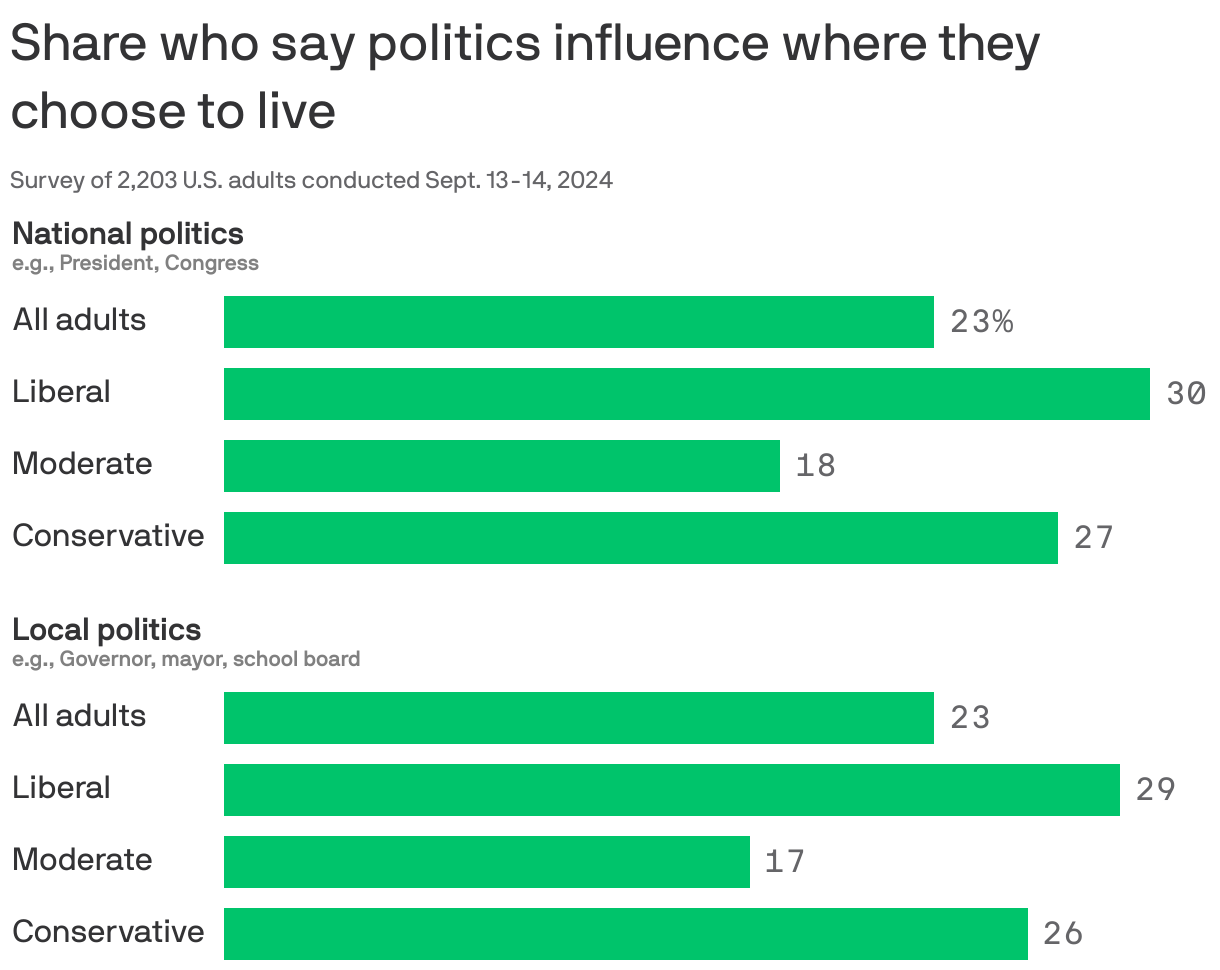
About 1 in 5 adults in the West say local or national politics vastly influenced their decision on where to live, according to a recent survey from Realtor.com.
The big picture: This is especially true for frequent U.S. voters, the data shows.
- Nearly 1 in 3 frequent voters say living in a place where most people share their political views is very or extremely important, compared with 17% of occasional voters and 8% of inactive voters.
- Realtor.com surveyed 2,203 adults Sept. 13-14.
Zoom in: Environmental concerns are a key issue on the minds of Utah voters this year.
- Utahns saw air pollution and smog as a more pressing problem than in any other Western state, per a Conservation in the West survey released in February.
- The cost of living and the lack of water supply were also top worries here.
By the numbers: As of Oct. 21, active Republican voters in the state outnumber Democratic voters by a nearly 4-1 ratio, per state election data.
Zoom out: Political scientists have been studying the idea of "voting with your feet," or voting with your actions, since the 1960s, Penn State professor Bruce A. Desmarais says.
- What's become clear over time is places that tend to draw migration usually end up with political extremes, Desmarais says.
- For example, college towns, which tend to be more liberal, are popular destinations for left-leaning folks. Those people may migrate from one college town to another.
- Research shows people are not only leaving communities that don't align with their point of view, but they might be willing to pay more for a house if they knew their new neighbors had similar views, Desmarais says.
Yes, but: We don't know whether this is good for political discourse.
- Some say communities should have a mix of political views to temper extremes, but in some instances, reaching across the aisle causes people to dig in their heels further, and that amplifies extremes, Desmarais tells Axios.