Book banning activists target Little Free Libraries in Utah

Add Axios as your preferred source to
see more of our stories on Google.
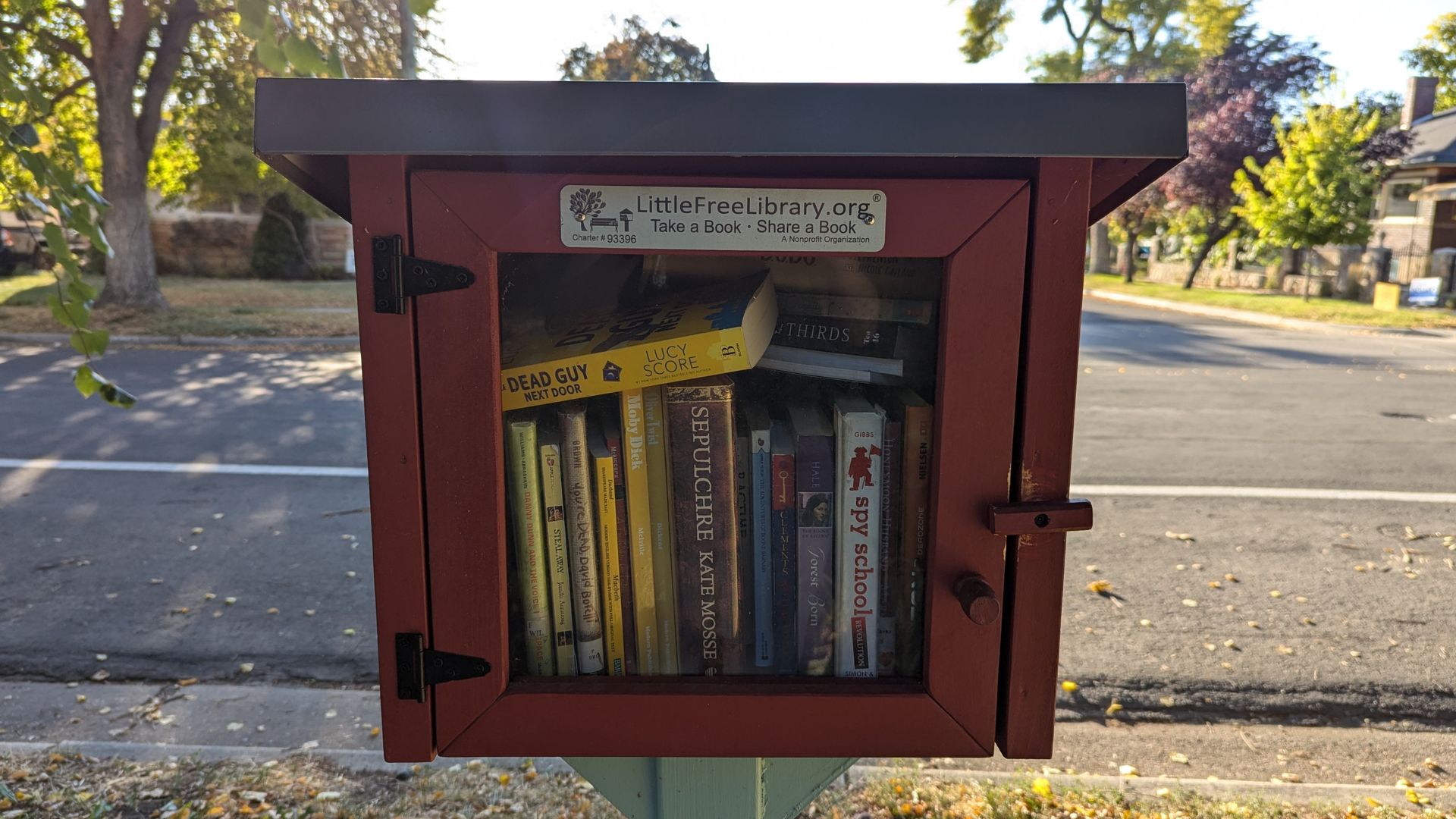
A Little Free Library in Salt Lake City. Photo: Erin Alberty/Axios
Advocates of school book bans have shifted their sights toward Utah's Little Free Libraries after a Democratic lawmaker planned to add banned books to the volunteer-run curbside collections in her district.
Driving the news: State Rep. Sahara Hayes (D-Salt Lake City) recently announced on Instagram that she planned to celebrate national Banned Books Week by placing titles that are banned in a Utah school inside Little Free Libraries.
- That led to accusations that she was distributing "explicit content" to children in violation of Utah laws.
- Some of the activists have previously filed police reports accusing schools of distributing pornography because they carried books by acclaimed authors like Toni Morrison, Margaret Atwood and Sherman Alexie.
Zoom out: Brooke Stephens — a leader with Utah Parents United who called for Hayes' prosecution and has previously mobilized parents to report librarians to police — argued last week that owners of Little Free Libraries should face prosecution if they make "obscene" material available.
The other side: Book ban opponents say threats to prosecute people for simply having or putting books in reach of children likely will have a chilling effect on authors, parents and owners of Little Free Libraries.
What they're saying: "If you're someone who runs a Little Free Library, you have to make the choice: 'Am I going to put these things in there and take the chance' [of a pornography charge]," Peter Bromberg, a policy advocate for the Utah Library Association, told Axios.
- "Even having that levied against you as an accusation — forget if you can actually defend yourself in court. … Are you going to be targeted?" Bromberg asked. "Your address is public, your Little Free Library is public. Are you going to be vandalized? Are you going to be threatened?"
Reality check: Salt Lake City police said they had not received complaints of Hayes' book-sharing as of Thursday.
- Her district also includes part of South Salt Lake; police there did not immediately respond to Axios' inquiry.
How it works: Little Free Libraries are small, enclosed bookshelves where passers-by drop off used books and can select others' books to read.
- They're usually on people's lawns or parking strips, near sidewalks and streets for public access.
Neither Hayes nor Stephens immediately responded to Axios' request for comment.
Catch up quick: Under a law passed this year by the state legislature, 13 books have been banned from all public schools in Utah.
- To decide what counts as "sensitive material," the law directs schools to use existing statutes that define "pornographic or indecent material" for children.
The intrigue: At least one state lawmaker has argued that school officials should be subject to prosecution for "accessory to distribution of pornography to minors" if they do not adequately cull their libraries.
- In a 2023 hearing, a legislative attorney agreed that a county prosecutor could determine library materials amount to pornography and seek the arrest of anyone who "provides access" to it.
Caveat: Schools do not have the final word on determining whether a book is pornographic for the purpose of criminal prosecution.
Between the lines: It's unclear how that risk might extend to owners of tiny libraries — but "in a pluralistic democracy that relies on the rule of law, that we should not be running our society based on people's wondering whether they are at risk," Bromberg said.
- A Washington Terrace family built a "Little Banned Book Library" outside their home specifically to feature restricted books, KSL-TV reported last year.