When the American Indian Movement protested the Mormon Church over racism

Add Axios as your preferred source to
see more of our stories on Google.
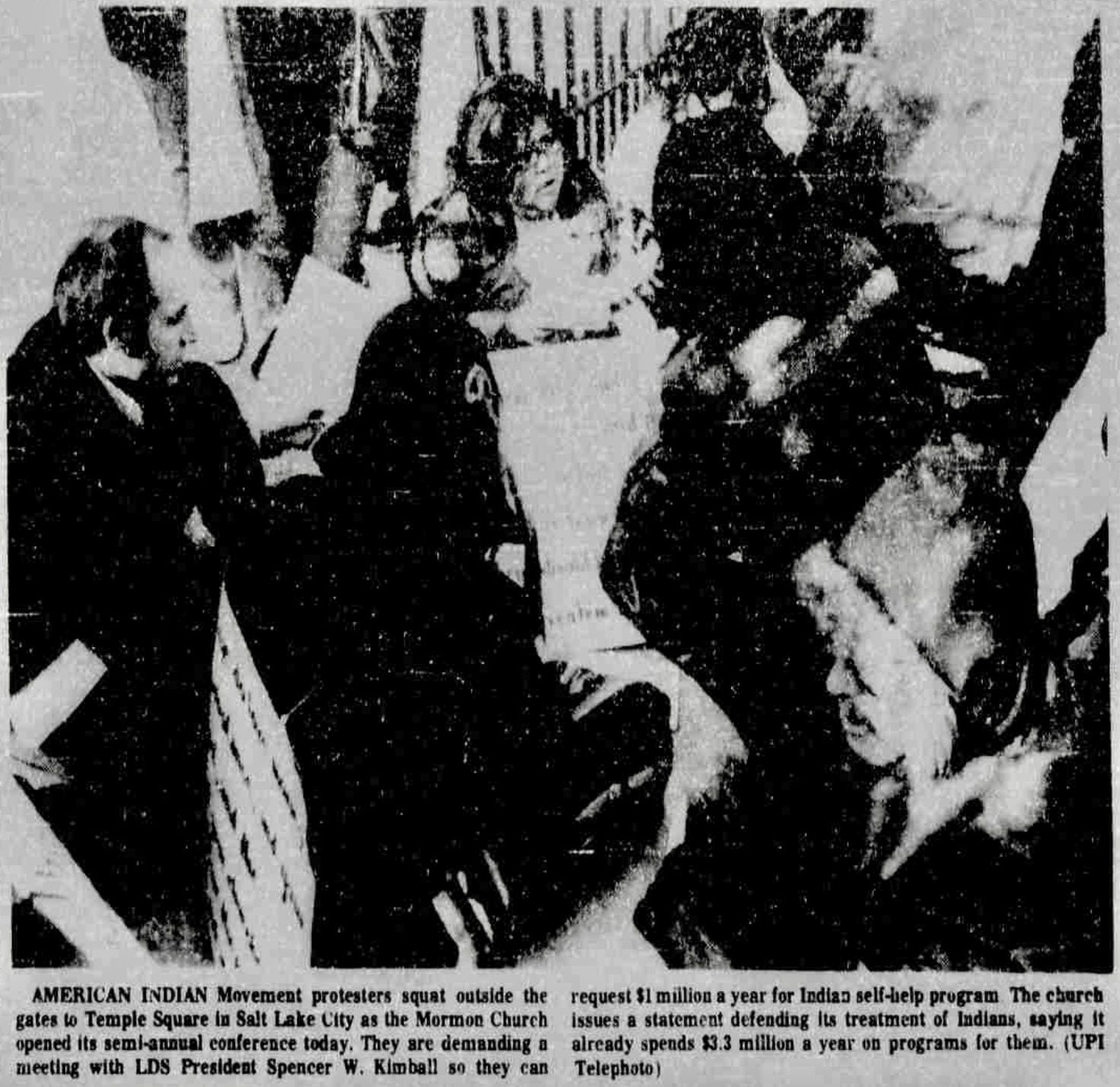
Tensions flared 50 years ago between the Church of Jesus Christ of Latter-day Saints and American Indian Movement (AIM) leaders who protested at General Conference.
- This is Old News, our weekly march through Utah's past.
What drove the news: About 50 protesters gathered at Temple Square to challenge racist statements in teachings and to:
- Seek more Indigenous involvement in church planning, including a majority-Native board to help craft church policy, citing similar groups in Lutheran denominations
- Dispute BYU's ban on long hair for men
- Recover Indigenous human remains then on display in a Temple Square museum
- Request $1 million for secular self-help programs
What they said: "They feel we have to turn white to become all that we are supposed to be in the eyes of the Great Spirit," AIM coordinator David Hill told the AP, referring to Book of Mormon texts about "Lamanites" — characters widely understood to be Indigenous Americans' ancestors.
- The texts — later changed or removed — called Lamanites "dark, filthy and loathsome" and "cursed" with "skin of blackness" to punish their disbelief. The book also predicted Lamanites' descendants would become "a white and delightsome people" upon their redemption.
The other side: A statement from the church at the time said it "stands on its record through many years of providing self-help programs for Indians both within and without the church."
Yes, but: Hall retorted that those programs came with a "'paternalistic attitude' which seeks no input by Indians into church programs relating to them," The Salt Lake Tribune reported.
Case in point: "We feel that we have done an immeasurable amount for the Indian people in the past years — training, educating, inspiring, blessing them to help them increase their culture and refinement" the church's then-president Spencer W. Kimball said. "We love the Indians. They know that."
The latest: Church apologists now — as then — argue that the "white" and "dark" references in scripture describe spirituality rather than skin color.
Reality check: Kimball himself said in 1960 that Indigenous members' skin lightened when they joined the church's "Indian Placement Program," which for decades removed children from Indigenous communities to be enrolled in predominantly-white schools.