More Utahns are living with multiple generations of their families

Add Axios as your preferred source to
see more of our stories on Google.
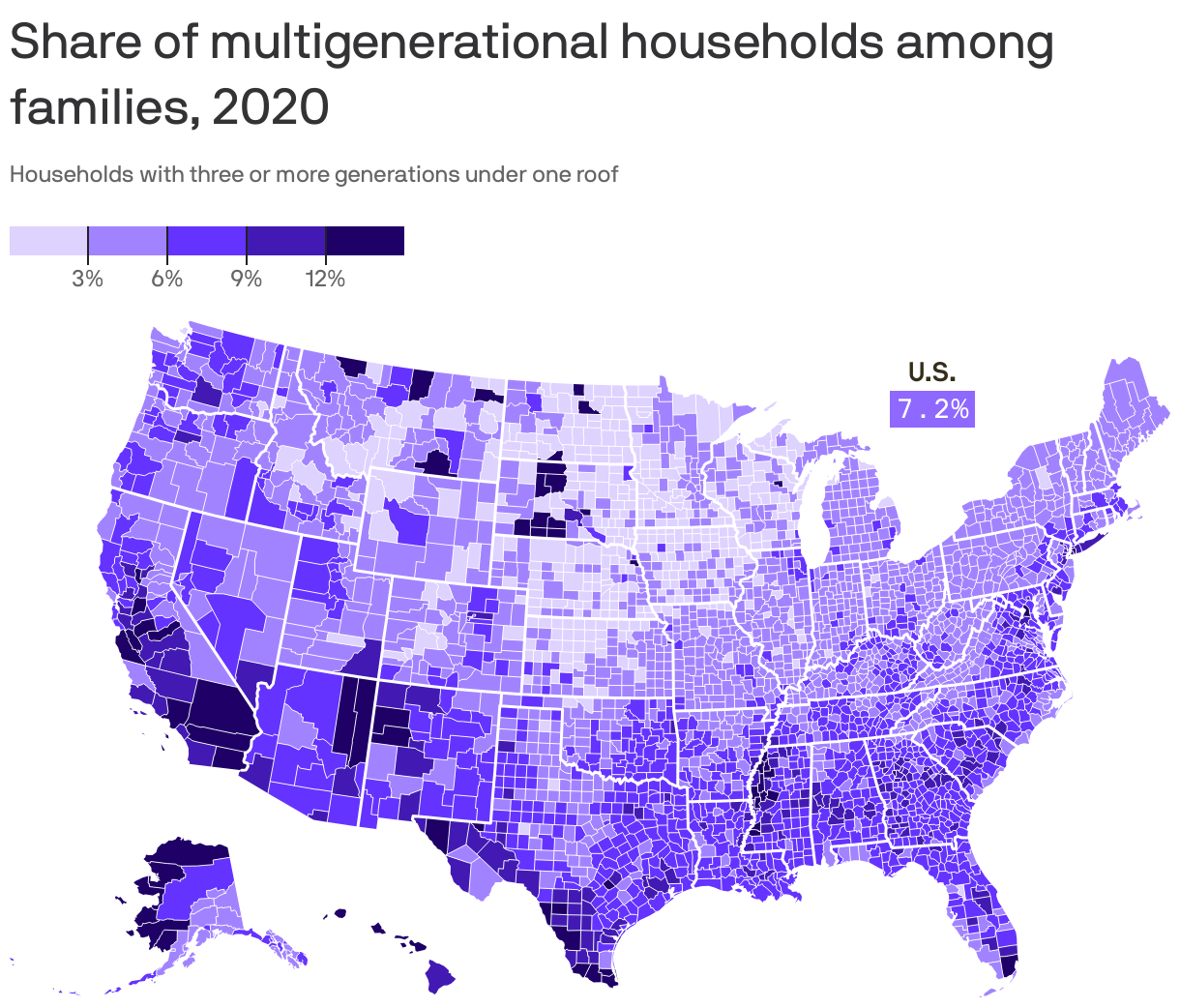
Rural Utah saw some of the nation's biggest increases in multigenerational households — that is, three or more generations under one roof.
Driving the news: Rich, Piute and Kane counties each saw the share of multigenerational households jump more than 50% from 2010 to 2020, census data show.
- The rate more than doubled in tiny Rich County, which saw the 10th sharpest jump of the nation's more than 3200 counties.
Why it matters: Growing rates of multigenerational living are driven mostly by financial need, according to Pew polling data released last year.
- Caregiving, whether for an aging parent or young grandchildren, also plays a significant role.
Zoom in: In 2020 and 2010, rates were highest — but held steady — in Utah counties with large urban or Indigenous populations.
- It's most common in San Juan County, where 10% of households are multigenerational. That's higher than 96% of U.S. counties.
By the numbers: Statewide, 6.6% of Utah households were multigenerational in 2020, up from 6.2% in 2010.
- That's lower than the national average of 7.2%, but in the top half of states.
The big picture: The national rise of multigenerational living is likely connected to population growth among people of color, who are more likely than white Americans to live with extended family, according to Pew, citing census data.
- There were 6 million multigenerational households in the U.S. in 2020, up from 5.1 million in 2010, census data shows.
The intrigue: Living close to family or friends can improve your health and happiness.