Why Richmond's rainstorms are getting more dangerous


Add Axios as your preferred source to
see more of our stories on Google.
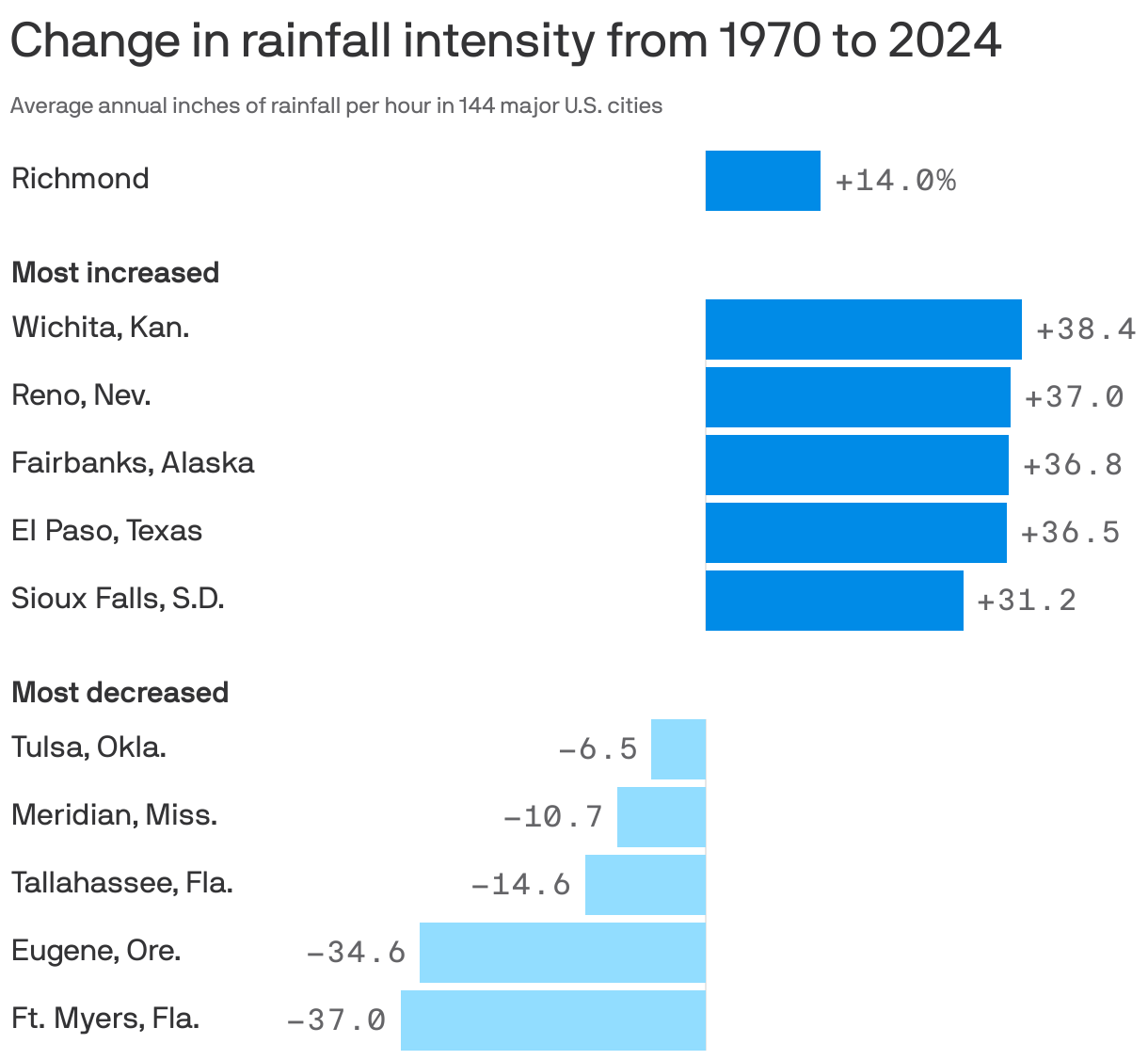
Rainstorms have gotten more intense in Richmond over the past five decades, a new climate analysis has found.
Why it matters: We've been facing on-and-off showers for nearly the past week. And when rain gets more intense, it can cause flash-flooding, dangerous driving conditions and other potentially deadly hazards.
The big picture: Hourly rainfall intensity in Richmond increased between 1970 and 2024 by nearly 14%, per a new report from Climate Central, a research and communications group.
- It's near the average increase of 15% seen across other cities analyzed.
How it works: The researchers divided each location's total annual rainfall by its total hours of annual rainfall, using NOAA weather station data.
- That approach quantifies how much rain fell for each hour it was raining in a given year, aka rainfall intensity.
Between the lines: Human-driven climate change is resulting in warmer air, which holds more moisture and thus can drive more intense precipitation.
Zoom in: Virginia had several notable intense rainfall events last year that highlight the trend.
- There was Tropical Storm Debby last August, which saw the Richmond area drenched for multiple days. It also threatened half of Virginia with potential tornadoes and flash floods.
- Then Hurricane Helene devastated the southwestern part of the state and wreaked havoc on the Blue Ridge Parkway, destroying people's homes and rendering roads impassable.
Threat level: Climate Central researchers have also found that predominantly Black coastal communities — like Hampton Roads — may be particularly vulnerable to increased flood risk over the coming decades.
- And since 2015, Virginia's flood insurance claims have totaled more than $110 million, per the state's Department of Conservation and Recreation site.
Go deeper: 2025 hurricane season may see "above-normal" storm activity, forecasters say