Jackson Ward's future could include reparations

Add Axios as your preferred source to
see more of our stories on Google.
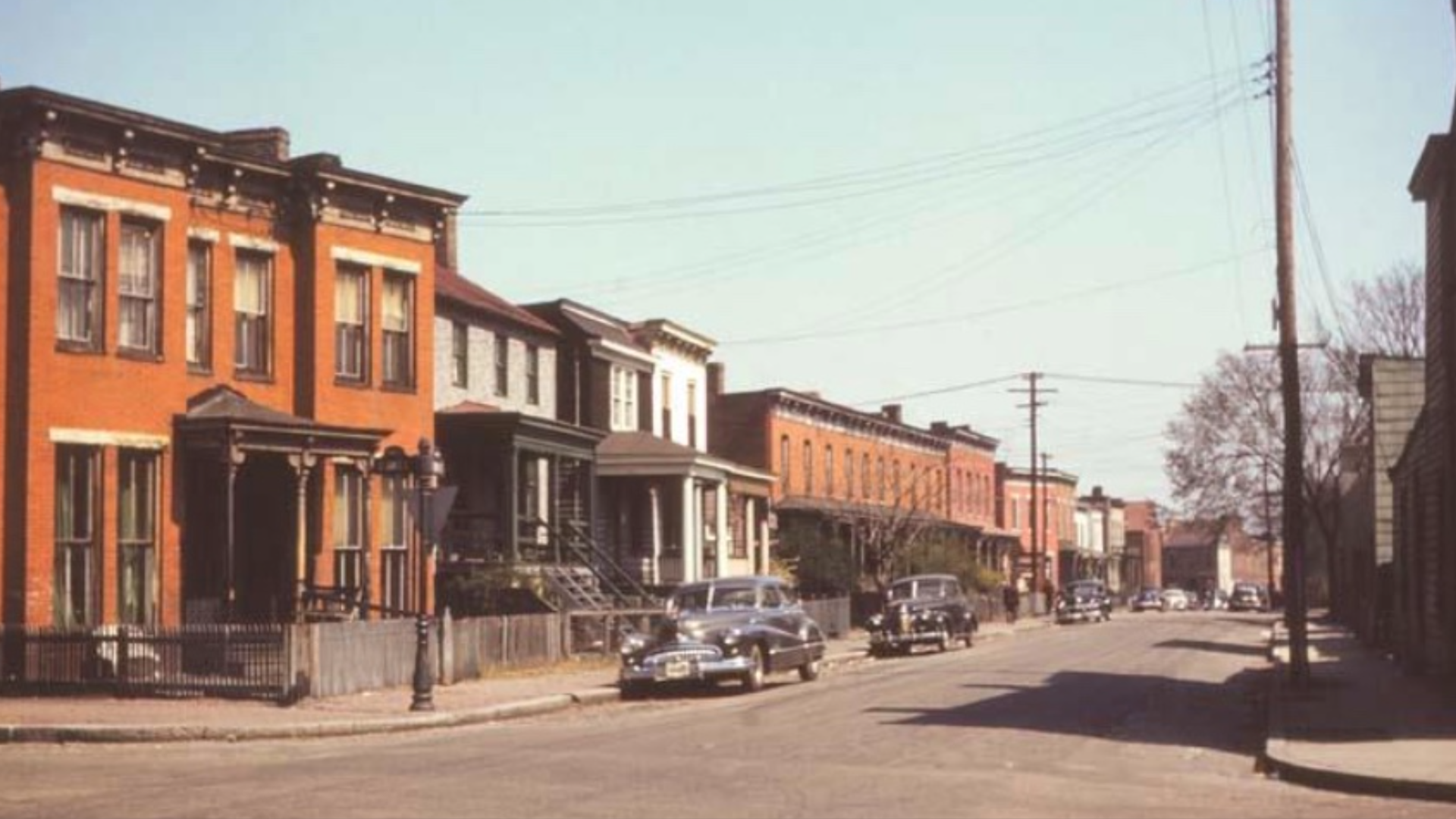
Houses on Baker Street in Jackson Ward in the 1950s that no longer exist. Photo: Courtesy of The Valentine
Jackson Ward is one of hundreds of Black neighborhoods in the U.S that were destroyed to build a highway.
Why it matters: Richmond's attempts to rectify the fallout of that destruction — which forced out nearly 7,000 residents, including people who had lived there for generations — is resurging conversations about what reparations look like for those displaced families, WHRO reports.
State of play: At the center of that discussion is a $1.3 million grant from the Department of Transportation, awarded to Richmond last year, that's part of a $1 billion push to "reconnect" communities split by highways.
- The money is to study how a land bridge could connect the north and south sides of Jackson Ward, which were divided when about 1,000 homes and businesses were razed in the 1950s for what's now I-95.
- Depending on the size and location, installing the bridge could cost $100 million to $400 million.
The goal is to expand Black home and business ownership and help close the economic gaps between the north and south sides of what was once "the Harlem of the South."
- The north part, which includes the predominantly Black public housing community of Gilpin Court, has double the unemployment rate of the south portion as of 2022, per WHRO.
- It also has nearly 80% of residents living below the poverty line and a median income of $10,734.
Yes, but: "You can't reconnect people who were forcibly removed," said Gary Flowers, a fourth-generation Jackson Ward resident who told WHRO that he sees the proposal as a "glorified doggy park."
- And residents still fear that these changes will lead to displacement, especially in Gilpin, which the city plans to eventually redevelop.
- Critics also note that a land bridge doesn't exactly address how Black-owned homes in Richmond are still valued less than homes with white owners.
- Those disparities are displacing residents in Richmond's Black neighborhoods.
The intrigue: Reparations and "how, as a city, do we tackle that issue" are part of the conversations about Jackson Ward's future, Marianne Pitts, deputy director for the city's planning department, told WHRO.
What that could look like, per WHRO's reporting:
- A check to families displaced in the 1950s.
- Offering low-rate mortgage loans to incentivize people to return to Jackson Ward.
- Other financial incentives to current longtime residents so that the project doesn't force them to relocate.
What's next: WHRO reports that Richmond will be hiring people to begin studying the impact of the land bridge in the fall.