New Valentine exhibit explores the Lost Cause roots and its effect in Richmond

Add Axios as your preferred source to
see more of our stories on Google.
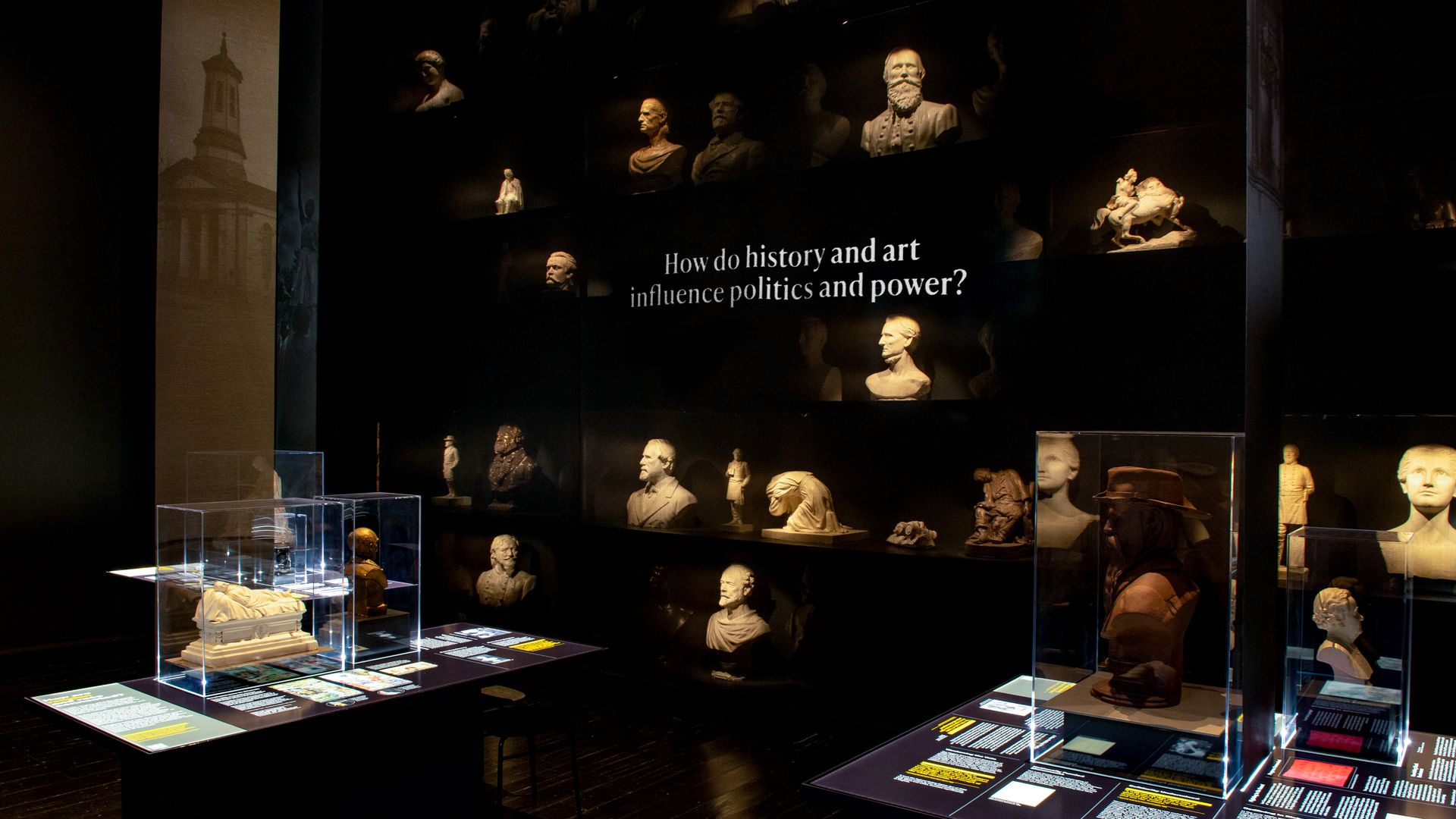
Edward Valentine's works are displayed behind a screen and highlighted with context. Image: Courtesy of The Valentine
What is the Lost Cause? How does fiction — in this case, reframing the Confederacy as a heroic cause divorced from slavery — become accepted truth?
- What role do money and media have in what we learn and believe?
Driving the news: These are some of the questions The Valentine invites the public to consider in its latest exhibition, "Sculpting History at the Valentine Studio: Art, Power and the 'Lost Cause' American Myth," which opened Thursday at the downtown Richmond museum.
Why it matters: The exhibition is among the first and largest attempts by a Richmond cultural institution to explore the narrative that defined the city's post-Civil War history in the wake of the 2020 social justice protests.
- It's the result of three years of work, collaboration, community conversations, focus groups and surveys and funded through a $1.2 million grant.
Zoom in: "Sculpting History" is presented in the 600-square-foot studio where the museum's namesake, Edward Valentine, created many of the images that helped recast the Confederacy and slavery into a noble cause a century ago.
- Through 84 of Valentine's works, including the racist caricatures he created on commission and dozens of stately Confederate busts, along with photos and archival material, "Sculpting History" reminds us that the Lost Cause myth was a carefully crafted and propagated narrative.
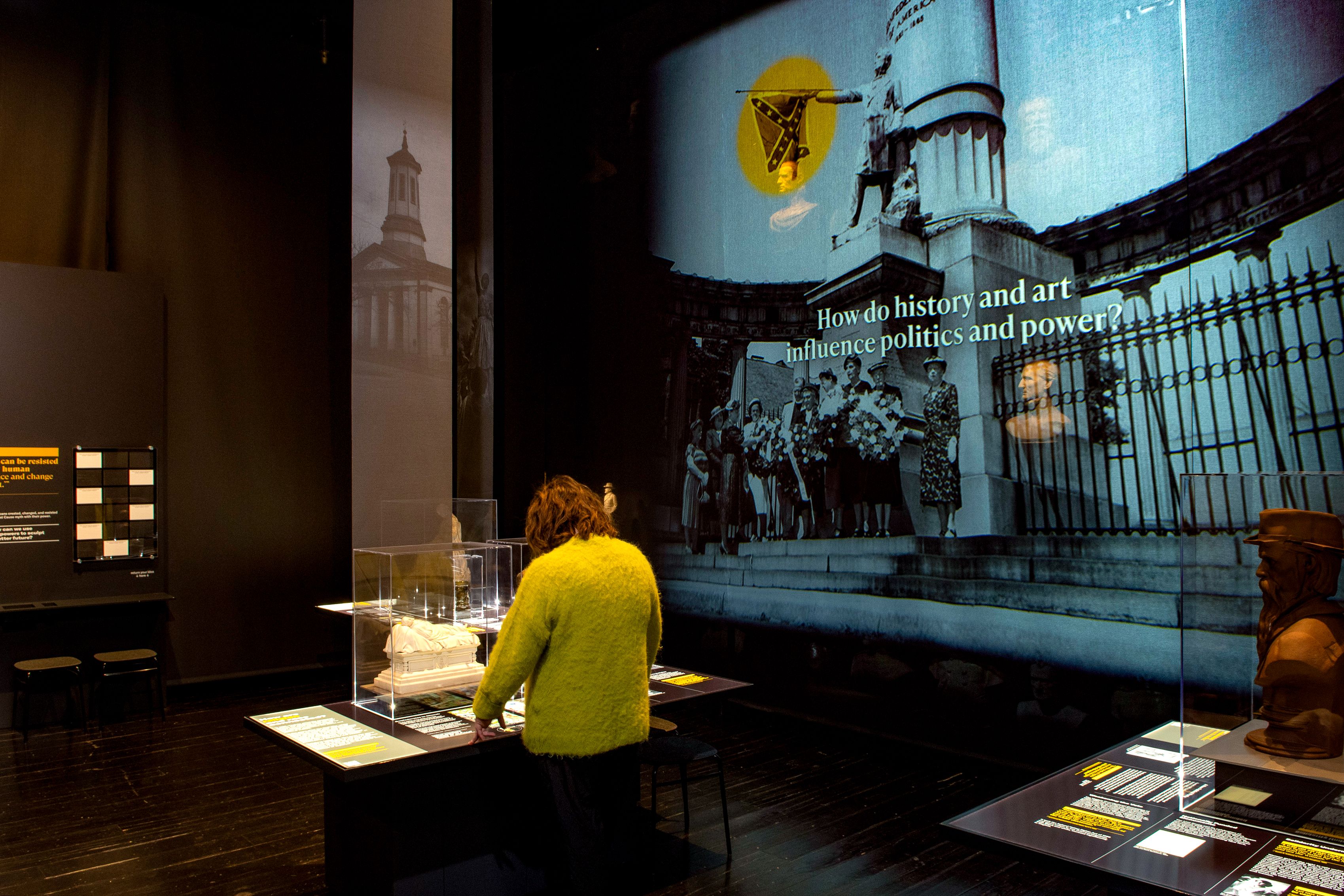
The exhibit goes beyond Valentine, too.
- One installation includes an image from a 1960s Virginia history textbook that depicts enslaved people arriving in America as a well-dressed family of four stepping off a slave ship with luggage and shaking the hand of a white man in greeting.
- As the curators remind us plainly in the caption, in 1960s Virginia, slavery was not taught for what it was: a "system of kidnapping, forced labor, sexual violence and murder."
Engaging visitors emotionally was crucial to the team when designing the exhibit, Wendy Evans Joseph, with the architecture firm that designed the new exhibition, tells Axios.
- "The whole nation watched the monuments come down, but didn't necessarily have the context of what it was like here," she says.
- It was paramount, she says, to get at the emotional response — the visceral anger, rage and anguish — that drove some Richmonders to physically pull down and deface statues, as they did with the Jefferson Davis statue in Richmond in 2020.
Today, the Davis statue that loomed over Monument Avenue for more than 100 years is displayed on his back and splattered in paint at The Valentine.
There you can also find "Sculpting History at the Valentine Studio," open Tuesdays-Sundays with free admission and extended hours on Thursday. Also, free this weekend. $10 all other days.