Follow tagged North Carolina fish — and one likely eaten by a shark

Add Axios as your preferred source to
see more of our stories on Google.
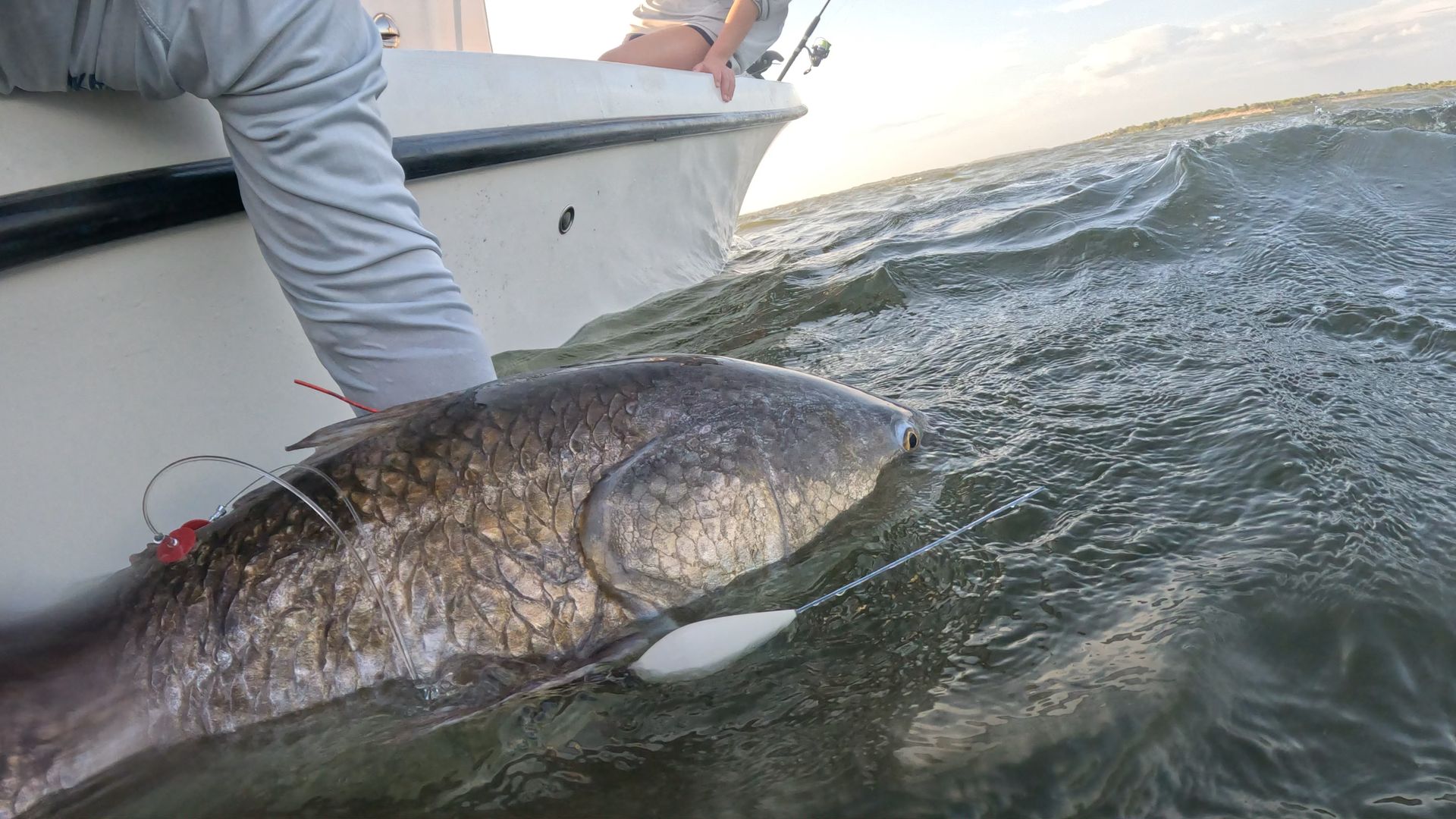
Dwight, a red drum, is released with a tag near Oregon Inlet on June 9, 2025. Photo: Courtesy of the North Carolina Marine & Estuary Foundation
North Carolina researchers tagging and tracking coastal fish have created an online tracker that lets anyone see where the fish are pinging.
Why it matters: Red drum are hugely popular recreational fish, and yet their movement patterns are somewhat of a mystery.
Zoom in: The state line between the Carolinas is thought to be where the northern and southern populations of the Atlantic Ocean's red drum diverge.
- While the northern stock is in good shape, the southern stock is overfished, according to the Atlantic States Marine Fisheries Commission.
State of play: One of the key research needs federal scientists cited in the 2024 stock assessment is gathering more data on how the fish move from sound to sea and between states.
- That attracted the attention of Chad Thomas, executive director of the North Carolina Marine & Estuary Foundation.
- "They can live to be 60. A fish that lives to be 60 has a story to tell," Thomas says.
The big picture: Recreational fishing is a multibillion-dollar industry for North Carolina.
What they're saying: Tagging studies have been done before, but the marine environment is changing.
- "As our waters warm, as our environment changes, you start to see fish showing up in places that they haven't been before," Thomas says. "And that can be concerning if you're not keeping a pulse on that."
How it works: The foundation began partnering with the state Division of Marine Fisheries in 2024 to catch red drum, affix satellite tags and study their migration patterns.
- If a fish is near the surface when a satellite passes overhead, its GPS information pings into the system.
- Tags are designed to pop off after six or 12 months.
By the numbers: So far, 43 red drum have been tagged. They're often given punny names, like Finley, Gilligan or Swim Shady.
- There's a $100 reward for anglers who reel in a tagged fish and clip off the red reward tag.
Between the lines: The foundation's online tracker is similar to OCEARCH's one for great white sharks. OCEARCH's tagged sharks have attracted over a million social media followers.
- One key difference with the red drum database is that it's not reported in real time. The updates are delayed one week, both to help protect fishing spots and to ensure the data is accurate.
- "There have been some anomalies," Thomas says.
Case in point: Swim Shady pinged multiple times in Bermuda a couple months after being caught in the Neuse River.
- The foundation contacted shark biologist Chelsea Black, formerly at UNC, who confirmed the movement patterns were consistent with shark behavior.
- Black conducted an experiment with the tags, submerging one in a shark cadaver to test if it would still ping. Sure enough, it did.
- Swim Shady's tag never did pop off, and the foundation assumes it is likely in the belly of a shark.
What's next: Most of the existing tags will have popped off by September, giving scientists a sizable dataset to examine, and 25 more fish will be tagged this summer.
- Eventually, they hope to add more species to the database.