North Carolina goes to trial over how it's managed fisheries

Add Axios as your preferred source to
see more of our stories on Google.
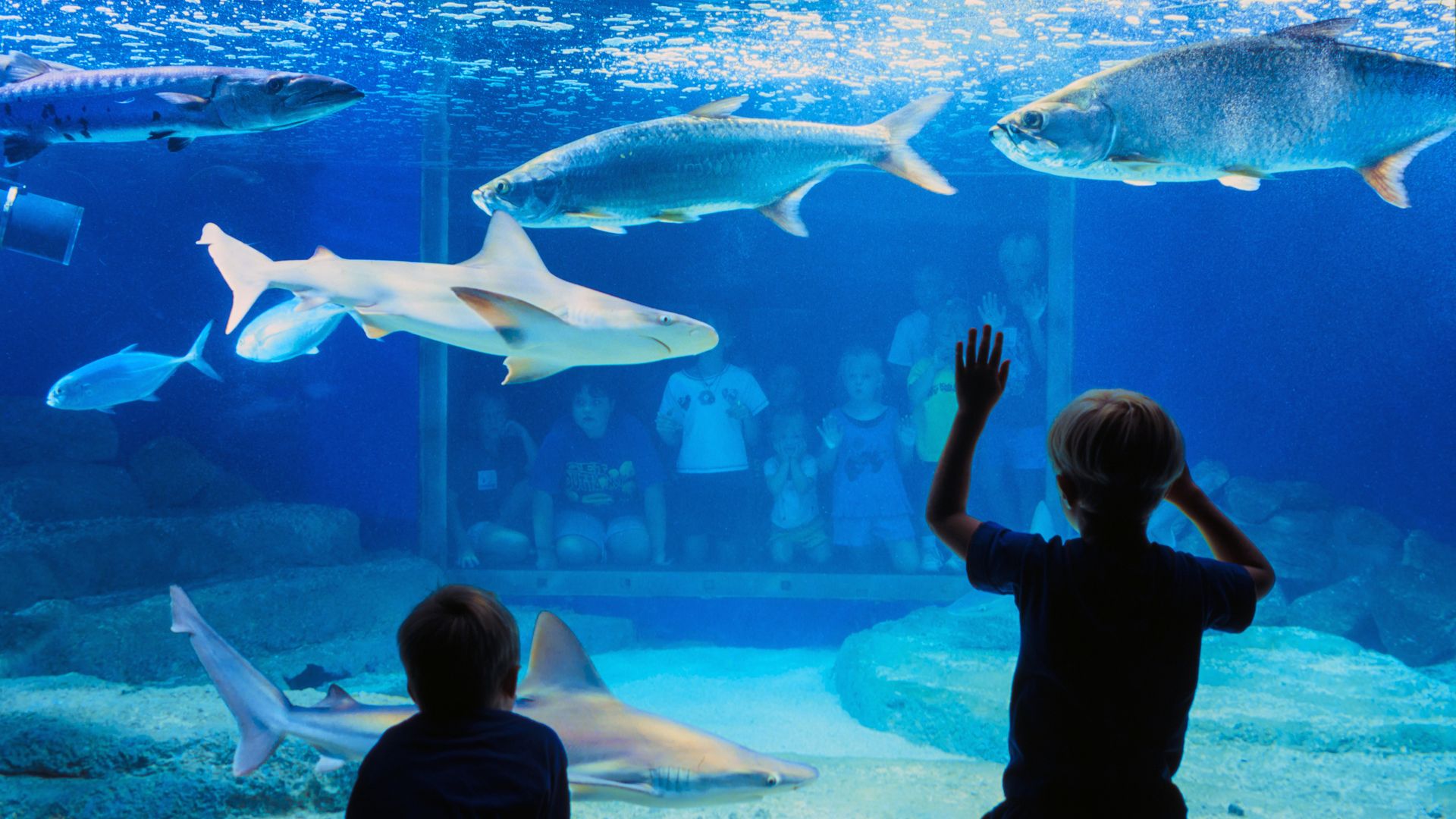
Fort Fisher Aquarium in 1997. Photo: Brownie Harris/Corbis via Getty Images
A trial is now underway in Raleigh that could have enormous consequences for North Carolina's multi-billion-dollar commercial and recreational fishing industries.
Why it matters: The state is being accused of not effectively managing its fisheries, natural resources that belong to the people of North Carolina.
State of play: Over 80 people, organized by the Coastal Conservation Association of North Carolina, sued the state in 2020 to demand reform.
- They argue that decades of mismanagement and commercial overfishing have led several coastal species to collapse or to the brink of it.
Context: North Carolina is bound by both its state constitution and a 1997 state law called the Fisheries Reform Act to rebuild any fishing stocks that get depleted, which has led the state to get involved in managing flounder, shrimp and red drum, among other species.
- Appellate court judges ruled back in 2022 that the state is indeed responsible for preserving "the people's right to fish and harvest fish," citing the North Carolina constitution's public trust doctrine.
What they're saying: But over the decades, the plaintiffs' lead attorney Keith Johnson said Tuesday during opening arguments, recreational fishing access and harvest allotments have dropped steeply because of how long overfishing has been allowed to persist.
- Food production is important, Johnson argued about commercial fishing, "but not at the expense of the resource."
The other side: The assistant attorney general defending the state, Ashton Roberts, said managing a wild ecosystem is a balancing act.
- North Carolina has seen "explosive growth in recreational fishing" that has outpaced population growth since the 1980s, with the state's estimated 18 million recreational fishing trips a year second only to Florida, Roberts said during opening arguments.
Just because some are dissatisfied, she argued, doesn't mean the state is failing the wider public.
- Roberts pointed to predation, disease and climate change as contributing factors and argued that "the state can not be held responsible for the whims of nature."
Zoom in: Tim Nifong, an attorney who previously worked for the state's Division of Marine Fisheries but who is now giving legal advice to the CCA, was the first witness to testify on Tuesday.
Flashback: Nifong told the court that North Carolina's commercial fishermen saw harvests of globally important species — like blue crab, flounder and shrimp — peak in the 1970s, then decline "almost across the board."
- The 1997 legislation was intended to be the solution, and "it had widespread public support, particularly from the recreational fishing community," Nifong said.
What's next: Judge Bryan Collins is presiding over the bench trial in a courtroom high above downtown Raleigh.
- The arguments will go into granular detail, likely over the course of several weeks, with dozens of witnesses scheduled to be called.
Editor's note: This story has been updated with the correct names of Tim Nifong and the state Division of Marine Fisheries.