Taking home these 5 fish triggers new North Carolina rule

Add Axios as your preferred source to
see more of our stories on Google.
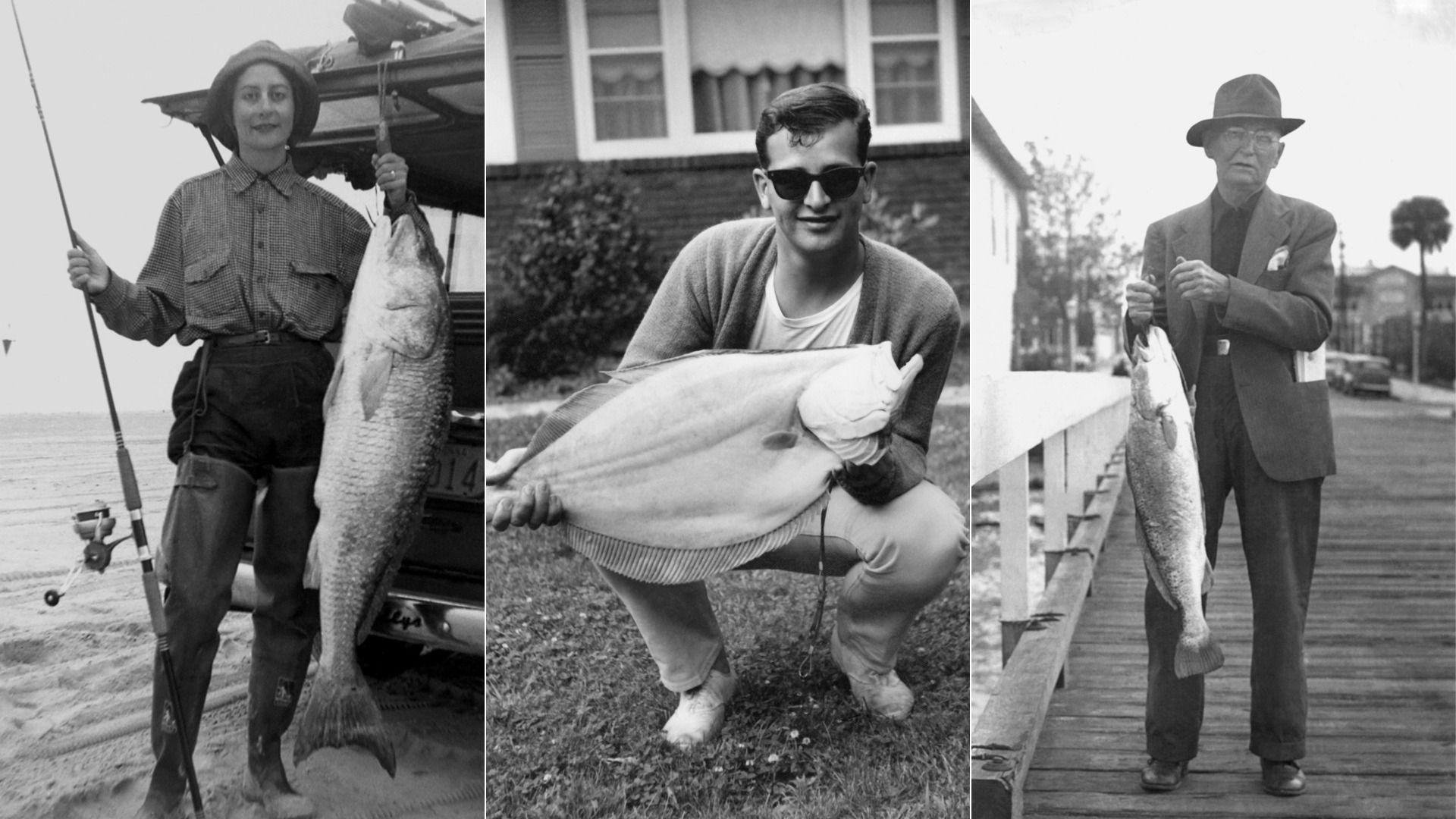
Anglers show off their red drum, flounder and weakfish catches (from left) in the mid-1900s. The drum was caught in Ocracoke, and the others in unknown U.S. locations. (Photos by International Game Fish Association via Getty Images)
Starting next week, anglers who catch some of North Carolina's most popular coastal fish species are required to file reports with the state if they're taking those fish home to eat.
Why it matters: More than 1 million people fish every year in North Carolina waters, the state reports, and many of them have bristled against the new rule, which applies to flounder, red drum, spotted seatrout, striped bass and weakfish.
- Advocates say the data being collected will grant the state new insights into the multi-billion-dollar recreational fishing industry.
Catch up quick: When it passed in 2023, the legislation had the support of "every 'fisheries group' walking the halls of the General Assembly," the North Carolina Fisheries Association said in one of its email blasts last year, adding that "it would not have happened if any one group had opposed it."
- The N.C. Marine & Estuary Foundation helped draft the bill language, saying it was a "groundbreaking policy" that would "fill data gaps to provide a better understanding of how fish are harvested from our coastal waters."
Friction point: Commercial and recreational anglers tend to point fingers at each other when fish stocks get depleted, but both are subject to the new reporting requirement.
- The biggest change, however, is in store for recreational anglers, whose participation in surveys had been voluntary until now.
- Commercial fishermen have been filling out trip tickets for catches they sell since 1994, though now they'll also have to report what they take home for themselves.
Zoom in: Starting Dec. 1, harvesting the five species of primarily coastal fish triggers a requirement to fill out an online form.
- Flounder, spotted trout, red drum and the others are "some of the most popular recreational species in North Carolina," Jesse Bissette, a liaison for the Division of Marine Fisheries, tells Axios.
How the state will use the data from the estimated 600,000 to 800,000 trips will likely evolve over time, Bissette predicts, emphasizing that the division didn't request the rule it is now legally obligated to enforce.
- "If we can get better, more timely, more accurate data, that should lead to better informed management decisions," Bissette says.
Yes, but: That's only possible if people actually cooperate. Bissette says that "there's been a lot of consternation" during the past two years of outreach about how the data will be used.
- "This is like going out to sell a you-know-what kind of sandwich," division director Kathy Rawls put bluntly in a meeting last week.
Caveat: The primary source of data "for the foreseeable future" will continue to be the surveys conducted under the Marine Recreational Information Program, Bissette says.
- "It's the only scientifically accredited, certified survey on the East Coast for recreational data collection," he explained.
The rule doesn't apply to catch-and-release fishing, only to what gets kept.
- You'll report how many fish you caught, the gear you used and what waterbody it was in. (No need to reveal a secret spot, which staff know anglers can be sensitive about.)
What's next: Consequences for not filing a report within 24 hours will ramp up over time, with verbal warnings the first year and written warnings the next.
- Fined infractions — $35 plus court costs — will be handed out starting Dec. 1, 2027.