Cold stuns fish on North Carolina coast

Add Axios as your preferred source to
see more of our stories on Google.
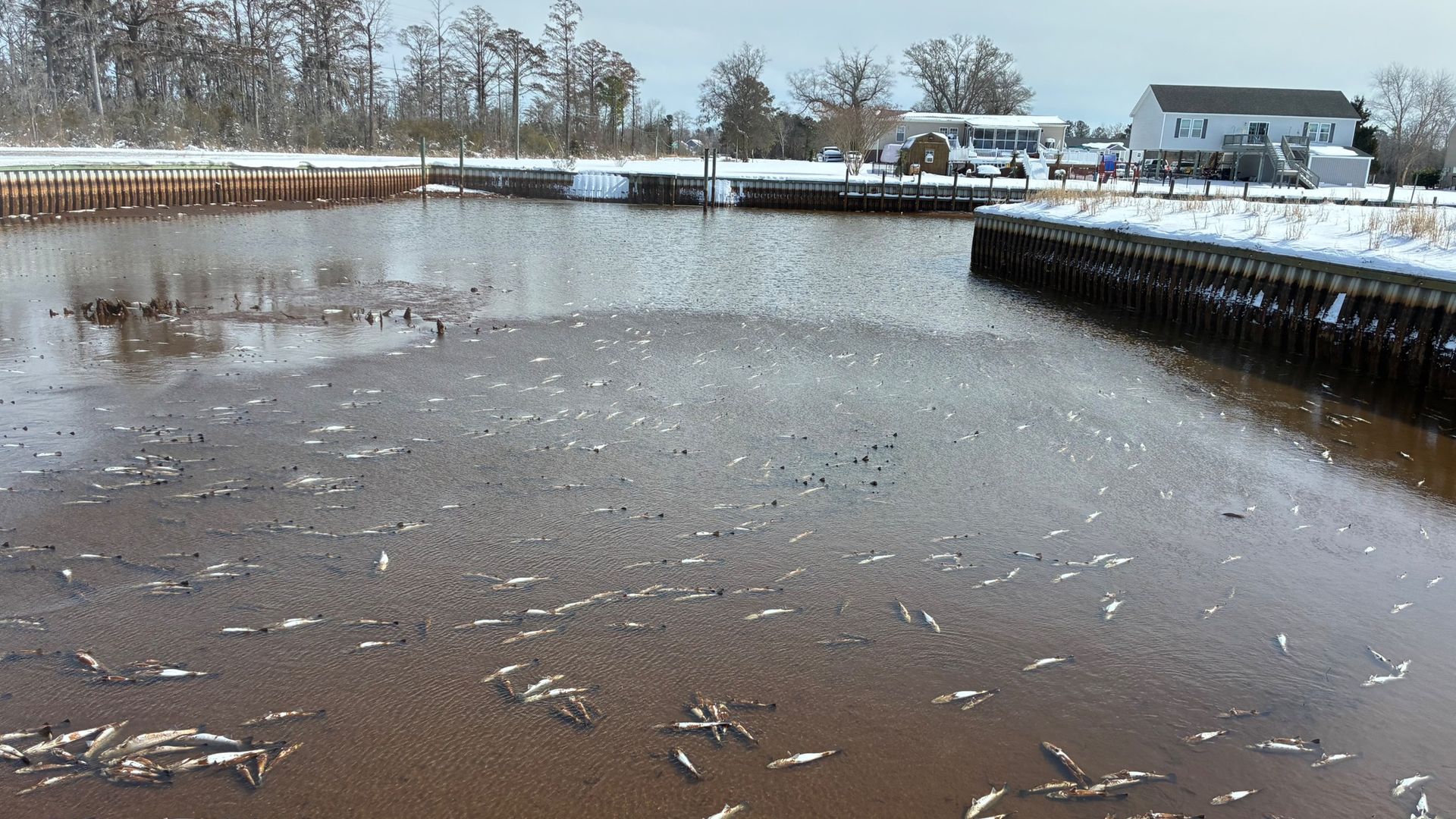
North Carolina closed the season on spotted seatrout after lengthy cold snap killed the fish. Photo: Division of Marine Fisheries
The North Carolina Division of Marine Fisheries is closing the season on spotted seatrout because so many of the fish are dying from the cold.
Why it matters: The recent stretch of unusually frigid temperatures is having an impact on wildlife throughout the South, especially fish and reptiles.
State of play: Cold-blooded animals can't regulate their body temperatures like birds and mammals can, so they're especially vulnerable during sudden cold snaps or long stretches of bitter cold.
- In Florida this month, the state's wildlife agency says it collected thousands of cold-stunned green iguanas.
- And in January, rescues from Texas to South Carolina have picked up cold-stunned sea turtles off the coast.
Driving the news: Speckled trout are popular for commercial and recreational fishers, so DMF made the emergency decision this week to close the fishery for all harvest.
- The closure began Friday afternoon and will last throughout the spring spawn, reopening July 1.
Zoom in: After North Carolina's snowstorm last weekend, photographer Hiatt Ellis captured images of frozen fish piling up and being consumed by birds. They're largely mullet.
- "It was an incomprehensible amount of fish. I was struggling to fit the whole scene into (the) frame, there were so many," Ellis tells Axios.
How it works: Animals vulnerable to cold shocks get sluggish and sometimes lose the ability to move. Fish and turtles may float to the surface. Iguanas sometimes fall from trees.
- Cold stuns are "not the norm in North Carolina's mild climate, but periodically occur," according to the state's Department of Environmental Quality.
- The NOAA says "shallow bays and lagoons where water temperatures can fall relatively quickly" are some of the most dangerous spots for animals prone to cold shocks.
That's exactly where spotted seatrout — known to many as speckled trout — spend their winters, according to researchers. The North Carolina Marine & Estuary Foundation says water temperatures below 45 degrees are a hazard for trout.
By the numbers: The water temperature at Duke Marine Lab in Beaufort has largely stayed below 45 degrees since Jan. 25, National Oceanic and Atmospheric Administration monitoring shows.
Flashback: The state has stopped harvesting because of cold snaps at least four other times since 2011.
- That's because cold-shocked seatrout tend to die, according to DEQ. "In controlled temperature experiments, fish have recovered after being stunned if they are immediately placed in warmer water. However, in nature, these conditions are rarely encountered."
What's next: Warmer temperatures are expected next week.