Where NC ranks among healthiest states, and how smoking fits in


Add Axios as your preferred source to
see more of our stories on Google.
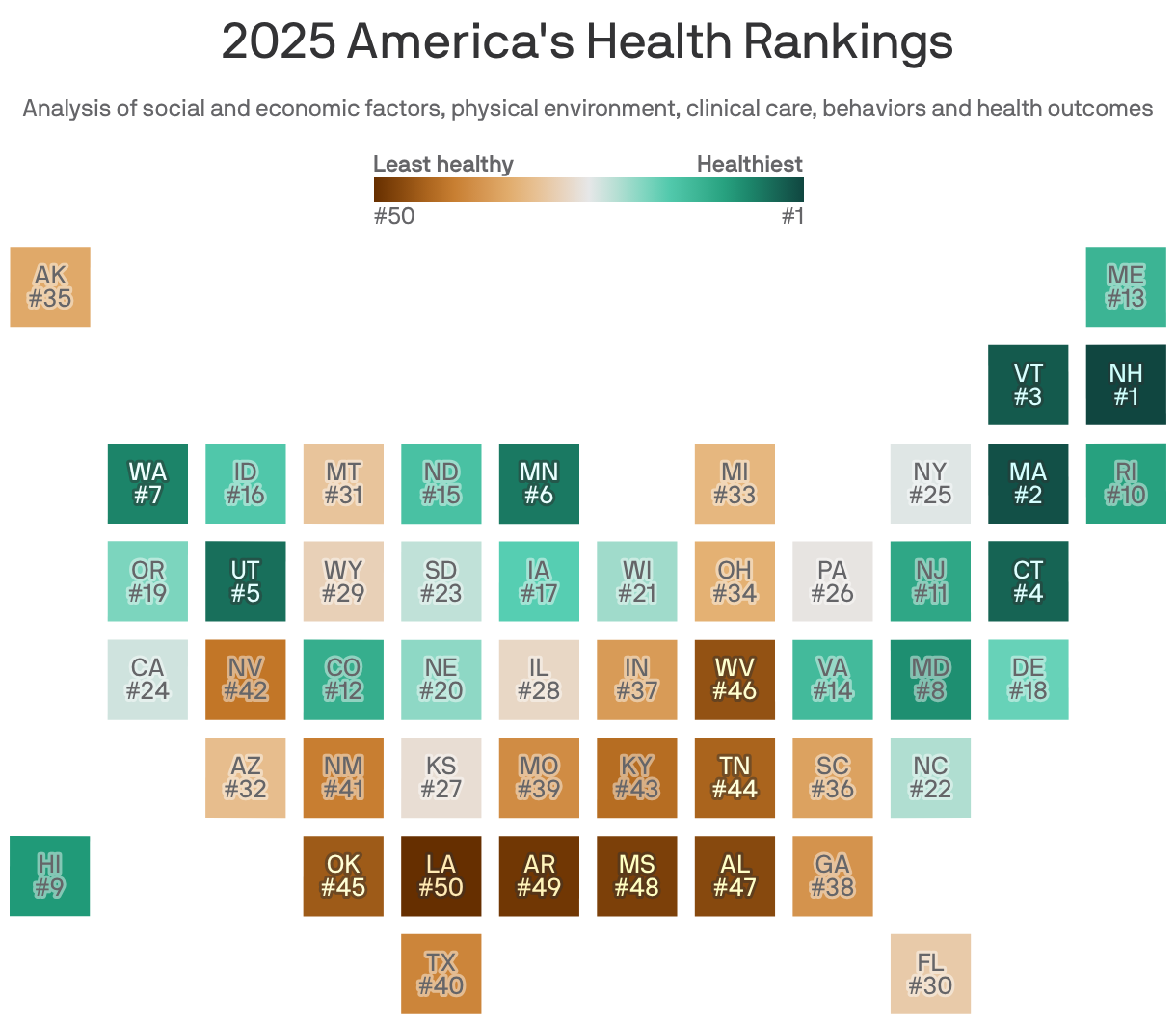
A state-by-state health report card published by the United Health Foundation finds an array of encouraging signs for North Carolina and the rest of the country.
Driving the news: Rates for premature death, drug deaths, firearm deaths and homicides all fell, and rates for cancer screenings, physical activity and volunteerism all increased.
- But rates of multiple chronic conditions also increased, as did homelessness and unemployment — socioeconomic factors that help determine the nation's health.
How it works: America's Health Rankings — from the United Health Foundation, established by UnitedHealth Group — synthesize 99 measures of health and well-being, drawn from 31 data sources, to produce a "comprehensive portrait of health at both the national and state levels."
Zoom in: North Carolina ranks 22nd in the report and outperforms most of the Southeast, especially when it comes to vaping and excessive drinking.
The intrigue: Smoking fell to about 11.5% of adults in North Carolina, a rate that's actually a tenth of a point below the national average, according to the U.S. Department of Health and Human Services.
- For decades, the percentage of smokers here tracked well above national rates, perhaps unsurprisingly given tobacco's importance in North Carolina's economic and cultural pasts. This appears to be the first time in recent history that the state has outperformed the wider U.S.
Smoking has grown increasingly unpopular nationwide since the 1980s, though vaping is replacing the habit for some.
- Around 7.3% of adults regularly use e-cigarettes in North Carolina, according to the report, also slightly below the national average.
- Both smoking and vaping cause cancers and lung disease, and nicotine is especially harmful to pregnant women and their developing fetuses.
Yes, but: Researchers told North Carolina Health News last year that the Trump administration cut grants, threatening that progress and leaving public health workers "concerned for the health of North Carolinians moving forward."
By the numbers: Another highlight in the report was North Carolina's 19% drop in the rate of drug deaths — the largest in the country — that returned rates to national levels after a startling post-COVID jump in overdoses here.
- "We still have a long way to go," Nabarun Dasgupta, the scientist who runs the UNC Street Drug Analysis Lab, said last summer. "We're still losing way too many people we love."
What we're watching: Some of the factors dragging North Carolina's ranking down are poor educational outcomes, bad eating and exercise habits, elevated rates of gun deaths and homicides and relatively low spending on public health.