Transit ridership still lags behind pre-pandemic rates in Raleigh


Add Axios as your preferred source to
see more of our stories on Google.
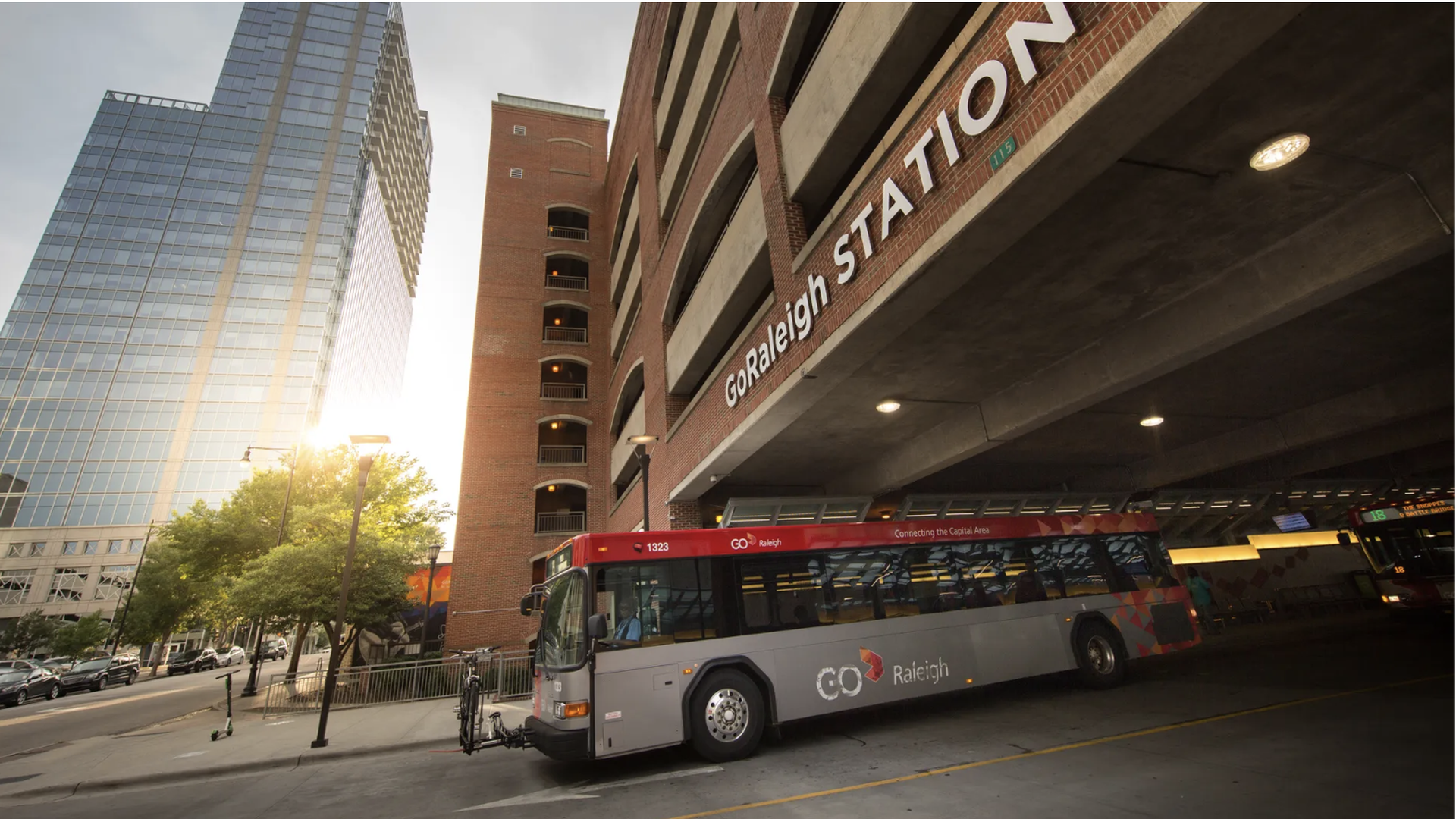
A GoRaleigh bus leaves the city's main bus station in downtown Raleigh. Photo: VisitRaleigh
Bus ridership in Raleigh is around 80% of pre-pandemic levels, according to Federal Transit Authority data.
- That's based on September 2023 ridership, as compared to September 2019.
State of play: Over that time, bus service in the city decreased by 13%, as the city closed routes due to a lack of drivers as well as riders, David Walker, Raleigh's transportation manager, told Axios.
- However, he added, the city hopes to return to full service by mid-January, potentially boosting the city's ridership levels.
Why it matters: Public transit — whether in the form of buses, subway systems, light rail or even cable cars — is key to cities' broader health and vibrancy.
- It makes them cleaner and greener, opens up possibilities for those who can't afford a car, and frees up parking lots to be turned into housing, green space and more.
Zoom out: Of around 100 U.S. metro areas with more than 500,000 people, only nine metro areas in September reported ridership at levels at or above 100% of September 2019 levels.
- Nationally, "ridership recovered throughout 2022 and 2023 to stand at 77% of pre-pandemic levels in November 2023," per APTA's latest big-picture data.


What's happening: Cities have been experimenting with a variety of tactics to boost transit ridership.
- Some places reduced fares, or made rides entirely free (though funding such efforts can prove difficult). Some are investing in new routes and infrastructure.
- Some are also rethinking routes based on people's new post-pandemic travel patterns, with remote and hybrid work affecting how, where and when we move about.
What they're saying: Walker said he believes Raleigh's core riders — many of them dependent on the bus network for work and travel — have returned while remote work trends continue to stymie a full recovery.
- "The stragglers — those that were the choice riders — they may hold out for a while yet, but we do hope that they come back," he said.
- He said Raleigh will continue to increase the frequency of its buses in hopes to make its buses more attractive to riders.
Zoom in: GoRaleigh's bus fares are set to resume in June 2024, the city announced this year, despite the fact that more than 80% of riders make less than $35,000 a year.
- If the city didn't reinstate bus fares, it would face an $8-$12 nillion budget shortfall in fiscal year 2025, after federal recovery funds expire.
- City council members recently asked staff to present ways the city could keep fares free, however.
- Meanwhile, Durham has not yet determined whether it will reinstate fares, and Chapel Hill has been fare-free since 2002.
What's next: The city — and the region as a whole — is betting that bus-rapid transit could attract more riders with increased service, dedicated lanes and improved stations.
- Raleigh's first Bus Rapid Transit line will run 5.4 miles down New Bern Avenue between downtown and WakeMed and New Hope Road. It could open by 2025.
- Three other routes are planned running west, south and north from downtown. All of them follow some of the city's most popular bus routes.
The bottom line: In many cities, it may take years for public transit ridership to return to pre-pandemic levels, if it ever does. But leaders nationwide are investing regardless, given the potential benefits.