Overdose deaths fall across much of Oregon


Add Axios as your preferred source to
see more of our stories on Google.
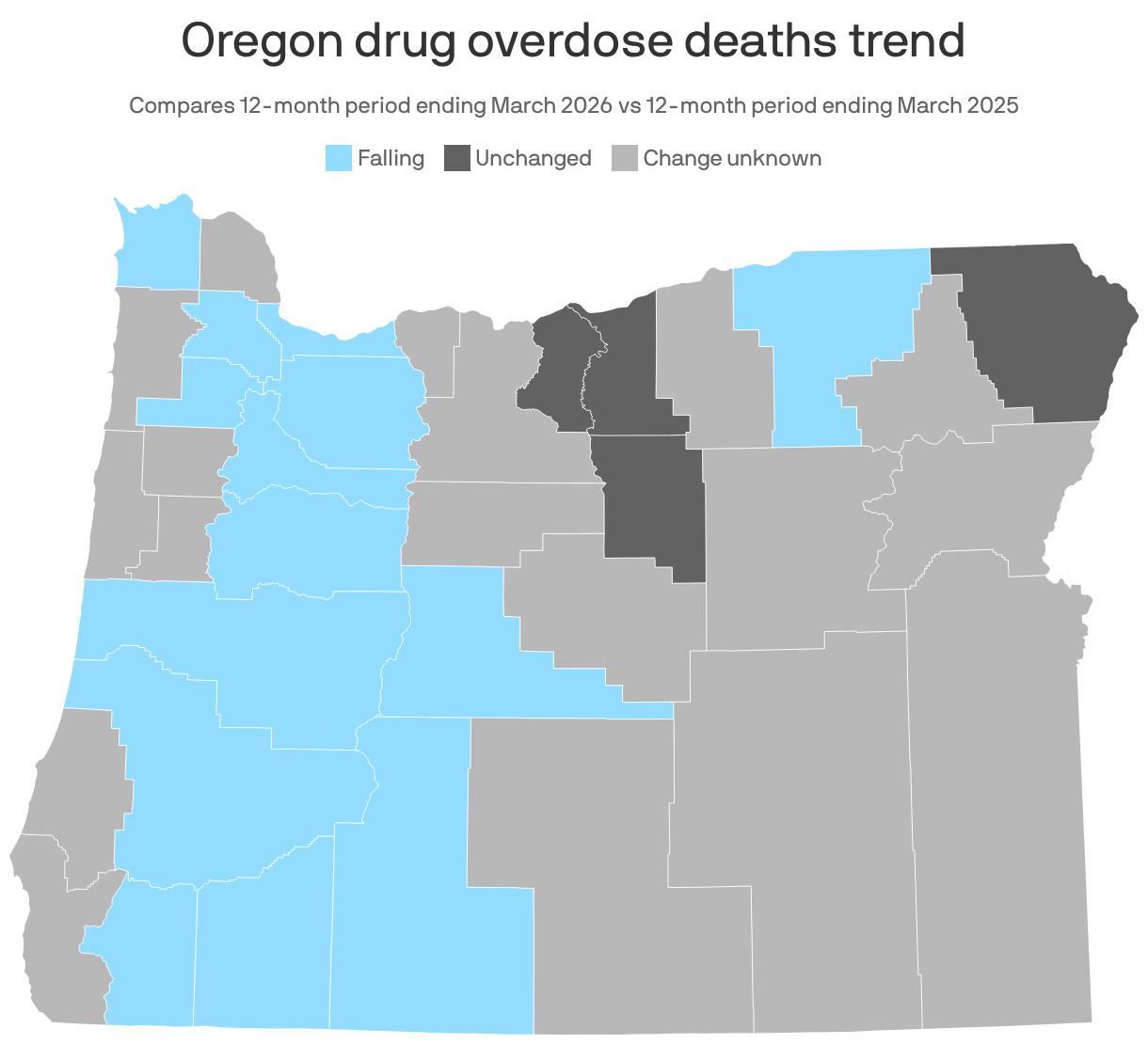
Overdose deaths continue to decline in Oregon, with Multnomah County recording a 36% drop over the past year, according to recent data from the Centers for Disease Control and Prevention.
Why it matters: The decline mirrors a nationwide trend, but Oregon continues to face challenges expanding access to addiction treatment.
By the numbers: There were 315 overdose deaths in Multnomah County during the 12-month period ending in March 2026, according to an Axios analysis of provisional CDC data.
- That's down from 494 deaths during the same period a year earlier, a 36% decline.
- In Clackamas County, the reported count fell 43% from 105 to 60, while Washington County saw a 47% decrease, from 99 to 52.
- Deaths fell in all 14 Oregon counties with enough data to determine a trend.
What they're saying: "This improvement is the result of deep partnerships between state agencies, behavioral health providers, local officials and law enforcement," Gov. Tina Kotek said in a statement earlier this year.
Yes, but: More than 90% of the overdose deaths reported involved methamphetamine, fentanyl or a combination of the two, according to John McIlveen, Oregon's state opioid treatment authority.
- Oregon has been slow to add addiction treatment beds and, as of January, was only halfway toward its goal of 3,800 beds by 2029, per the Oregonian.
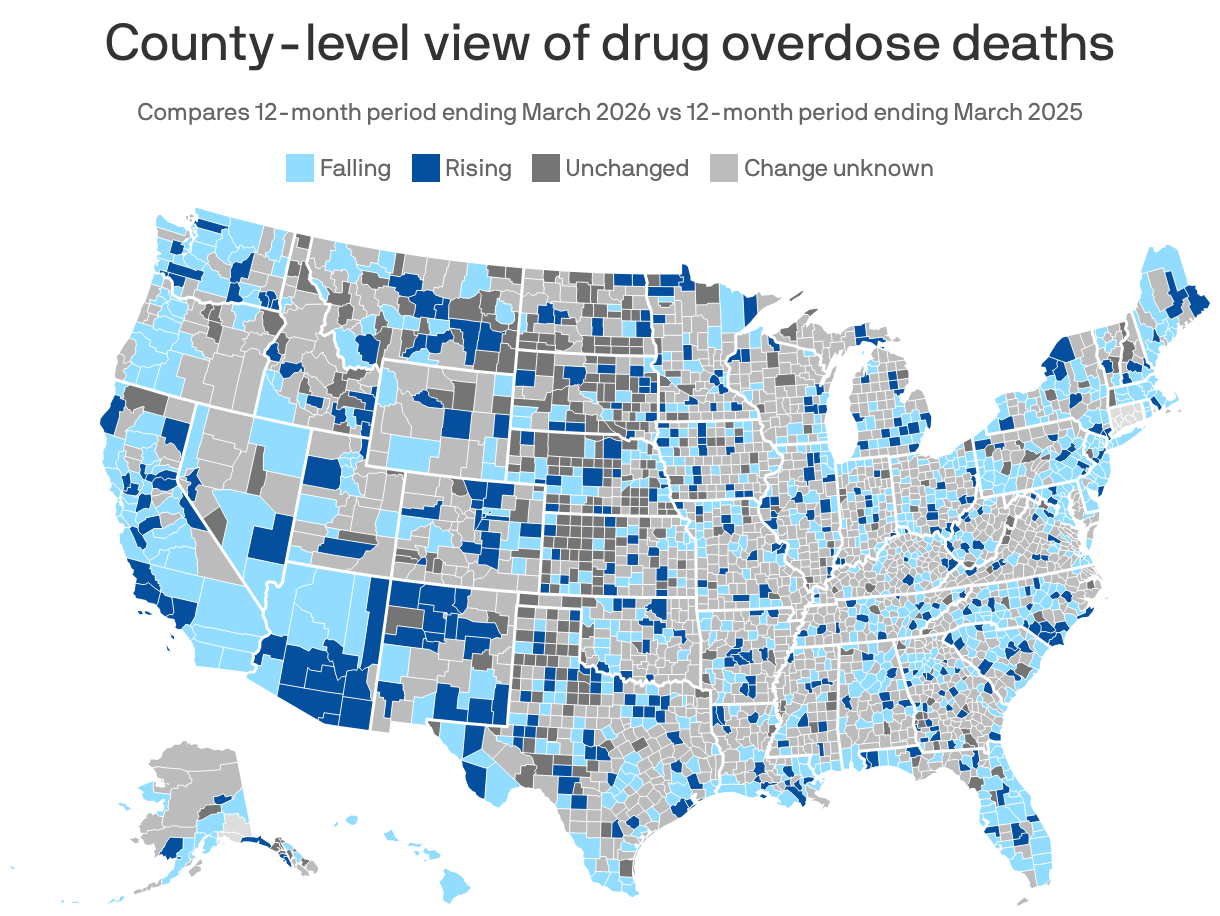
Zoom out: The CDC estimates there were nearly 68,000 overdose deaths nationwide in the 12-month period ending March 2026, about 9,500 fewer than the prior year.
- Among counties with enough data to determine year-over-year changes, overdose deaths declined in 842, increased in 430 and remained unchanged in 352.
- The disparity highlights the uneven impact of the ongoing overdose crisis, with historically marginalized communities often seeing slower recoveries.
Between the lines: The CDC cites several possible factors behind the national decline, including wider access to the overdose-reversal drug naloxone, expanded addiction treatment, and changes in the illicit drug supply.
What we're watching: Multnomah County's deflection center, which opened two years ago to offer an alternative to jail for people caught with drugs, has seen limited success connecting people with addiction treatment.
- The center received fewer than one referral per day, on average, during the first three months of the year, per Willamette Week.