Wildfire smoke costs Oregon tourism

Add Axios as your preferred source to
see more of our stories on Google.
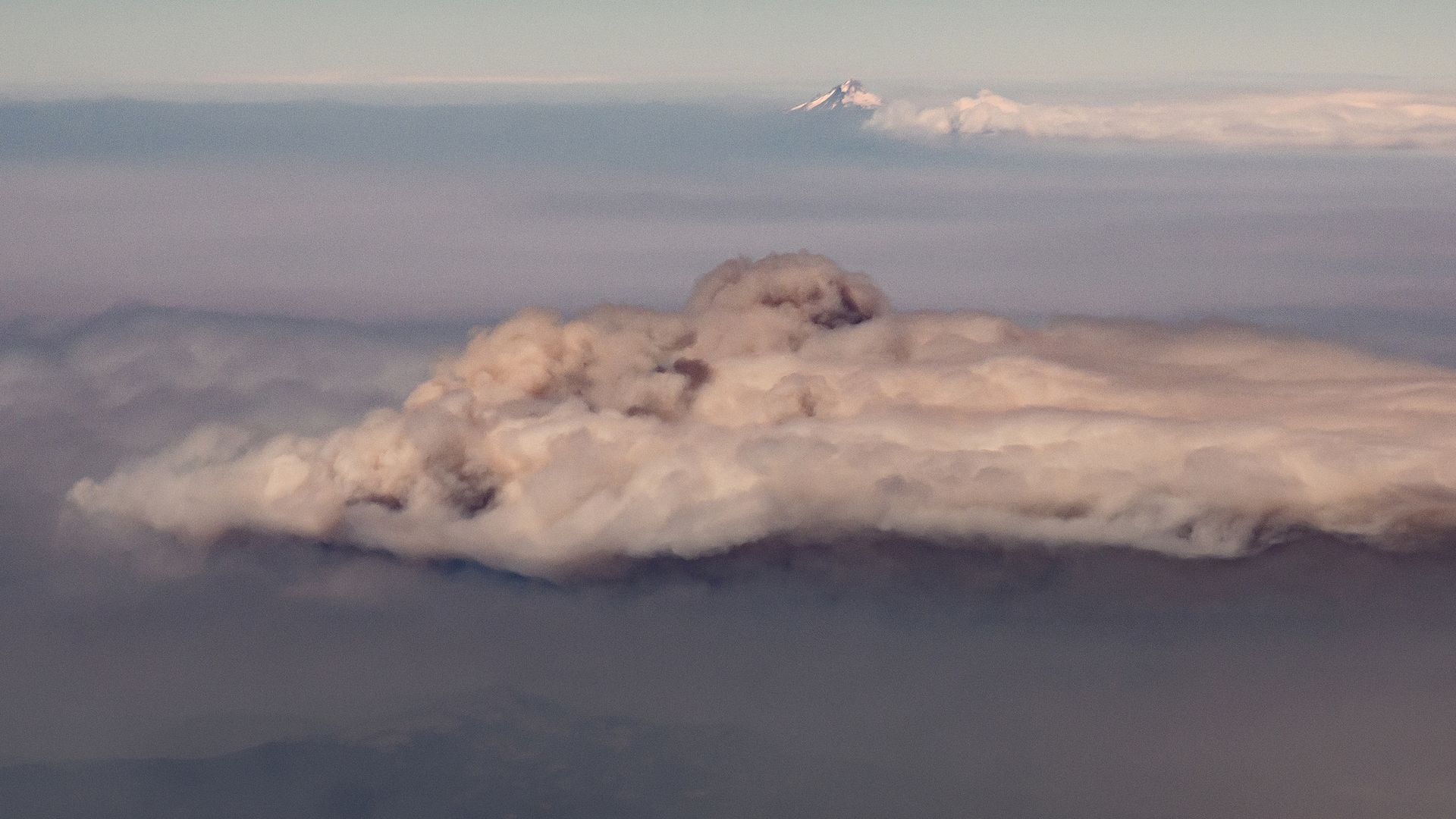
Smoke and evacuations forced Mount Hood Meadows to cancel all its summer operations last month. Photo: Josh Edelson/AFP via Getty Images
Longer periods of wildfire smoke are costing Oregon communities thousands in lost tourism revenue.
Why it matters: More smoke could reshape where and when people vacation in Oregon during the summer, a new Oregon State University analysis warns.
Zoom in: Todd Montgomery, director of OSU's Sustainable Tourism Lab, compared Air Quality Index measurements with lodging data from the Bend Visitors Bureau from 2021 to 2025 to see how smoke affected summer travel.
By the numbers: Short-lived smoke events had little impact on hotel bookings, Montgomery told Axios, but longer periods of poor air quality caused sizable losses.
- A sustained 10-point increase in Bend's AQI during August was associated with about $472,000 in lost lodging revenue, Montgomery found.
- And those effects can stack up, he said, with a 20-point AQI increase doubling the financial impact, a 30-point increase tripling it and so on.
Yes, but: Montgomery stressed that his analysis only captured losses in the lodging sector and didn't include the hit to restaurants, recreation and other tourism-reliant businesses.
Case in point: The research focused only on Bend, but similar patterns are likely playing out in smoke-stricken communities across the West, Montgomery said.
- Mount Hood Meadows was forced to cancel its summer operations — hiking, mountain biking and wedding events — in early August due to smoke and evacuations from the Grasshopper fire.
Zoom out: People still take vacations, even when they have to change plans due to smoke, Montgomery said, and those crowds could all end up further crowding the spots with cleaner air.
- "What if it got to a point where we're trying to cram as many people as we can on the coast in July and August?" he said.
What's next: The best-case scenario in our new, smokier reality would entail tourists extending their travel seasons into spring and fall to avoid the worst of the summer months.
- The worst-case scenario, Montgomery said, is that places like Bend become increasingly untenable summer destinations and tourists instead seek out ever more crowded refuges, stressing local infrastructure and resources.