Portland metro braces for major shelter cuts

Add Axios as your preferred source to
see more of our stories on Google.
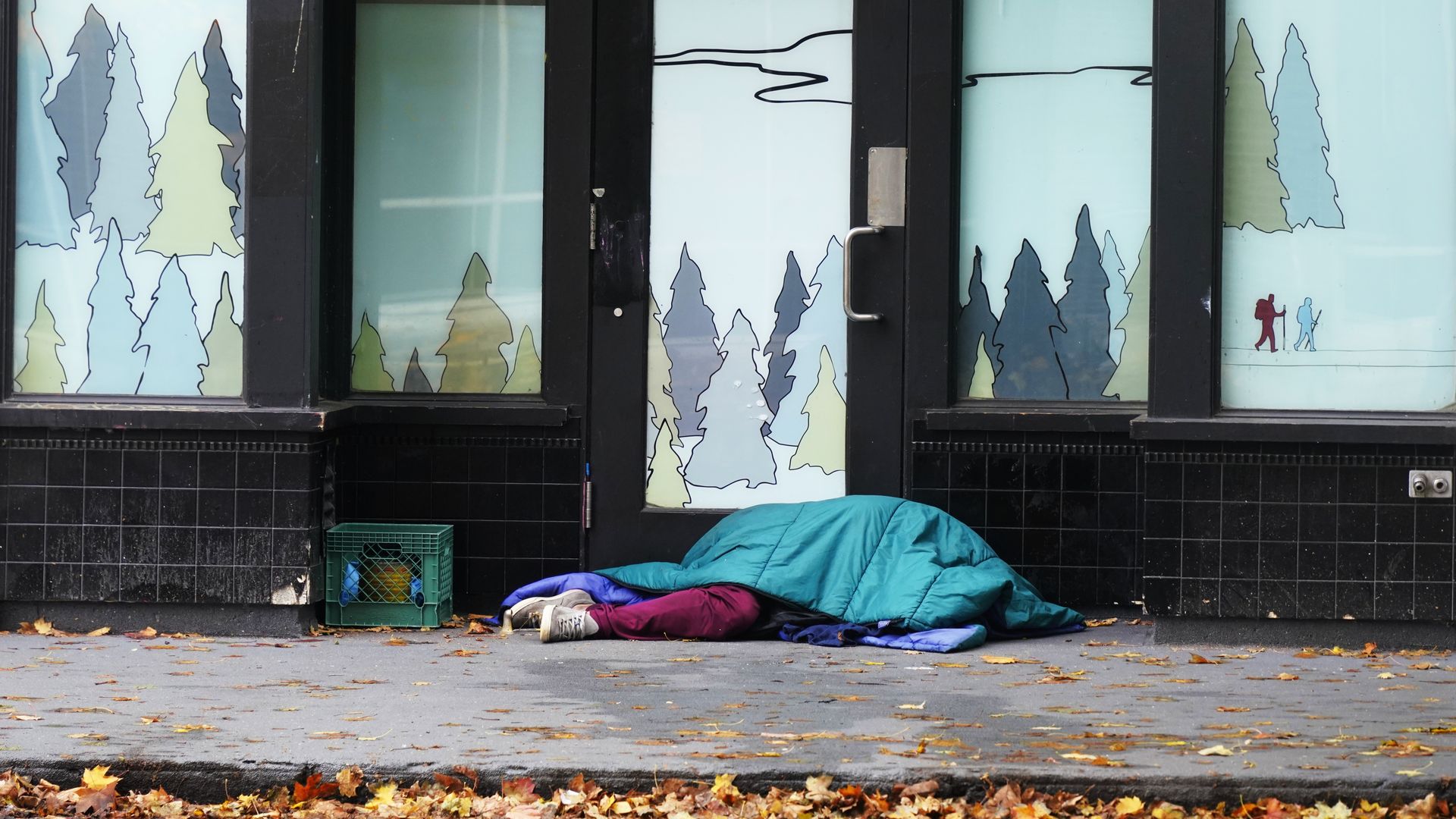
The crisis on our streets is likely to become much more visible. Photo: Wu Xiaoling/Xinhua via Getty Images
Portland and Multnomah County are preparing to eliminate more than 1,000 homeless shelter beds by the end of the year, unwinding roughly a third of the capacity that existed at the start of 2026, according to the Oregonian.
Why it matters: The cuts come as homelessness remains at record high levels.
By the numbers: Eleven shelters are expected to shut down across Portland and Multnomah County. About 800 people may be affected, according to Oregonian estimates based on average nightly stays.
- Day-use centers, street outreach and eviction-protection programs are also being reduced.
Catch up quick: Local leaders had rapidly expanded shelter since 2021 using a mix of Metro's supportive housing tax revenue, temporary pandemic aid, and surplus dollars that had gone unspent in the supportive housing tax's early years.
- Much of that money was always considered temporary.
- Now those reserves are drying up.
Meanwhile, declining Metro tax revenue and cuts in state, city and federal funding are squeezing the system.
Between the lines: The region is increasingly dependent on Metro's supportive housing tax, which pays for 61% of the county's homeless services, up from 42% in 2023, per the Oregonian.
Yes, but: The closures won't erase the progress the region has made.
- Multnomah County is still expected to have about 1,500 more shelter beds in 2027 than it had just five years ago.
Plus: The Metro tax has helped house more than 10,000 people and has prevented another 21,000 from becoming homeless in that time, too.
Still, the system has struggled. Just 16% of people leaving city- or county-funded shelters in fiscal year 2025 exited to permanent housing, according to a January report.
What we're watching: Local leaders said they plan to shift dollars away from shelters and toward helping people find more permanent housing, yet they warned homelessness is likely to rise and become more visible on our streets.