How Growing Gardens is planting food sovereignty

Add Axios as your preferred source to
see more of our stories on Google.
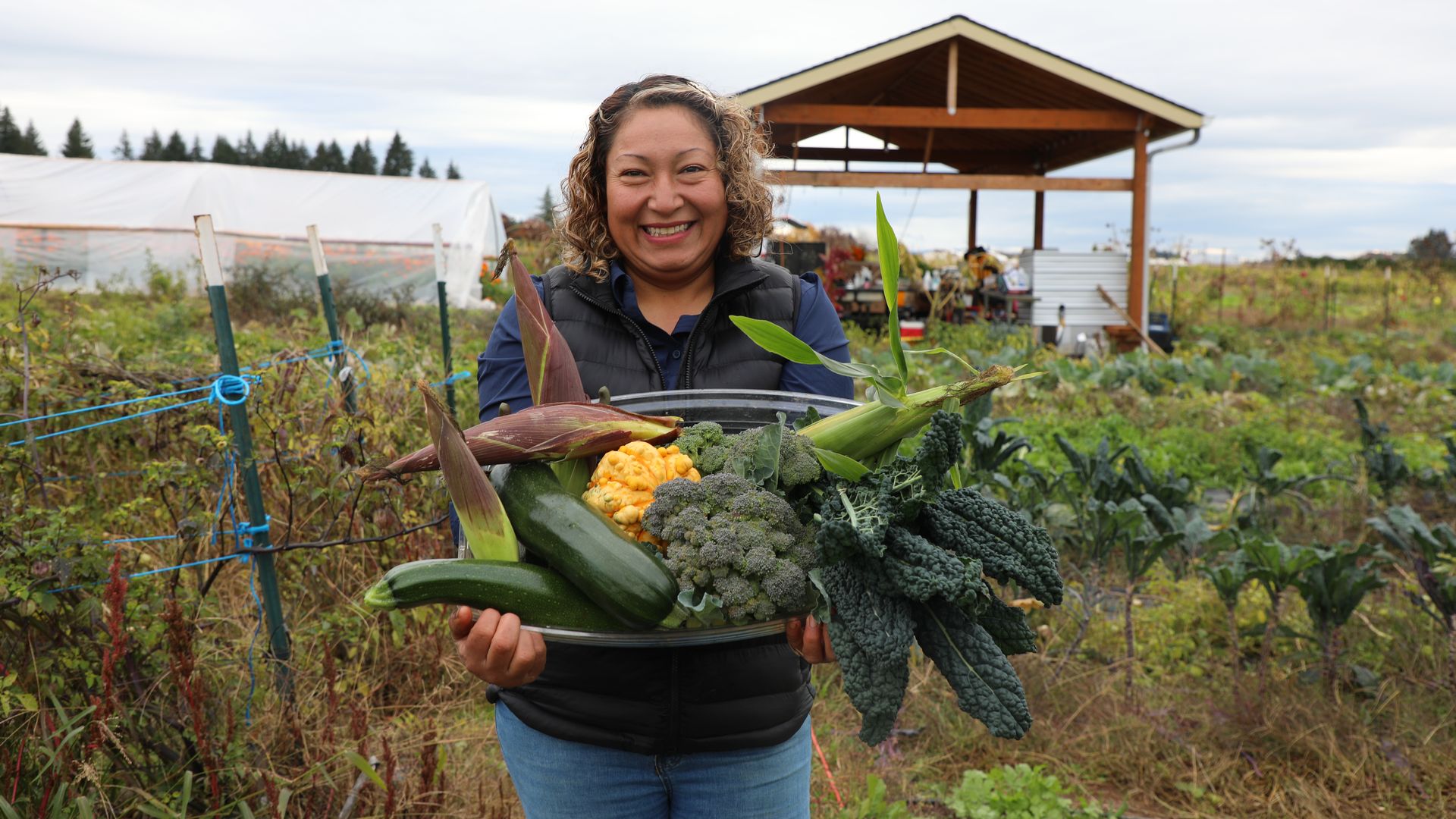
The goal is to build food independence, one harvest at a time. Photo: Courtesy of Growing Gardens
For more than three decades, a Portland-based nonprofit has planted thousands of gardens in low-income neighborhoods, schools and prisons across the state to reduce food insecurity.
Why it matters: As rising grocery costs strain budgets and federal cuts limit food assistance for more families, Growing Gardens' mission isn't about providing meals, but giving people the skills and support to produce their own.
- "We feel that teaching people to grow can contribute to long-sustaining food sovereignty," development manager Thuy Pham told Axios.
Catch up quick: Growing Gardens started as a grassroots organization in 1996 focused on bringing fresh food into Oregon prisons.
- Since then, it's expanded to provide horticulture education at nearly a dozen Portland-area Title I schools and has installed garden beds at more than 3,000 households.
- Food grown through the school program is used in the cafeteria and sent home through take-home cooking kits to help "build curiosity" among students, Pham said.
Plus: The nonprofit now works in 14 prisons across Oregon ranging from minimum security to maximum security.
- Roughly 350,000 pounds of fresh food is grown on Department of Corrections land per year, 95% of which is used in prison kitchens.
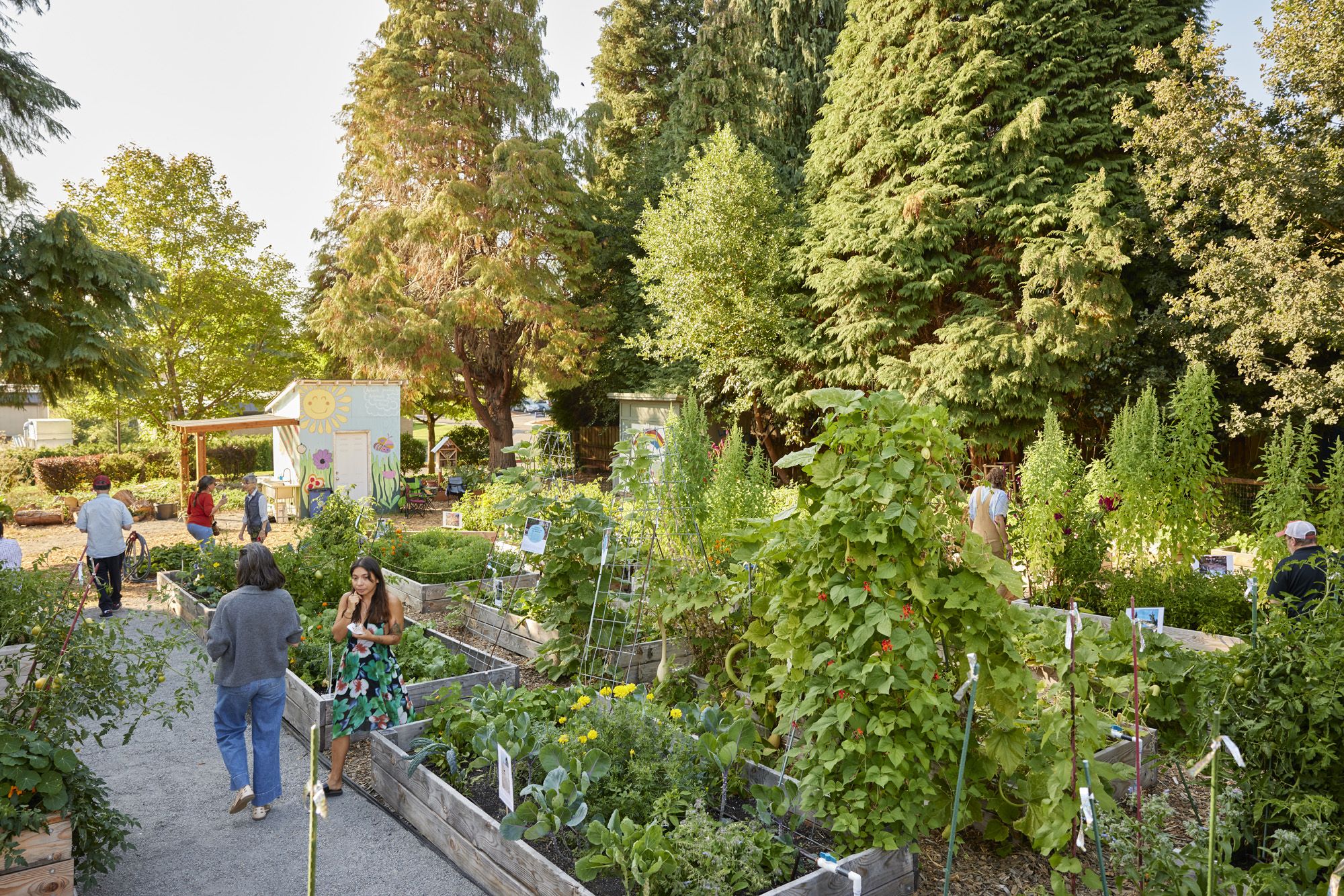
How it works: Growing Gardens doesn't just install a garden bed and then leave. Its home gardening program, which is geared toward low-income households, includes three years of mentorship — staff provide the plant starts and instructions and help turn the garden at the end of the season to prepare for spring.
- Participants choose what they want to grow and eat, and Growing Gardens cultivates those plants in its greenhouse before distributing them.
- "We are there throughout the whole process," Pham said. "We're going to put this knowledge in your hands. If you don't want to grow your own food, you don't have to."
That support is translating into savings: 92% of participants surveyed last year said growing their own food lowered their grocery bill, according to Growing Gardens' internal statistics shared with Axios.
What's next: Growing Gardens is scaling up its reach. Its six-greenhouse network launched last year to serve the wider tri-county area and produced 54,000 plant starts earlier this spring.
- "We just want to remind people of the things that they can do for themselves," Pham said.
If you go: Growing Gardens' "Chef in Your Garden" 30th anniversary dinner is Aug. 29 at 5pm at the Redd on Salmon (831 Southeast Salmon St.).
- The three-course, family-style dinner will be led by Alexa Numkena-Anderson of Indigenous restaurant Javelina with produce from Mr. Farms.