Rail merger puts Portland train delays in spotlight

Add Axios as your preferred source to
see more of our stories on Google.
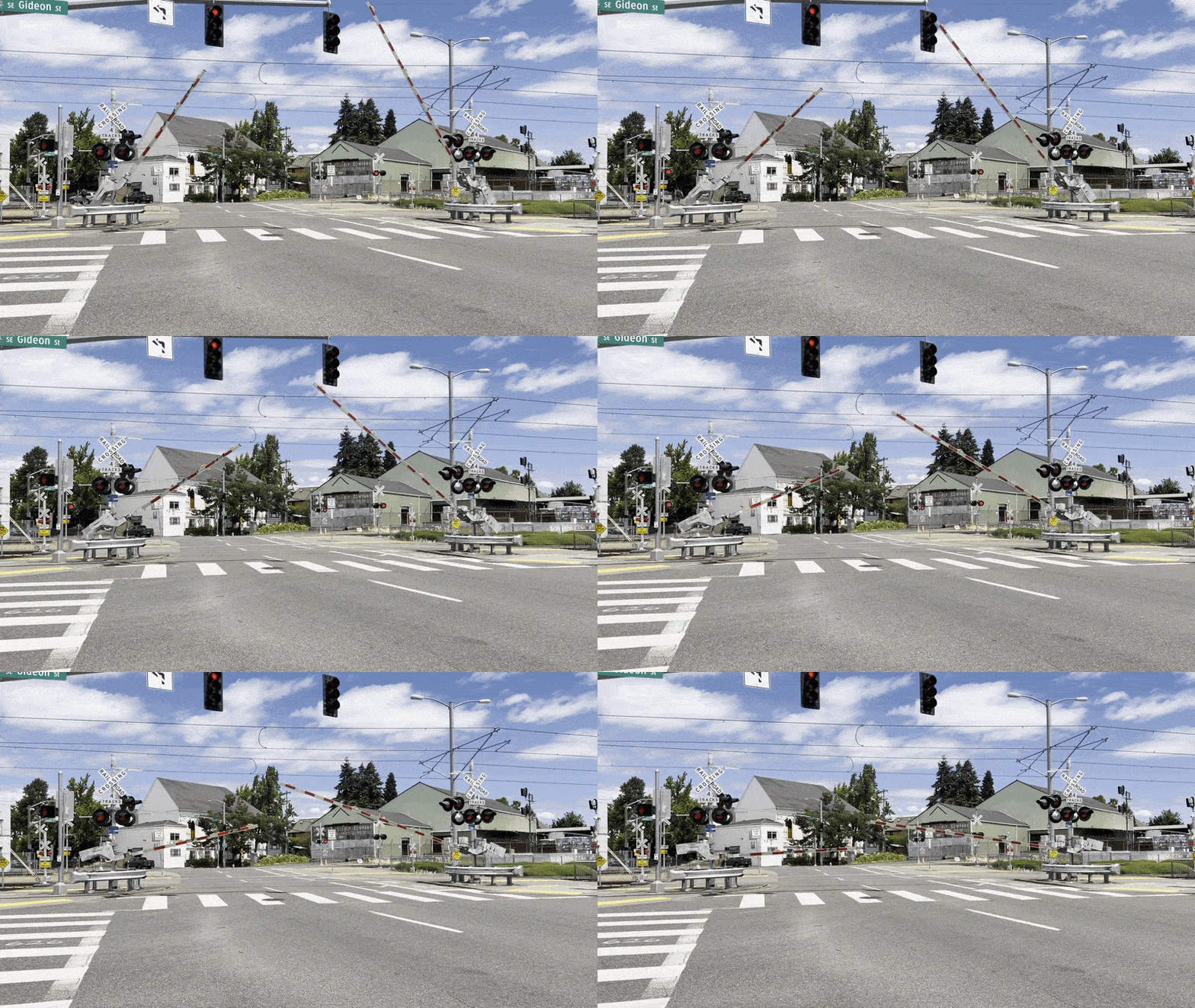
The train crossings in inner Southeast Portland are infamous for their extended delays, and the problem is getting new attention as two freight giants contemplate a merger.
Why it matters: Portland officials see the merger review process as a rare chance to push rail operators to address lengthy crossing delays that have become one of the biggest annoyances for Portland drivers.
Driving the news: Union Pacific is pursuing an $85 billion merger with Norfolk Southern, according to Willamette Week.
- The merger, if approved, would result in a 22% increase in rail traffic through Portland.
- The city filed notice of its intent to comment on the merger last week, with Councilor Steve Novick pushing to rein in the rail company and its associated delays.
Zoom in: Anyone who's driven through Southeast Portland near Division and 12th knows the rage that boils up when the crossing gates come down.
- Trains originating out of Union Pacific's Brooklyn Yard can reach lengths of up to 3 miles, and unlucky drivers can suffer waits stretching for hours.
- The problem is bad enough that there's an app called TrainSnap, developed in Portland, that tracks the status of rail crossings in real time.
Stunning stat: The crossing at 12th and Division is blocked for an average of 186 hours per month — more than a full week — according to TrainSnap.
Zoom out: The merger has plenty of opponents, the largest of which is Union Pacific's biggest competitor, BNSF Railway.
- But local Portland groups are also hoping to weigh in to exact some concessions from the rail company as part of the merger.
Between the lines: Solutions range from simple and cheap to complex and expensive, rail transportation consultant Bill Burgel told OPB's Think Out Loud.
- City-owned lots next to the crossing at 11th and Division could be repurposed to allow stuck drivers to escape, but that's more Band-Aid than cure.
- Union Pacific could run shorter trains, but that would cut into its profits.
- Overpasses could be built at the most problematic intersections, but those would each likely cost $50 million or more and it's unclear who would pay, Burgel said.
The bottom line: "Since I believe in competition, as an American, I hope the merger doesn't happen," Novick told Willamette Week.
- "But if we can leverage that merger to end that annoyance it will be one of the greatest days in Portland history."