Columbia Slough cleanup brings neglected waterway back to life

Add Axios as your preferred source to
see more of our stories on Google.
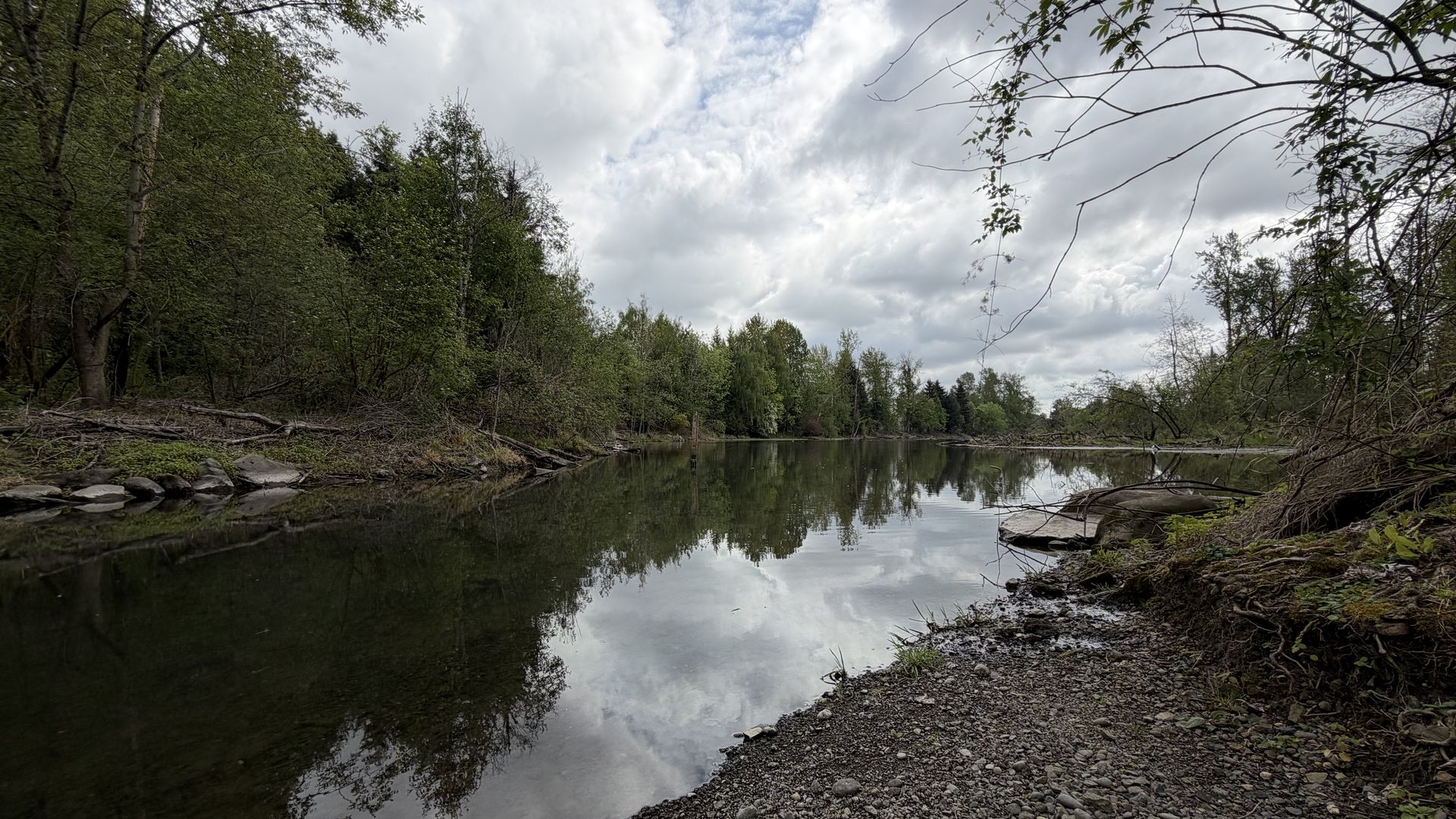
A stretch of the newly rejuvenated Columbia Slough near I-205. Photo: Kale Williams/Axios
Behind a chain-link fence at the end of a road in Northeast Portland, a stretch of one of the city's most neglected and polluted waterways is getting new life.
Why it matters: The Columbia Slough, which runs parallel to the Columbia for about 19 miles, has been turned into a natural oasis in a heavily industrialized pocket of Portland.
- The area, near I-205, has been transformed from a thicket of aging, unstable dogwood trees, blackberry bushes, and invasive plants to a rejuvenated riparian ecosystem.
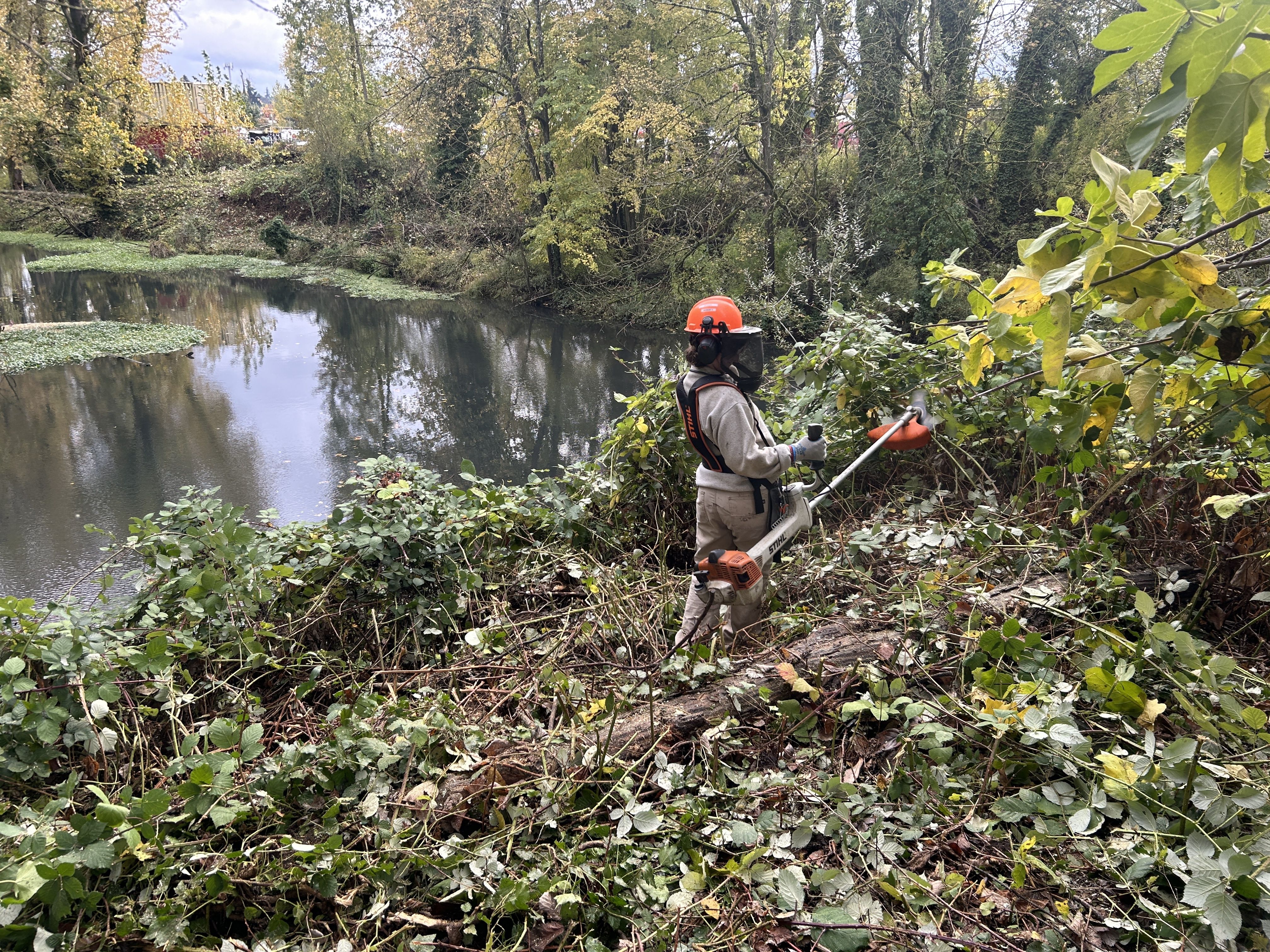
The project was spearheaded by the Columbia Slough Watershed Council as part of its Healthy Industrial Lands Initiative, with help from environmental restoration firm Mosaic Ecology and in partnership with more than a dozen landowners.
What they're saying: Chad Honl, one of those property owners, has been taken aback by the difference.
- He grew up in Portland and remembers canoeing in the Slough as a kid, when chemicals tinted the water bright blues, greens and coppers.
- "It was so polluted," Honl told Axios. "I'm amazed at the clarity of the water now."
By the numbers: Over the last roughly 18 months, the 16-acre area has undergone a complete overhaul.
- Tons of trash were removed — including a full-size oven — and more than 20,000 native trees and shrubs have been planted, along with an untold number of wildflower seeds.
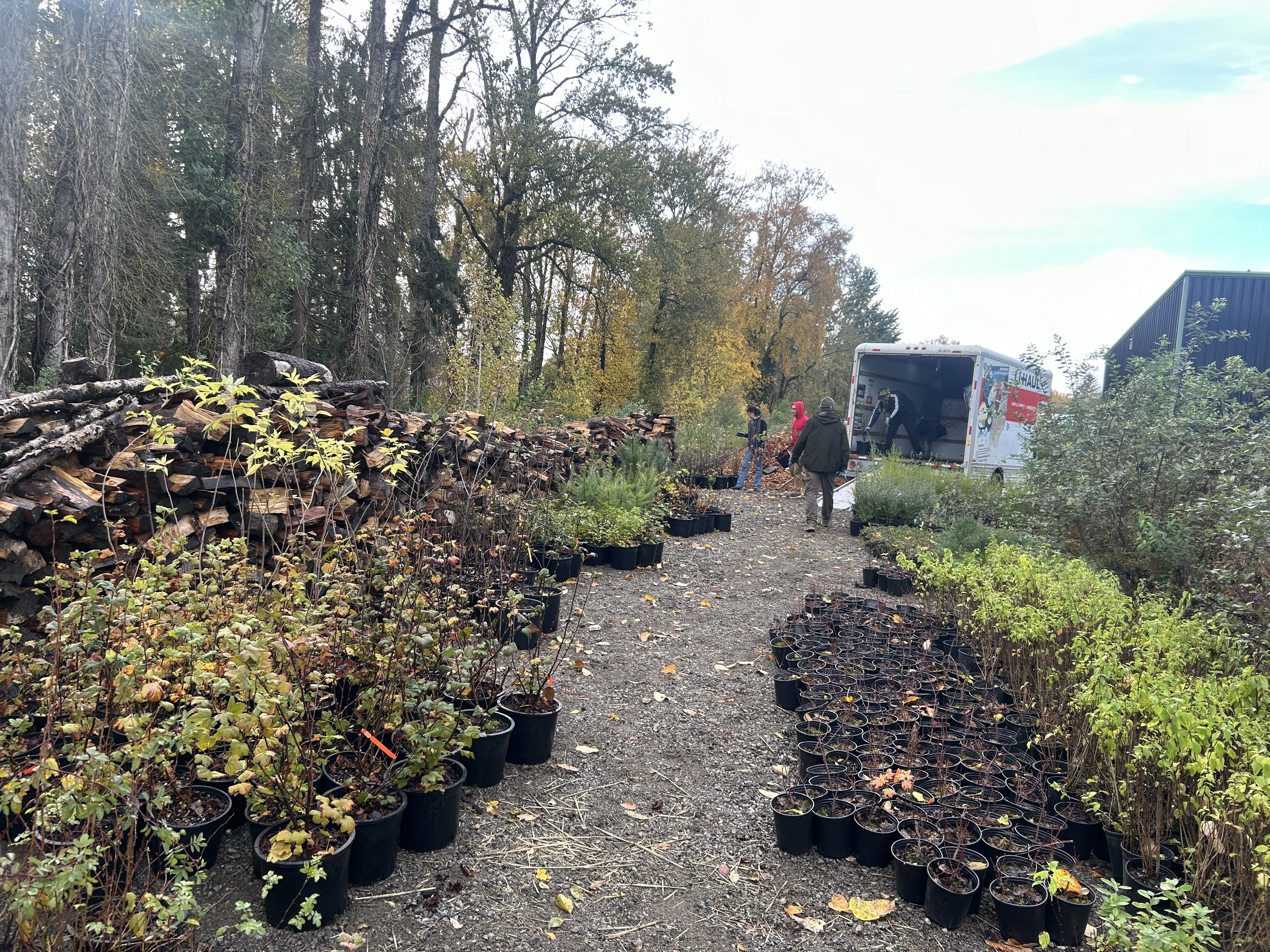
- The project was funded through a nearly $200,000 grant from the Oregon Watershed Enhancement Board.
Yes, but: The project hasn't been without its challenges, Alex Staunch, a natural resource scientist with Mosaic, told Axios.
- It's been hard to connect with some property owners, and it's taken some cajoling to convince others the work is free to them and not a scam.
- Others have wanted to keep their thorny blackberry bushes as a deterrent to trespassing.
As a secluded area, managing dumping and trash will always be an issue, but it's become much more manageable now that the land is clear, Staunch said.
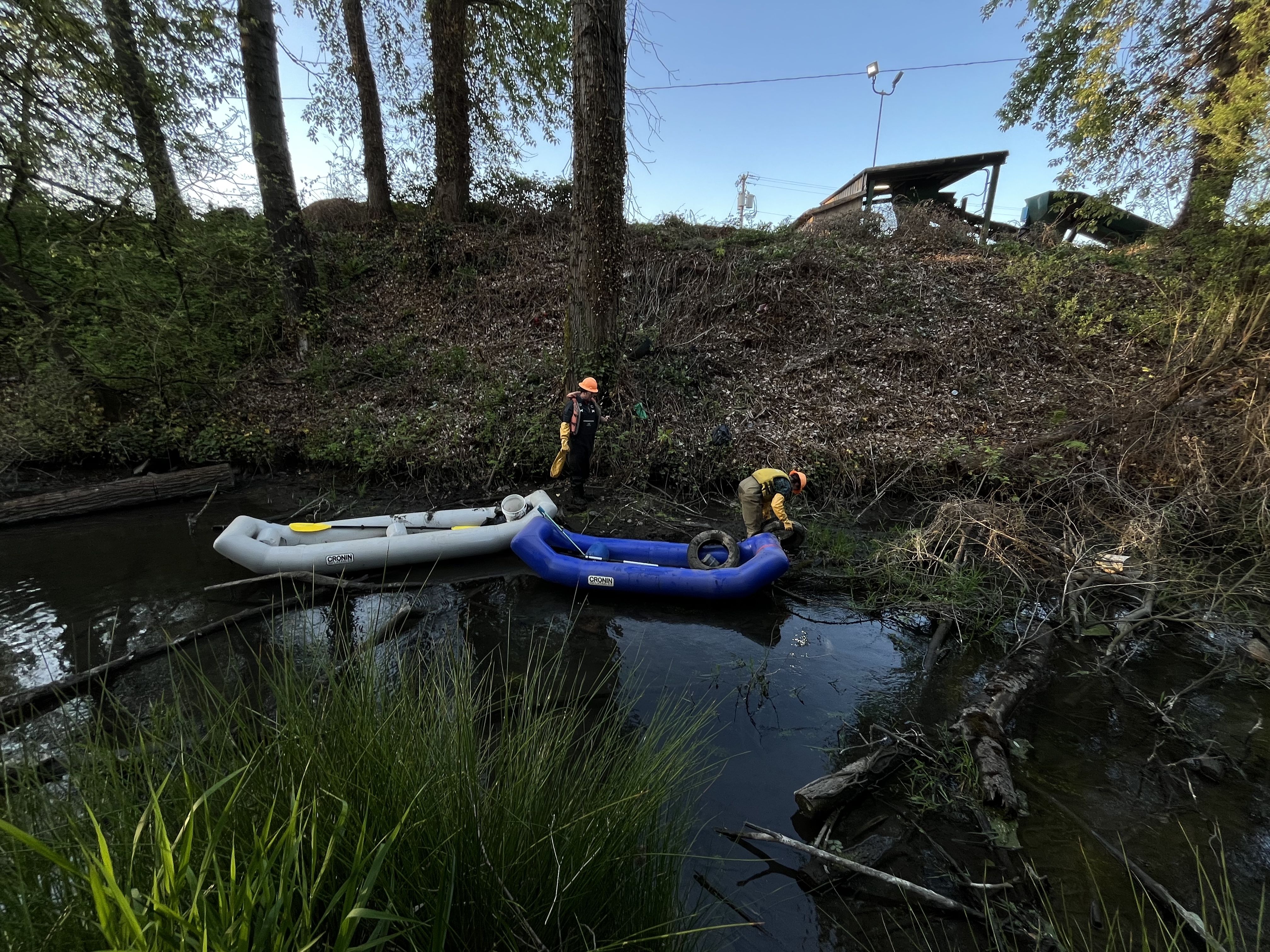
"Natural areas in urban environments will always require some level of management," he said. "But our primary goal was to support the natural process."
What's next: Amanda Gallegos, executive director of the watershed council, said they've already begun planning to transform more areas of the Slough.
- "There's not funding for that yet," she told Axios. "But the goal of this was to show that it's possible."