Blazers doc revisits turbulent early 2000s era

Add Axios as your preferred source to
see more of our stories on Google.
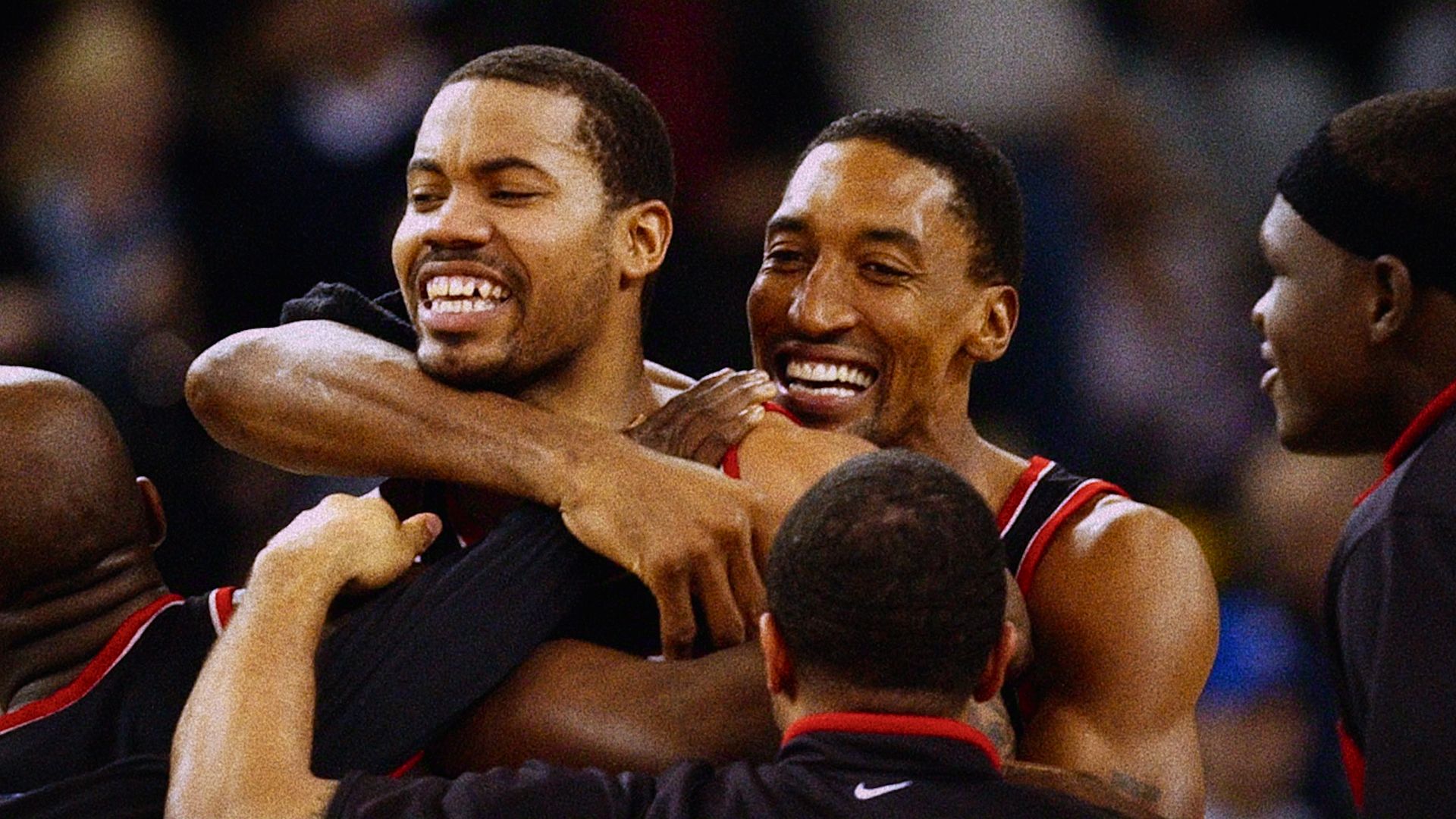
Did the Trail Blazers of the early 2000s get a fair shake? A new documentary tries to find an answer. Photo: Courtesy of Netflix
Netflix is out this week with a look back at the early 2000s Blazers, a talented and troubled squad that came close to competing for a championship but was plagued by on- and off-court drama.
Why it matters: "Untold: Jail Blazers" offers the perspectives of the players, fans, media members and management on the turbulent time for Rip City, but adds little new insight beyond what fans already know.
- Still, it was interesting to revisit the chaos and think about what might have been.
Catch up quick: The era began when Blazers owner and Microsoft billionaire Paul Allen hired Bob Whitsitt as general manager and effectively gave the GM a blank check to build a championship team.
- Portland is a small-market team, not likely to attract superstars, so Whitsitt built his roster by "taking damaged guys, guys who had been in trouble," former Oregonian sports columnist John Canzano said in the documentary.
- Rasheed Wallace, Damon Stoudamire and Bonzi Wells would come to define the team, for better and for worse.
Flashback: The Blazers made it to game seven of the Western Conference Finals in 2000, one game from the NBA Finals, but lost to the Lakers and "that's when everything started happening," Wells said.
- Stoudamire and Wallace were busted smoking weed while driving back to Portland from a game against the Seattle SuperSonics.
- Stoudamire's Lake Oswego home was searched by police, who discovered a pound of weed in his attic, though the charges were dropped after the search was found to be illegal.
- Over the next few seasons, Whitsitt brought in Shawn Kemp, who checked into rehab for a cocaine addiction mid-season; Ruben Patterson, who was a registered sex offender; and Zach Randolph, who had run-ins with the law several times for underage drinking, drag racing and possessing loaded firearms.
In a majority-white city like Portland, Wallace said a group of young, wealthy Black men never quite fit in.
- "We're loud, boisterous, riding around in our big cars smoking weed," he said. "It was a culture shock."
The big picture: The team would never get close to the success of the 1999-2000 season, making the playoffs each of the next three years, but never advancing past the first round.
- Fans soured on the team, and Wallace, Wells and Stoudamire were eventually shipped to other teams.
The bottom line: The documentary does a fine job rehashing the highs and lows of the early 2000s Blazers, with some previously unheard voices from inside the locker room.
- But for fans who lived it, the film does little to break new ground, even as it takes us for a sometimes-bumpy walk down Blazers memory lane.