How Futel is bringing free public phones back to Portland

Add Axios as your preferred source to
see more of our stories on Google.
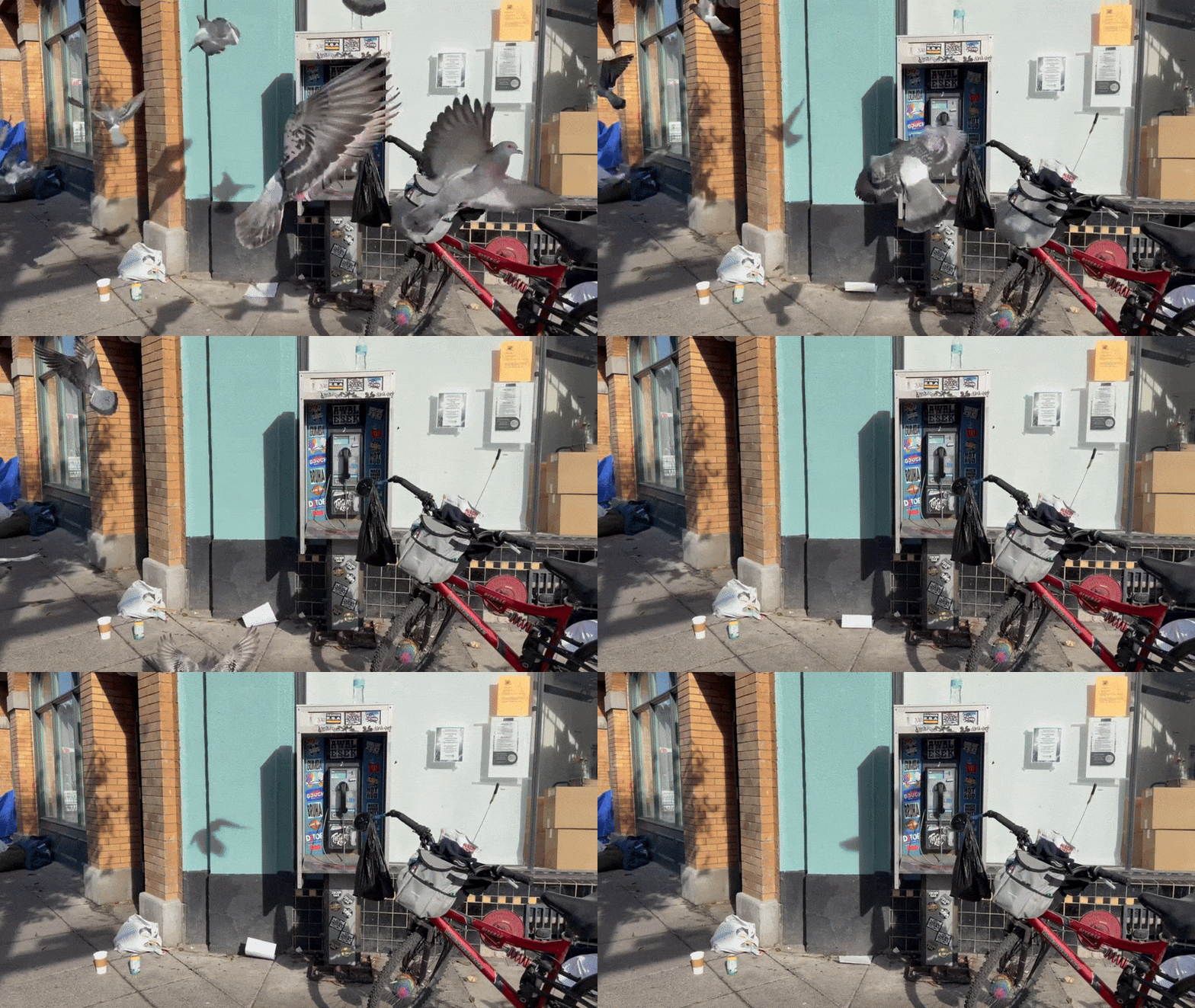
Most people will pass these weathered Portland phone booths without a second thought. But for those who stop, it's the difference between being cut off and connected.
Why it matters: Payphones are basically extinct, but a volunteer-led project called Futel is putting them back to work, turning obsolete technology into public infrastructure, as well as a place to engage with interactive art.
Catch up quick: Software engineer Karl Anderson began Futel in 2014 when he installed a payphone booth in his front yard near the Springwater Corridor. He noticed some of his neighbors and unhoused people nearby couldn't consistently keep a cellphone due to cost.
- Anderson sourced a salvaged payphone booth from a former installer and connected it to his home internet instead of a traditional landline.
- Within weeks, dozens of people were regularly stopping by, even though the phone wasn't labeled or advertised.
The initial response convinced Anderson to expand.
- "When I started the project, people would say, 'Everyone has a cellphone; even homeless people have cell phones," he told Axios. "But it's just been shown to be very useful."
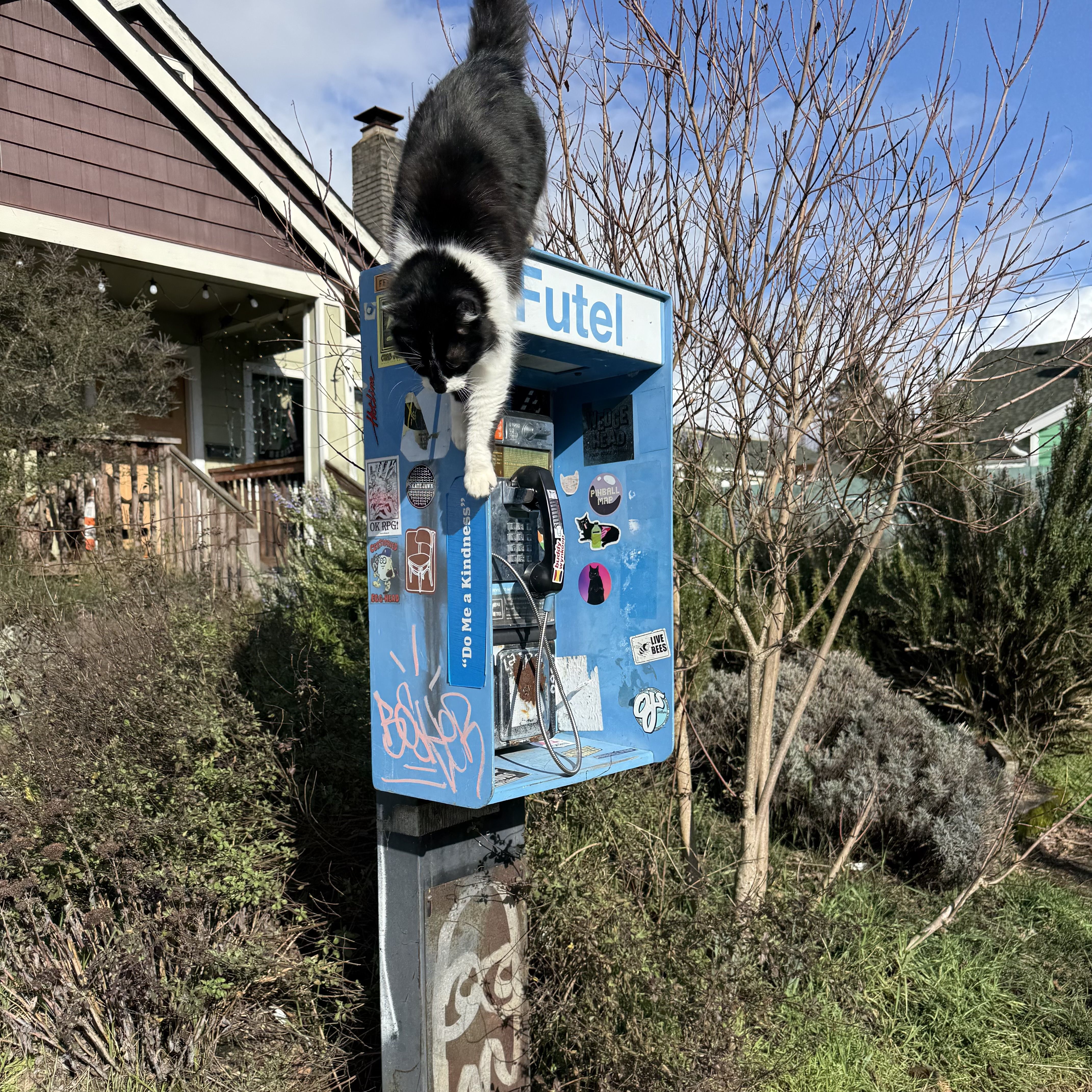
By the numbers: Over the last decade-plus, Futel has installed roughly 20 phones in Portland and a few others in Washington and Michigan. Anderson has partnered with nonprofit organizations like Sunnyside Shower Project and Street Roots, as well as private property owners who donate space, electricity and internet access.
- Last year, more than 35,000 phone calls were made using Futel phones, Anderson said.
- "There's no money in giving away free phone calls," he added.
- The project is funded by grants and donations and supported by a group of two dozen-ish volunteers.
Zoom in: Futel phones give users more than just the option of making an outgoing call. Anyone can set up a voicemail box and access directories for social services like 211, the mental health crisis line and Ride to Care.
- Yes, but: There are also numbers you can call to hear spoken-word poetry, play "choose your own adventure"-style phone tag games and leave an anonymous apology (inspired by a 1980s New York project).
The bottom line: Anderson said Futel will continue to grow, albeit slowly — limited by cost and upkeep. He's open to growing into other cities, but needs on-the-ground help so he can provide the back-end management.
- "I'm making this up as I go along," he said. "Everyone needs to use whatever power they have for good. This is something I can do."