Portland ramps up RV towing, but doesn't always track outcomes

Add Axios as your preferred source to
see more of our stories on Google.
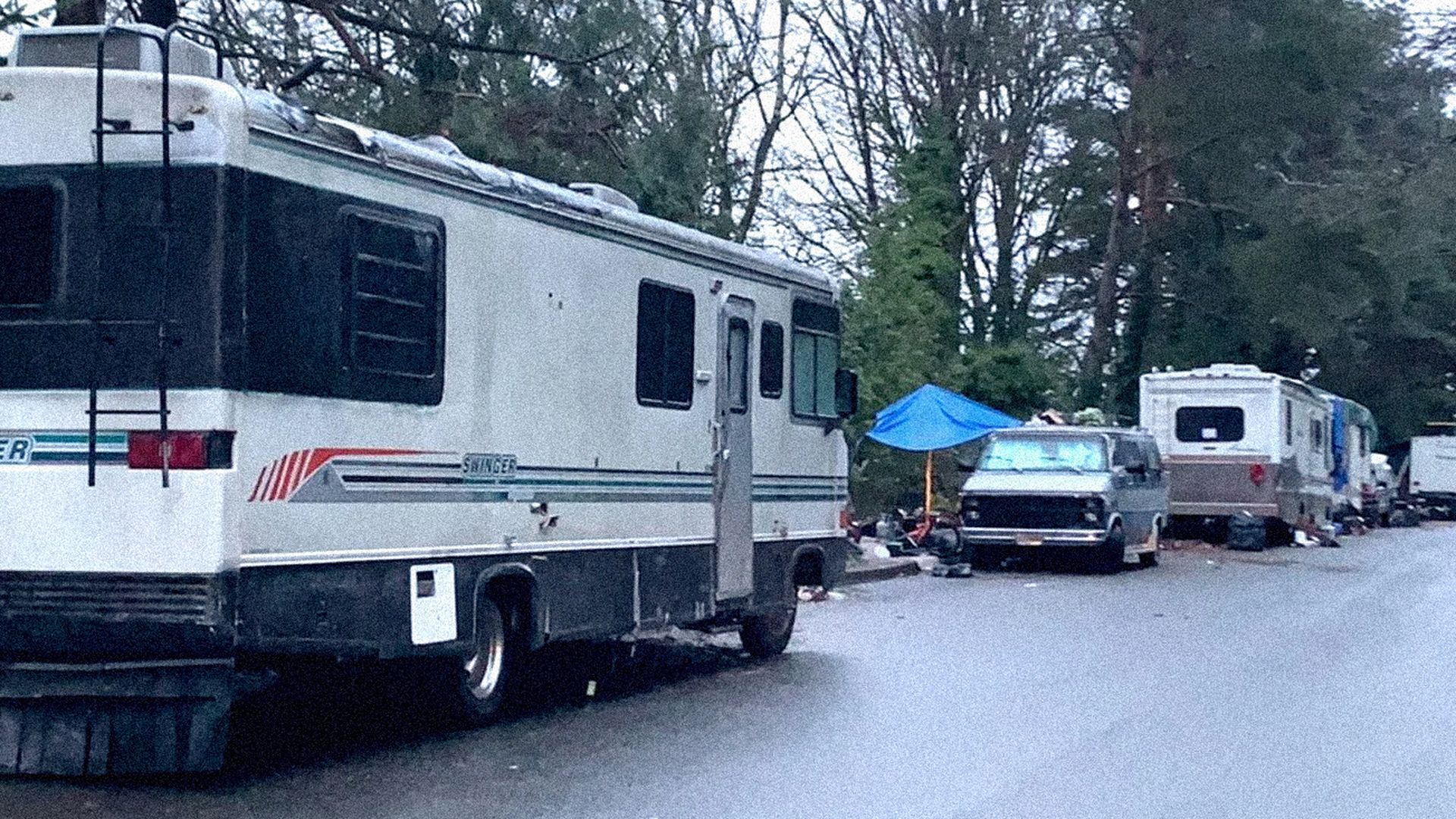
The cost of ticketing, towing and demolishing lived-in RVs has risen steadily over the past few years. Photo: Courtesy of the City of Portland
While Portland has increased spending to remove lived-in RVs from city streets, it has reduced dedicated RV shelter capacity and doesn't always track what happens to people after their vehicles are towed.
Why it matters: Removing lived-in RVs is a sanitation and safety measure as well as a key part of Portland's homelessness response.
- Spending on ticketing, towing and disposing of lived-in RVs has climbed in recent years. The city projects it will spend about $4 million on the effort by the end of this fiscal year in June, up from just under $1 million in 2022.
Catch up quick: When Portland closed the 55-space Sunderland RV Safe Park in September, it eliminated one of the few places for those living in vehicles to go. The city now operates a single dedicated RV shelter in North Portland with 70 spaces.
- Last year, Mayor Keith Wilson secured budget funding to double the city's derelict RV tow rate and reinstated fees — upward of $350 — in September for those seeking to reclaim towed lived-in vehicles.
- Wilson has previously described RVs as unsafe and unsanitary and has said ramping up removals is intended to push people toward the overnight-only shelters his administration has been rapidly expanding.
Threat level: Many older RVs pose fire risks, including frequent fires tied to improvised heating and cooking, as well as health risks from asbestos and mold found in deteriorating vehicles.
What they're saying: "Increasing towing capacity and reinstating towing fees are helping us address those hazards and improve conditions on city streets," Wilson said in an emailed statement. "Our goal is to move people out of unsafe vehicles and into shelter options that are simply much safer."
- "Towing is just one tool within a broader strategy to reduce harm and connect people with healthier, more stable alternatives."
State of play: Most towings of lived-in vehicles start with a resident complaint. The city receives anywhere from 1,500 to 2,000 campsite reports every week, according to Laura Rude, a spokesperson for the city's Impact Reduction Program, "and a good chunk of those are about vehicles."
- Once a vehicle is deemed unsafe or derelict, it's routed to the Portland Bureau of Transportation, which tags it and gives the occupants notice of at least 72 hours — and up to 10 days — to move it, unless it's creating an immediate hazard.
- Towed RVs go to either the city-owned Guilds Lake yard or Speed's Towing, a private lot, and are held for about 45 days before being demolished.
Between the lines: To reclaim a towed RV, proof of ownership, insurance and a valid driver's license are required, along with tow fees and — if the RV doesn't run — private towing help.
- In the last three months of 2025, only 13 of 254 towed RVs were retrieved, according to Rude.
The bottom line: The city does not routinely track people after their RV is towed unless they enter the shelter system, Rude said.
- Outreach workers occasionally accompany PBOT during RV removals to offer referrals to services, but not every time.
- "It's just a capacity issue," Rude said. "We don't have the staff to do it."