Portland's housing crisis squeezes middle-income buyers


Add Axios as your preferred source to
see more of our stories on Google.
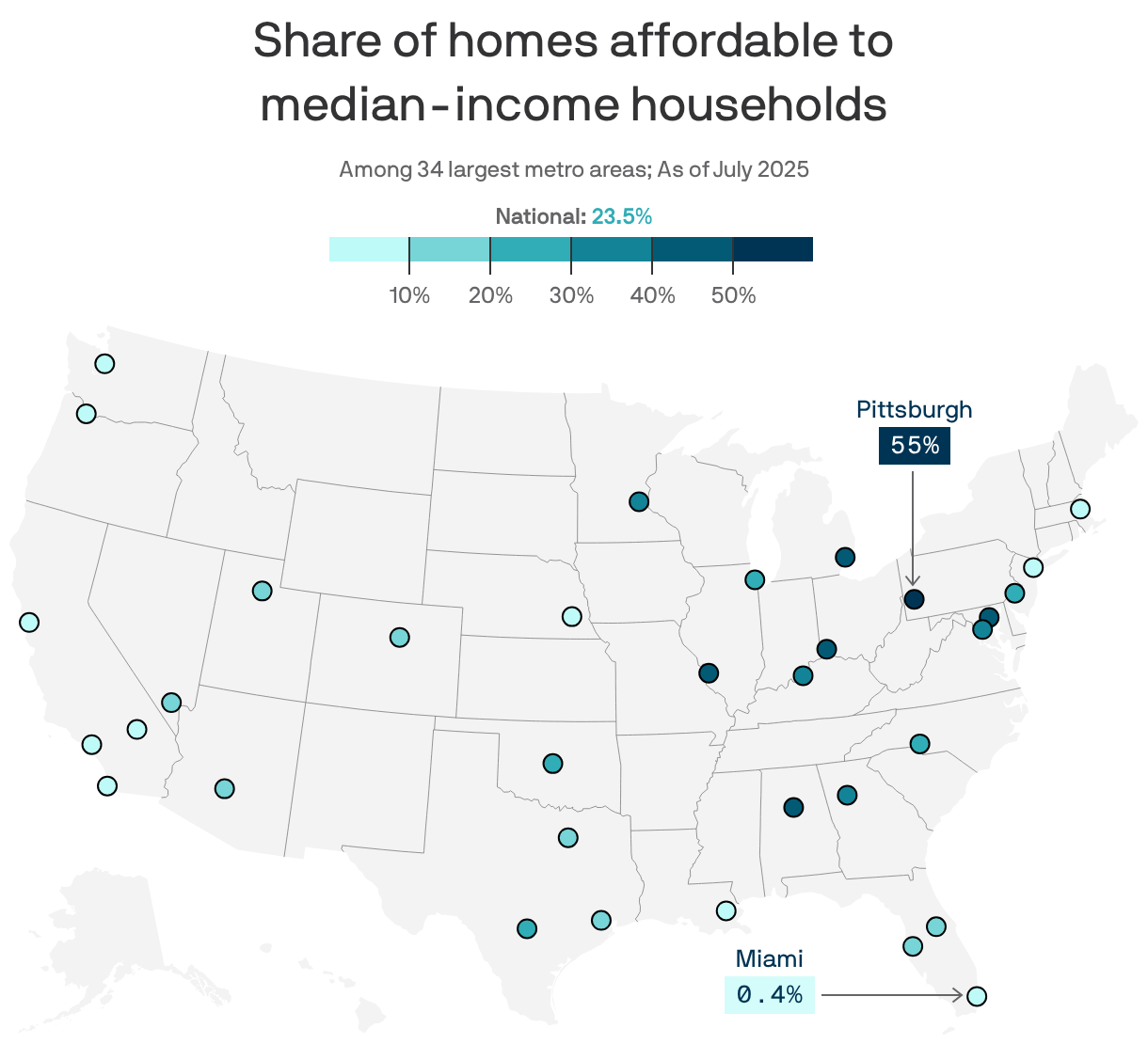
Nearly 90% of Portland metro homes on the market are unaffordable to the typical household, according to a Bankrate analysis.
Why it matters: That's higher than the national rate of 75%, reflecting the reality of a region where housing affordability remains one of voters' top concerns, per a survey released by the Portland Metro Chamber earlier this month.
The big picture: Persistently high home prices and mortgage rates are only part of the squeeze. In many places, including Oregon, there simply aren't enough homes available.
State of play: In 2023, Gov. Tina Kotek set a goal of building 36,000 new homes per year — mostly in the Portland and Willamette Valley region where the state's housing shortage is most acute.
- She signed a package of laws last year aimed at streamlining approvals, easing financial and infrastructure barriers for developers and spurring the construction of middle housing and modular homes.
- Yes, but: Developers only pulled a little more than 14,000 residential permits in 2024, and preliminary data shows less than 11,200 permits were issued for 2025.
By the numbers: In the Portland metro, only about 9% of homes are affordable to households earning the median income of $95,000, per the analysis.
- In only 11 of the 34 largest U.S. metros do at least 30% of listings fall within reach of middle-income households.
The bottom line: Regional affordability gaps largely come down to new construction.
- "Without a meaningful increase in housing supply, particularly in places where people want to live and work, affordability is unlikely to improve even if mortgage rates ease," Bankrate data analyst Alex Gailey told Axios.