Portland's kid population keeps dropping


Add Axios as your preferred source to
see more of our stories on Google.
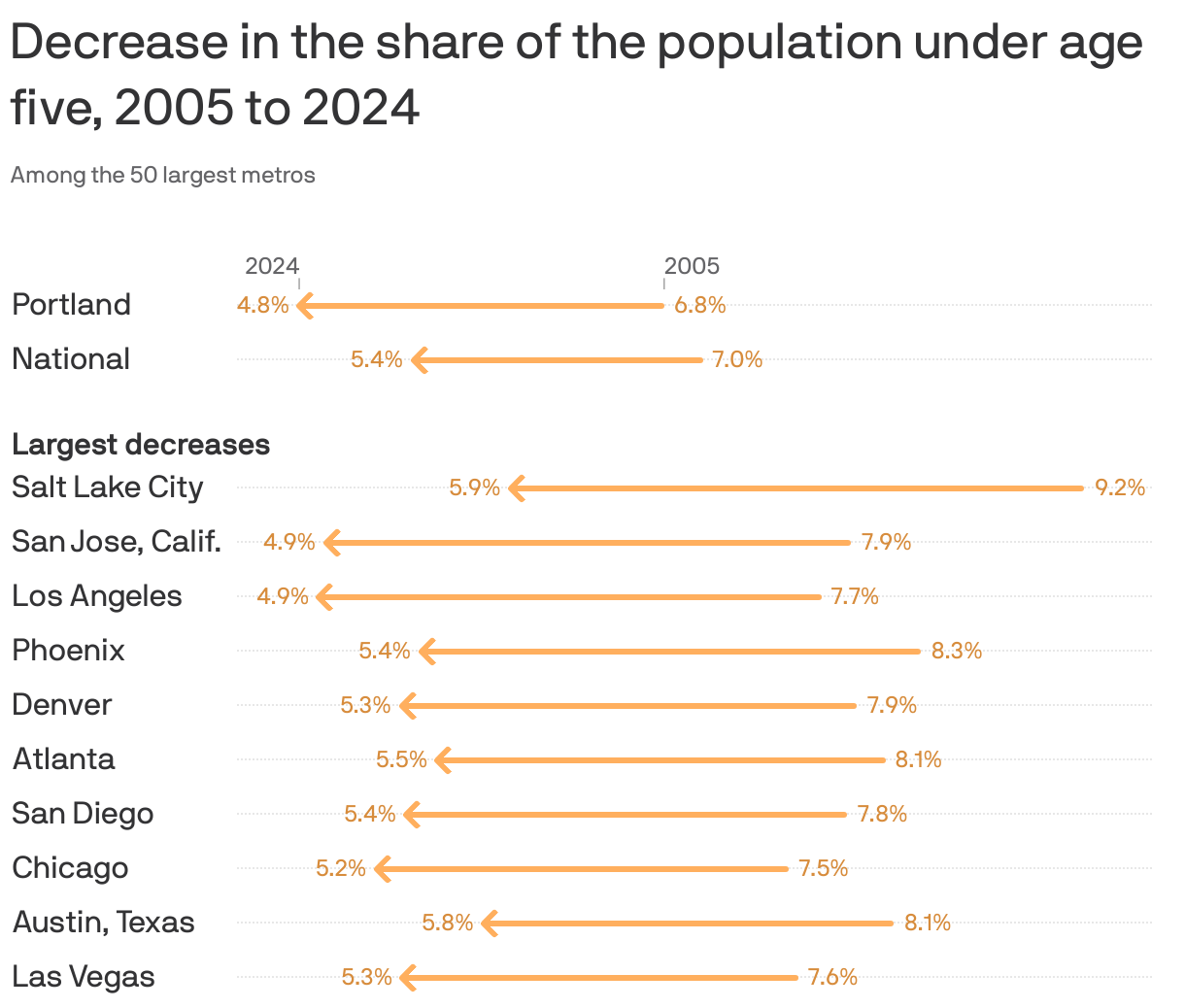
Young children's share of the population in the Portland metro area dropped from 6.8% to 4.8% over the past two decades, census data shows, mirroring national trends.
Why it matters: The child population trend can reflect cities' ability to attract, retain and support families.
- But larger nationwide factors are also at play, including birth and death rates as well as immigration.
Zoom in: Oregon has one of the lowest birth rates in country — above only Washington, D.C. and Vermont — and it is expected to have a strong influence on the state's demographics and economy in the coming decades.
- Plus: Oregon's birth rate is now below replacement level — meaning Oregon's economy is fully reliant upon migration for population growth.
Zoom out: Some experts link Oregon's low birth rate to the fact that we are an older state with a median age around 40.
The big picture: The U.S. birth rate hit a record low in 2024, while life expectancy is approaching 80 following a pandemic-era dip.
- Those data points might suggest children will make up less of the overall population over time — fewer kids, more older folks.
- Yet the country grew around 1% between 2023 and 2024 — breakneck speed, as such things go — driven primarily by immigrants (including children, complicating the births vs. deaths picture).
What we're watching: The Trump administration's efforts to clamp down on and dissuade illegal immigration could affect the child population share in ways not yet well understood.