Police funding measure targets clean energy tax

Add Axios as your preferred source to
see more of our stories on Google.
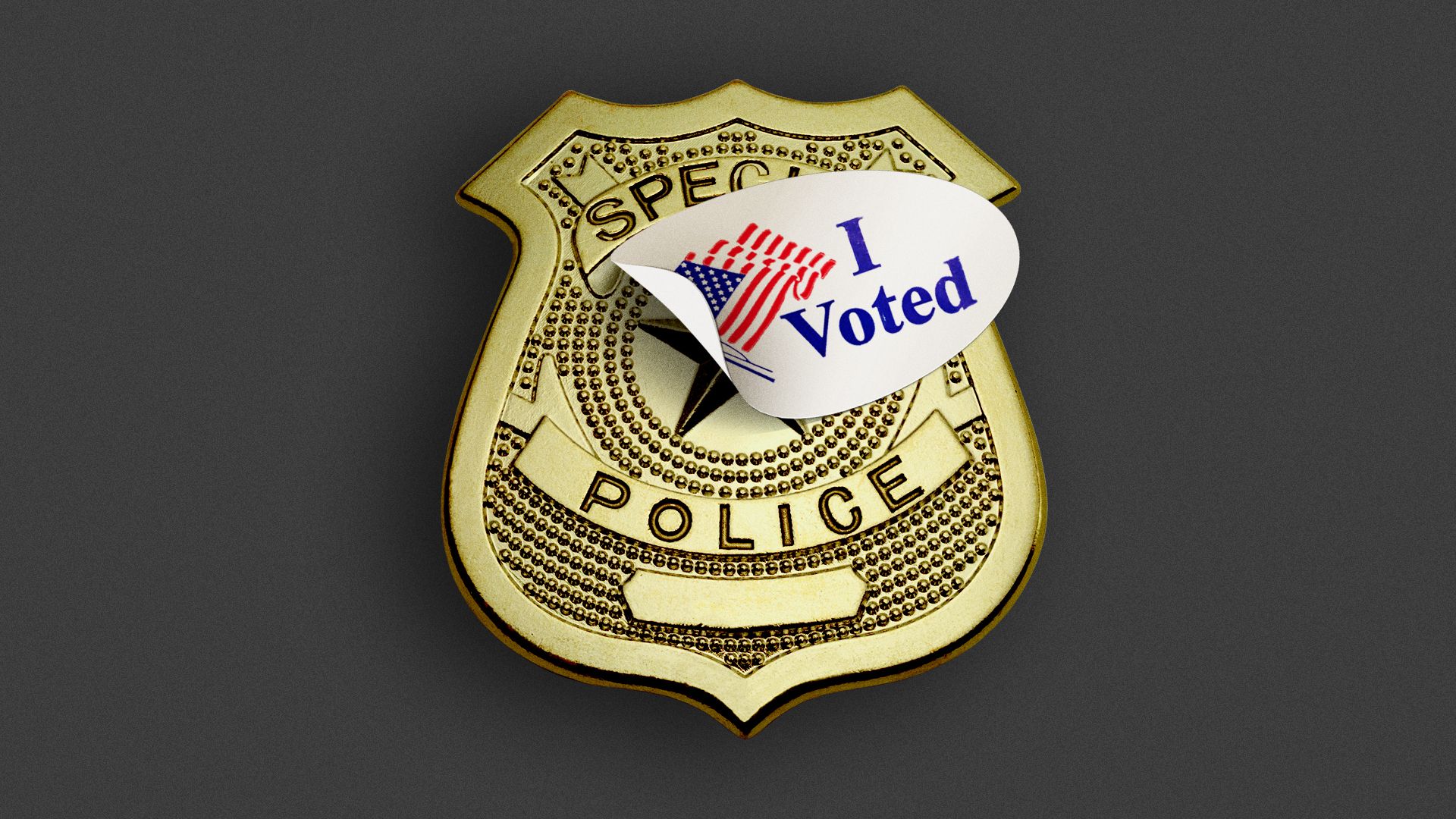
Illustration: Maura Losch/Axios
A proposed ballot measure would fund the addition of hundreds of officers to the Portland Police Bureau by pulling money from an existing tax meant to promote climate justice programs.
Why it matters: The measure could force Portland voters to choose between public safety and clean energy programs.
State of play: The plan would require the city to fund the hiring of an additional 400 officers in Portland via the Portland Clean Energy Fund (PCEF), a 1% tax on large corporate retailers approved by voters in 2018.
Catch up quick: Since its inception, PCEF has generated roughly $200 million annually, far exceeding the $40 million to $60 million originally forecast, per OPB.
- City leaders have repeatedly looked to tap the fund during budget shortfalls.
Follow the money: The ballot measure is primarily bankrolled by the Portland Police Association and Jeff Swickard, who owns auto dealerships and recently purchased the U.S. Bancorp Tower. Each contributed $25,000 to the Community Safety Coalition PAC supporting the initiative.
By the numbers: Portland has just over 800 officers, with 65 vacancies as of September.
- Backers of the measure noted the city ranks 48th out of the 50 largest cities in the country in police per capita.
What they're saying: "Portland can be both vibrant and safe again — but it requires courage and decisive action," Swickard said in a statement.
- "This measure is a crucial step toward rebuilding trust and restoring confidence in our city."
The other side: Councilor Candace Avalos said pitting public safety against climate action was unnecessary and divisive.
- "If the PPA and their wealthy backers want to put up a ballot measure to fund more police positions, they can do so without raiding a program that's helping protect vulnerable communities from climate change," she told OPB.
What's next: To get their measure on the 2026 ballot, supporters will need to collect 40,437 signatures by July 6.