Ochre sea stars make dramatic comeback in Oregon

Add Axios as your preferred source to
see more of our stories on Google.
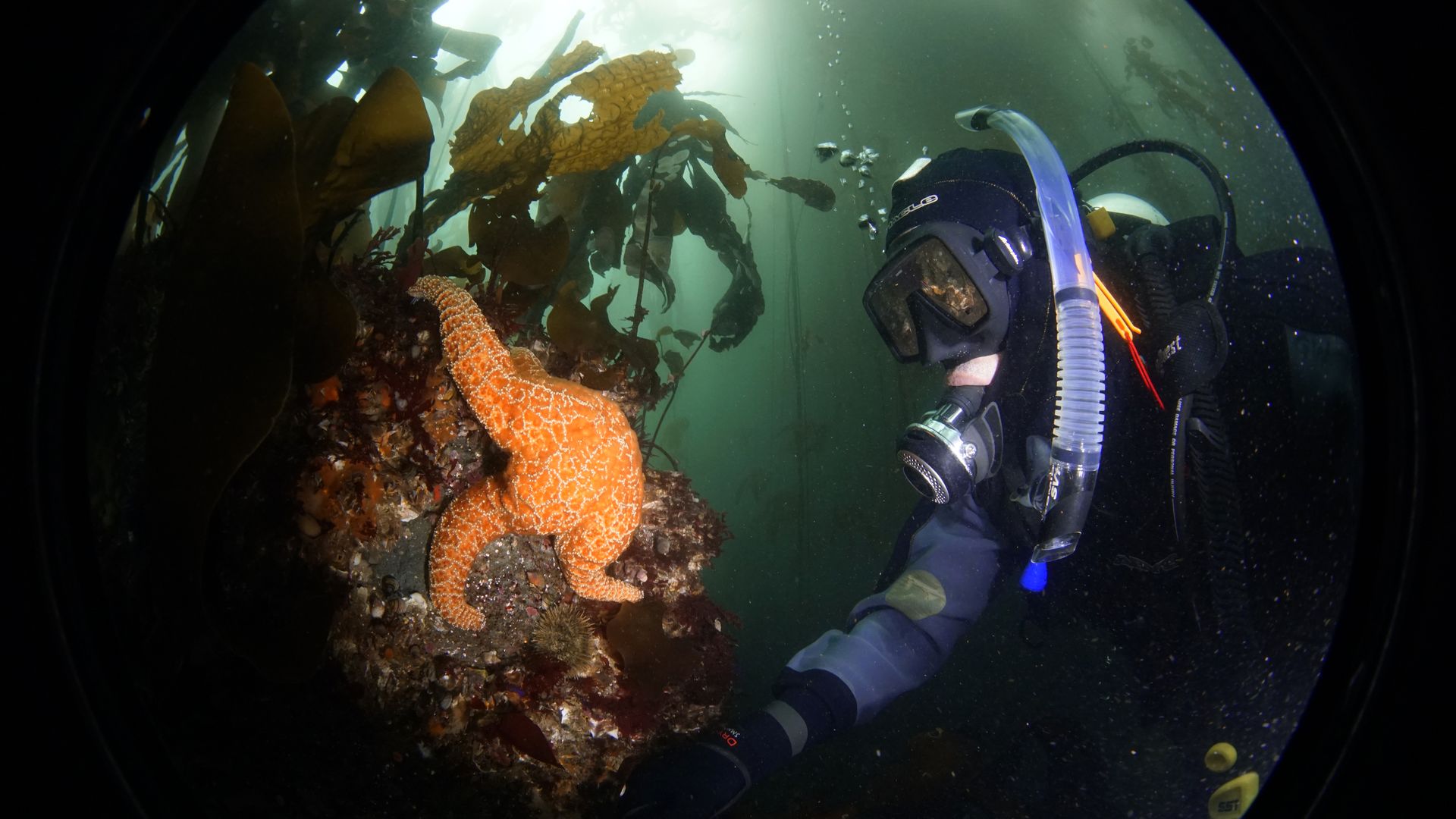
Ochre sea stars are on the rebound. Photo: HUM Images/Universal Images Group via Getty Images
Ochre sea stars are surging back to life along Oregon's coast, after a mysterious disease nearly wiped them out a decade ago.
Why it matters: Their return could help restore balance in rocky shore ecosystems overrun by mussels.
Catch up quick: More than 80% of ochre sea stars in Oregon were killed by sea star wasting disease in 2014. But by 2015, researchers saw an 8,000% increase in baby sea stars from pre-disease levels, according to an Oregon State University study published this month.
- Those babies are now grown and the total population is at or above pre-outbreak levels at several monitoring sites in Oregon.
What they're saying: "Populations are now large enough that sea stars are on the way to resuming their role as a keystone predator," Sarah Gravem, an OSU postdoctoral researcher when the project began, said in a statement.
Zoom in: Researchers confirmed the sea stars — five-armed purple and orange creatures that can grow up to 10 inches across — are once again eating mussels, a key indicator of ecological balance returning to tide pools.
- Without the ochres, mussel beds could easily take over tide pools, making life difficult for other invertebrates and seaweeds and decreasing biodiversity.
Yes, but: Other sea star species that were devastated by the disease, like the sunflower star, haven't recovered and their absence has upended coastal ecosystems, fueling sea urchin booms and kelp forest declines.
- And while ochre numbers are up, the stars themselves remain 25% to 65% smaller than before the wasting disease swept through.
Sea star wasting disease, first detected in ochre sea stars in Washington in 2013, causes the creatures to lose their limbs and dissolve into gelatinous goo.
- Scientists only discovered the bacterial culprit this year.
What's next: Researchers are still looking for what may have caused the baby boom that preceded the ochre's recovery.