This Portland nonprofit wants your fruit harvest before it rots

Add Axios as your preferred source to
see more of our stories on Google.
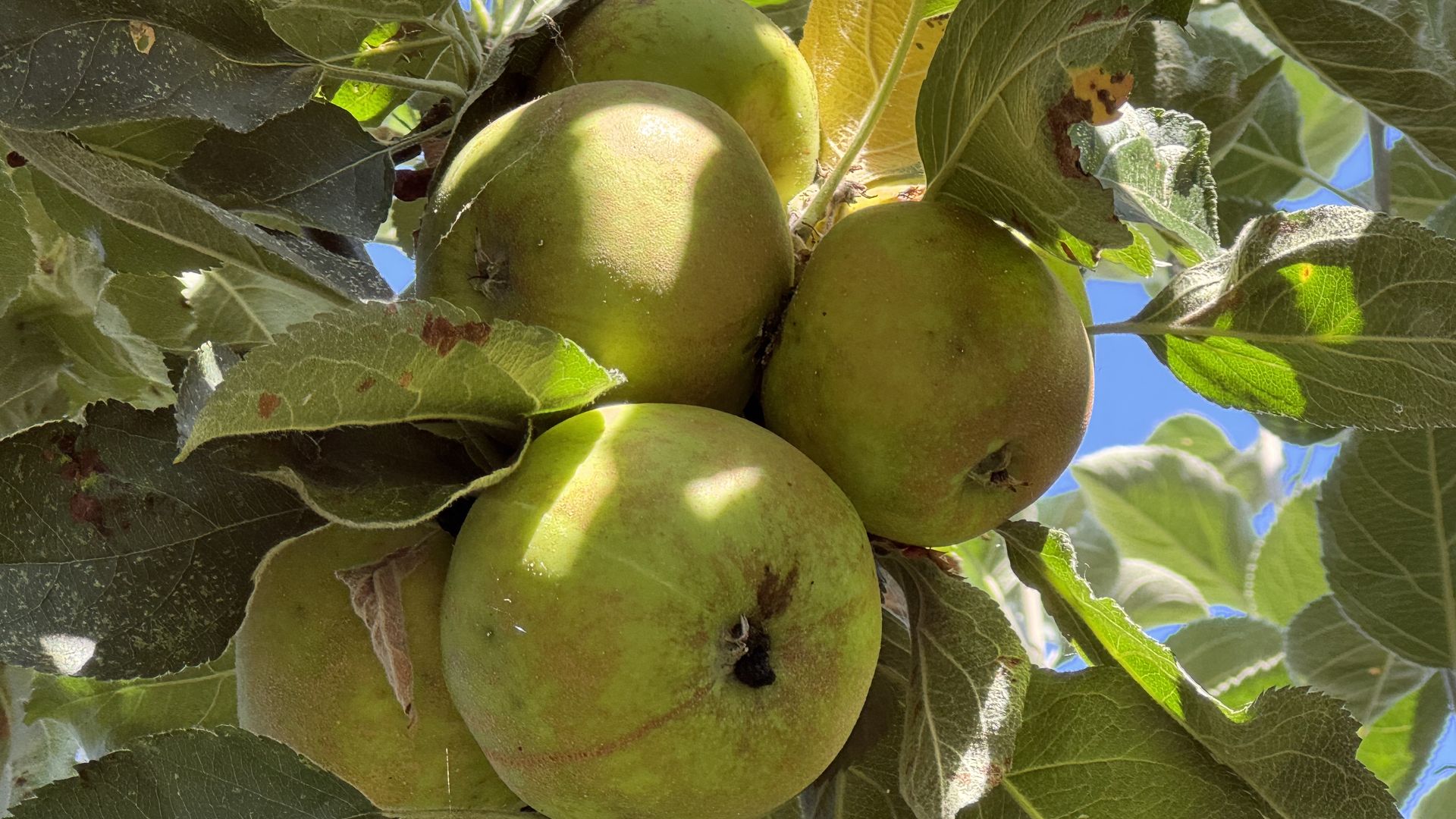
Just a few of the hundreds of apples that won't go to waste. Photo: Kale Williams / Axios
In a quiet Northeast Portland backyard recently, the soft thump of falling apples punctuated light chitchat as volunteers from the Portland Fruit Tree Project picked the fruit before it went bad.
Why it matters: The nonprofit operates under a simple mantra: Food shouldn't rot while people go hungry.
- The organization's efforts are as urgent as ever, as federal cuts to food aid programs have left local pantries struggling to meet rising need.
How it works: The nonprofit has been finding ways to get fruit to people experiencing food insecurity since the mid-2000s.
- All over town, the organization runs a handful of community orchards including pear, apple, persimmon and quince.
- Its backyard harvest program also sends volunteers to homes with extra fruit, so nothing goes to waste.
- Fresh fruit that still has aesthetic appeal goes directly to food pantries, while blemished fruit that might be less desirable ends up as cider, sauces and jams.
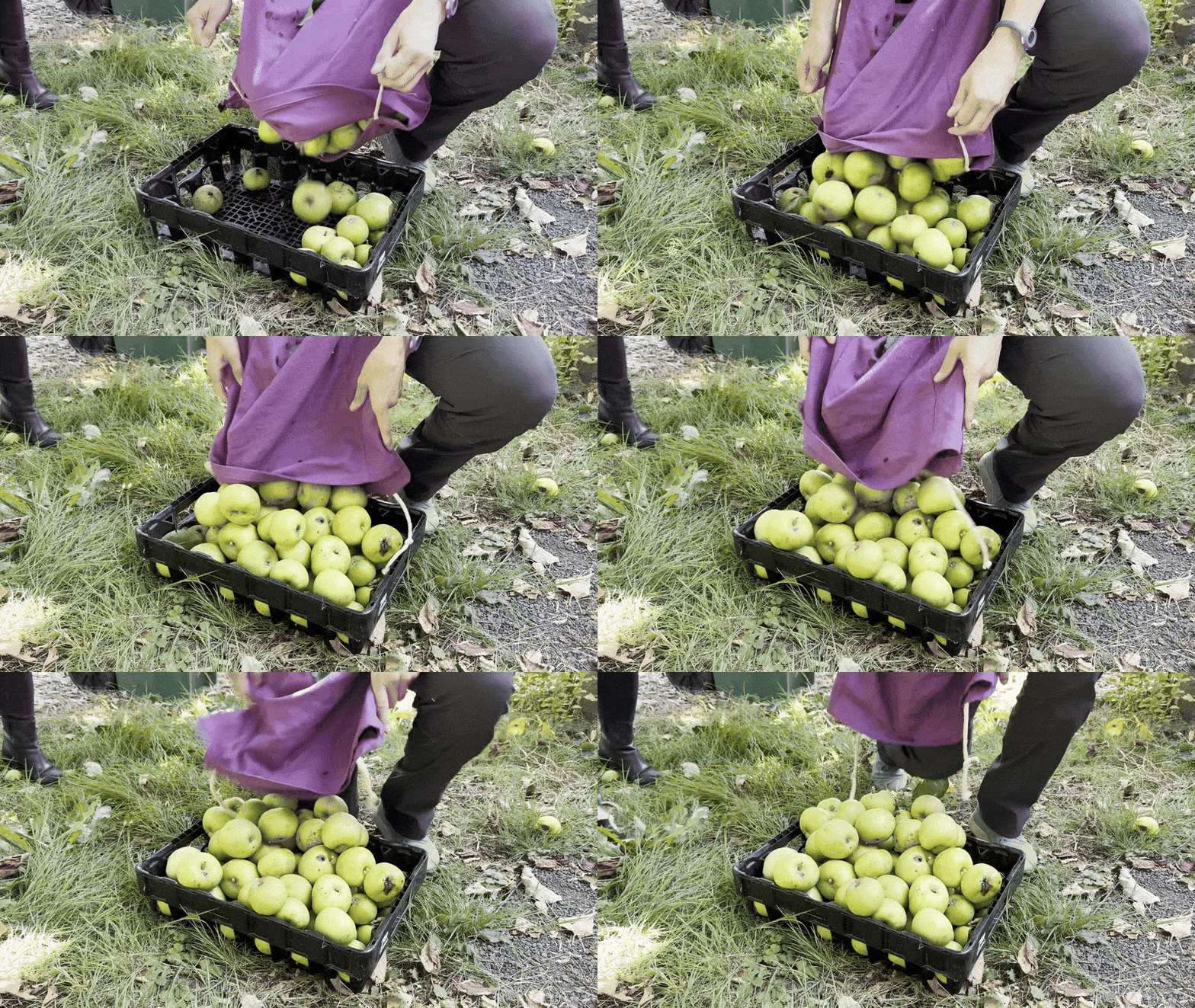
Zoom in: I joined a recent backyard harvest, where a team of volunteers arrived by bike to collect apples from two trees.
- They snagged nearly 300 pounds of fruit destined to become cider at an upcoming community event.
What they're saying: Food pantries partnering with the project have had a 30% to 60% increase in demand since federal food aid was cut, executive director Heather Keisler Fornes said.
- "There's a lot of panic," she told Axios, adding that they've roughly doubled their efforts this year to make sure as little food as possible goes to waste.
- "We felt really committed to busting extra ass."
Plus: To meet the spike in need, the group joined a grow-to-donate program in which people plant extra crops specifically to donate, not just share leftovers.
The bottom line: "Hunger is a problem that is completely solvable," Keisler Fornes said. "People are going hungry when there's food everywhere. It's a distribution problem."