How to protect your home from wildfires

Add Axios as your preferred source to
see more of our stories on Google.
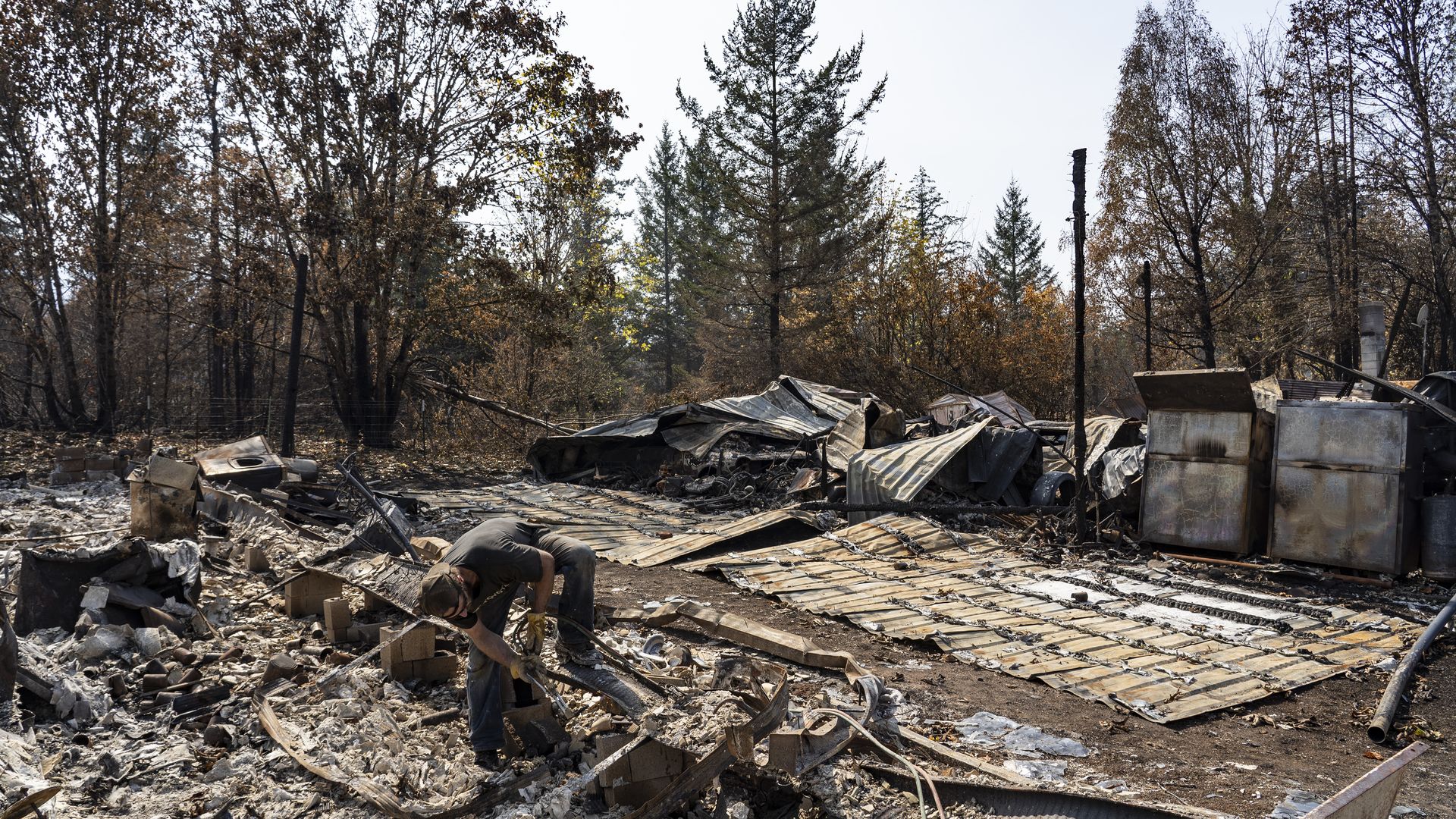
Creating fire-hardened homes could help prevent the type of destruction caused by the 2020 Labor Day fires in communities like Gates in the Santiam Canyon. Photo: Go Nakamura/Bloomberg via Getty Images
Five years after the Labor Day fires leveled thousands of Oregon homes, a key lesson has emerged: hardening homes is critical to managing risk in wildfire country.
Why it matters: Wildfires can't always be stopped, but the extent of their destruction can be blunted.
Catch up quick: Powerful east winds swept into western Oregon on Labor Day 2020, fanning existing fires into infernos and sparking new ones up and down the state.
- At least 11 people were killed, and nearly a million acres were scorched.
- Some 4,000 homes were destroyed — from the southern Oregon towns of Talent and Phoenix to whole communities in the Santiam Canyon.
Zoom in: New construction can incorporate fire-resistant design with relatively little added cost, and retrofits are far cheaper than rebuilding after a fire, said Erica Fleishman, director of the Oregon Climate Change Research Institute.
- "It's not a matter of preventing wildfires, especially when we have high winds," she said. "It's a matter of trying to harden structures and prevent loss of life and property."
How it works: Some of the most effective ways to protect homes include creating defensible space around structures, using fire-resistant materials for roofs and siding, and installing screens on vents to prevent embers from entering homes.
- Experts pointed to Firewise, a program run by the National Fire Protection Association, as a resource for property owners looking to safeguard their homes.
Threat level: Though Oregon has avoided destruction of that magnitude in the five years since 2020, it's not a bullet we can dodge forever, said John Bailey, a professor of wildfire management at Oregon State University.
- The convergence of increased development in wild spaces, a warming climate and fire-prone forests means it's not a matter of if, but when, Bailey said.
- "It's all just probabilities, and as each of those probabilities go up and intersect with each other, that's why we have more and more fire each year," he told reporters Tuesday.
Case in point: The Flat Fire, which ignited last week in central Oregon, has burned nearly 22,000 acres northeast of the town of Sisters.
- Four homes had been destroyed as of Tuesday, with some residents reporting the fire blackened their property but skipped over homes where defensible space had been created.
The bottom line: It's important for homeowners to look at risk on their own property, but wildfire should be viewed as a communal threat, not an individual one, Bailey said.
- "Communities tend to stand or fall together," he said. "It's in your best interest to help your neighbors join the Firewise community, because a whole neighborhood is much safer than a single hardened home."