
Portland's neon sign past is fighting for a future

Add Axios as your preferred source to
see more of our stories on Google.
The Montgomery Park sign sits atop its namesake nine-story westside building — 30-foot-tall letters glow bright red and can be seen from across the Willamette thanks to one thing: neon.
Why it matters: Neon signs are more than just business markers, they're cultural landmarks. But local artists and preservationists warn development, regulation and cheap LED knockoffs could threaten the craft's future.
- "We live in a world that's constantly tearing down and remaking," Perry Pfister, owner of Tiny Spoon Neon Signs, told Axios. "These are relics from different eras of Portland, and it's important for people to feel connected to them."
Flashback: Neon signage took off across the U.S. and Portland shortly after World War II. By the '60s, "if your business didn't have a neon sign, you basically didn't exist," according to Kate Widdows, a historian and preservationist with PDX Neon.
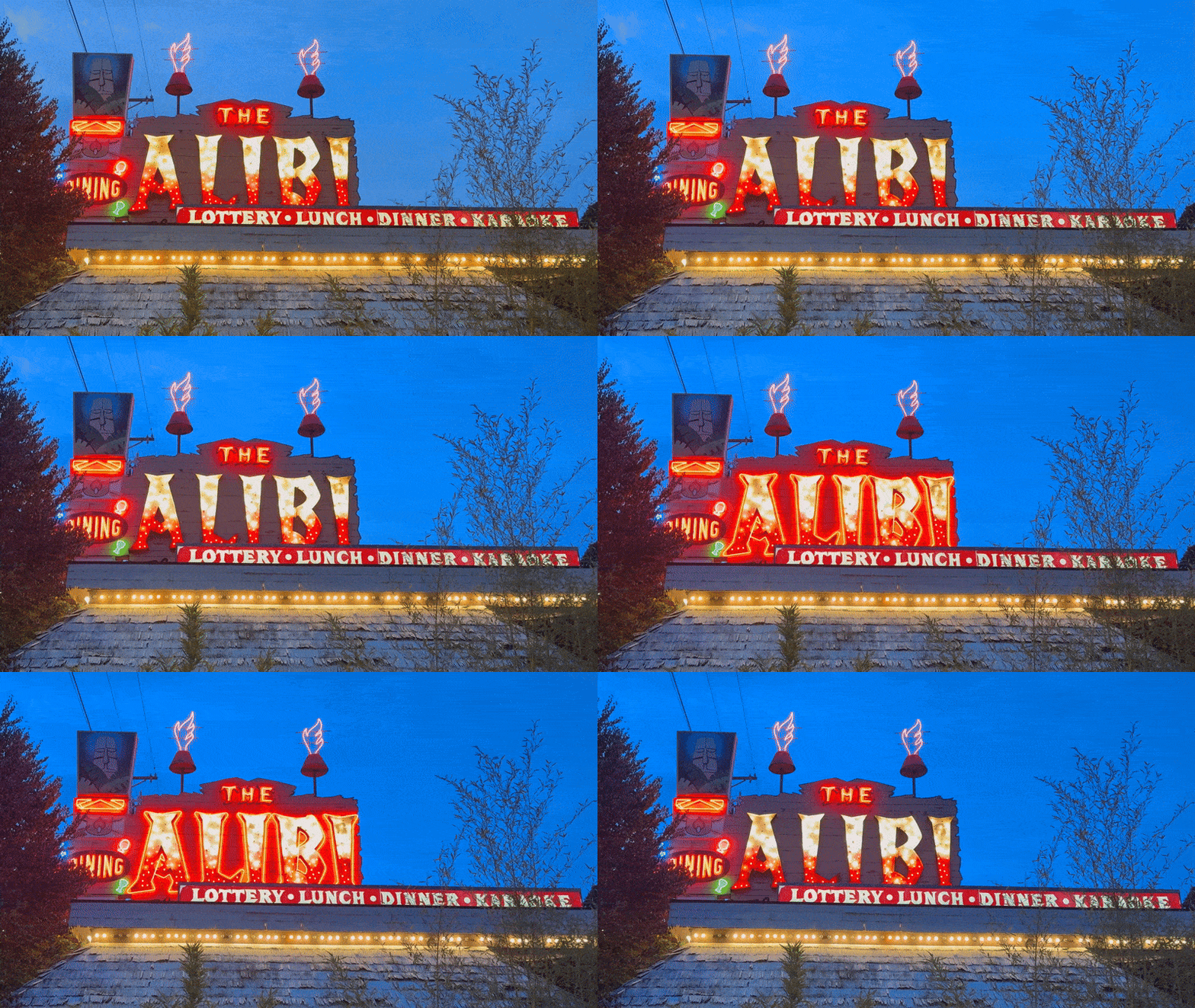
- That era gave us the White Stag sign, Laurelhurst Theater's marquee, Portland Outdoor Store's bucking bronco and The Alibi's tiki flames — all still standing today.
Yes, but: The prevalence of neon signs, which were expensive and time-consuming to create, quickly fell by the wayside when fluorescent lighting and plastic manufacturing arrived later that decade.
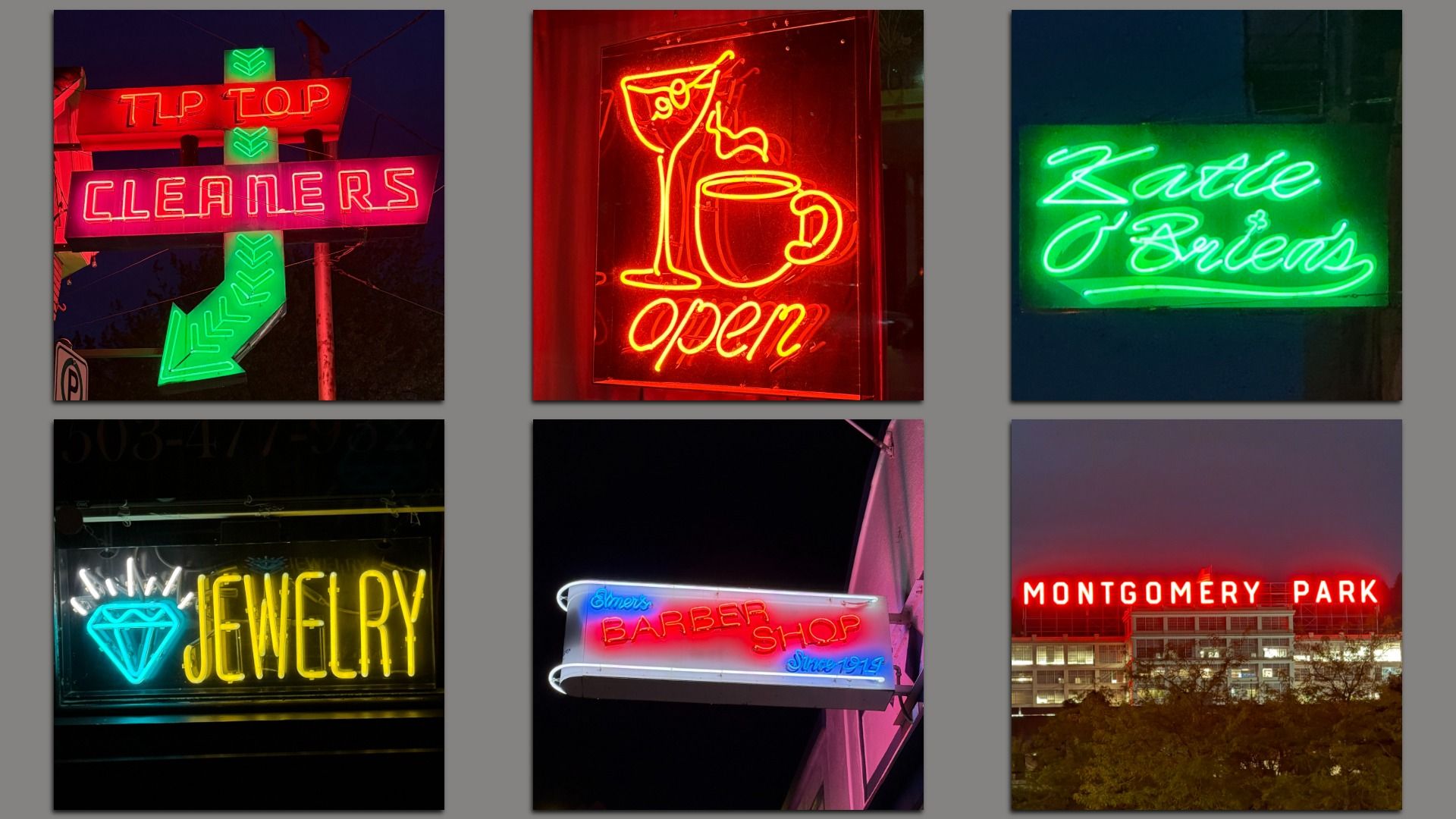
Rapid commercial development in recent years has led to the loss of some historic neon signs, but some have been saved in the 11th hour.
- For example, in 2018, Widdows was able to help assist the rescue of the Chinese Village sign, which once stood at SE 82nd and Stark, before demolition crews came in.
- Today, city permitting hurdles and exterior mounting costs mean more businesses are opting to install neon signs inside as decor instead.
- "We're also moving away from the era where brick-and-mortar businesses are in one place forever," said Pfister, who has created signs for Dear Sandy, Tulip Shop Tavern, Afuri and others.
What they're saying: Both Pfister and Widdows said the biggest threat to neon as an industry — and art form — is the rise of faux-LED alternatives crowding the market.
- "They're terrible for the environment, and they don't last very long," Widdows said. "Neon is an investment today, but it could last 100 years."
- Pfister added that LED signs "cut out the specialized labor of the people that have developed the crafts over their whole lifetime," of which there are only a handful of left in Portland.
The bottom line: Like the staying power of big neon signs across the city, the allure of neon remains for some. Due to repeated requests for workshops, Pfister started offering one-on-one workshops to teach tube bending.
- "Neon has just always been advertising for itself," he said.