Get to know Portland's bridges: Steel

Add Axios as your preferred source to
see more of our stories on Google.
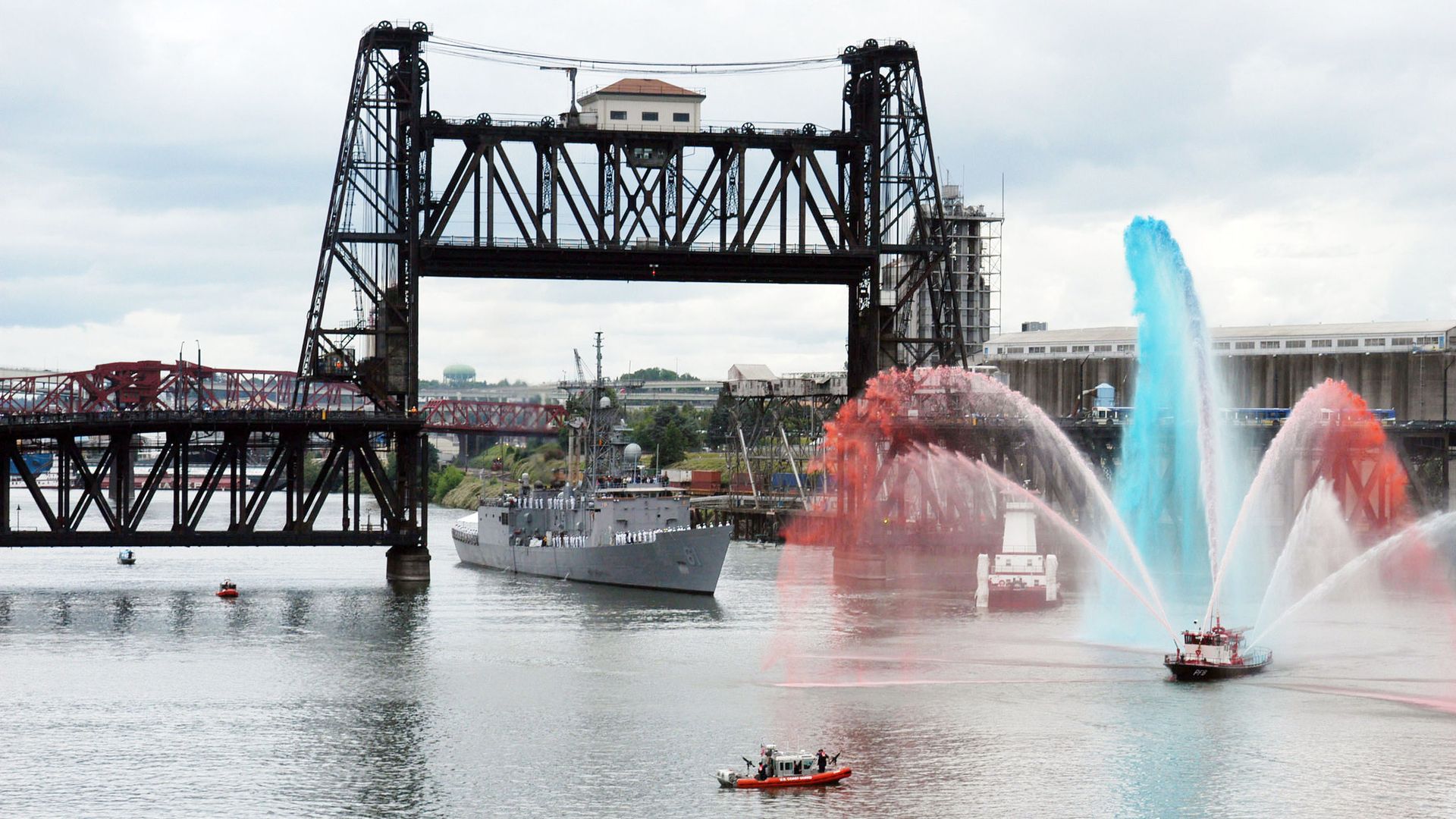
Photo: Courtesy of the City of Portland
The Steel Bridge may look unremarkable — especially compared to Portland's other river-spanning icons — but it's an engineering rarity.
Why it matters: It's the only active telescoping vertical lift bridge in the U.S.
Flashback: The bridge's name comes from a previous steel span near the site, the state's first steel bridge, built in 1888 and used as a railroad crossing. That structure was replaced in 1912 after two years of construction.
- Designed by Kansas City vertical lift pioneers Waddell & Harrington (now Hardesty & Hanover), it still functions as the engineers intended it to more than a century ago.
Zoom in: The multi-modal structure features double decks, each with a 211-foot span, that can be moved independently of one another — the only one in the U.S. able to do so.
- The telescoping truss can pull the lower deck (used for passenger and freight trains) into the upper deck to allow for the passage of small- to medium-size boats without stopping the flow of vehicular, light rail and pedestrian traffic up top.
- Both can be raised together, for a clearance of 163 feet, to accommodate large vessels.
The intrigue: Despite it having a somewhat cheaper price tag than other city bridges (it cost $1.7 million to build), residents did not want to pay for it.
- Instead, voters passed a measure to punt the responsibility for all bridges spanning the Willamette from Portland to Multnomah County. The Steel Bridge is now owned by Union Pacific Railroad.
The latest: Earlier this year, the city council approved the acquisition of land surrounding the west side of the Steel Bride from the state to allow for the development of the long-awaited Steel Bridge Skatepark.
- It's something both officials and advocates say could reinvigorate the nearby Old Town neighborhood.