How Pacific Northwest oyster farmers adapt to acidic seas

Add Axios as your preferred source to
see more of our stories on Google.
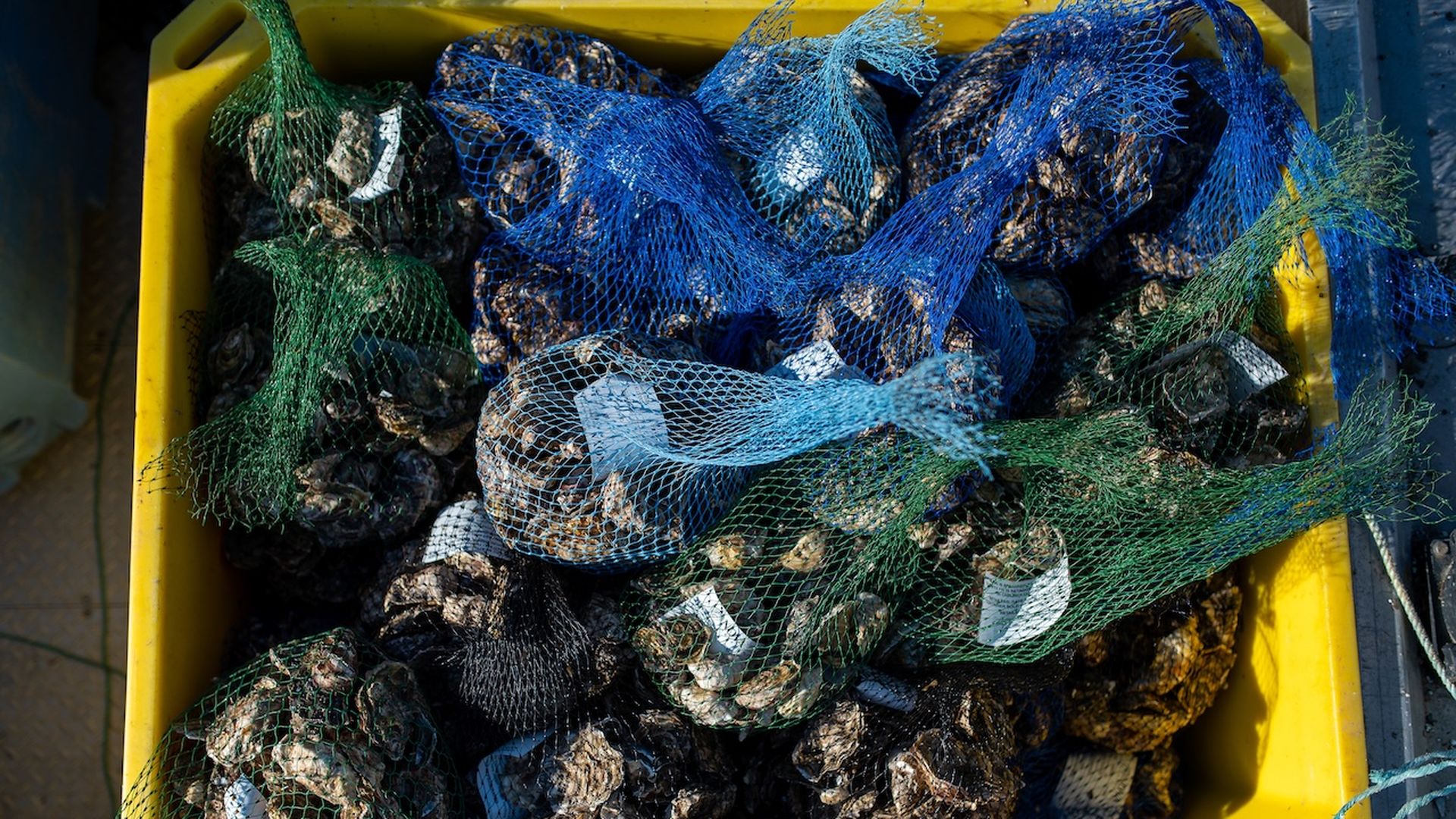
Pacific oysters, pictured here, were introduced to the Pacific Northwest region from Japan. Photo: James MacDonald/Bloomberg via Getty Images
Rising ocean acidity is threatening Oregon and Washington's oyster farms, leading local growers to seek out new ways to keep oyster populations — and their industry — afloat as waters turn more corrosive.
Why it matters: Most of the oysters consumed in the U.S. are produced in the Pacific Northwest. The industry brings in roughly $270 million annually and supports thousands of jobs, particularly in small, coastal communities.
Threat level: West Coast oceans are acidifying faster than anywhere else on the planet, Oregon State University researchers found, making it harder for oyster larvae to build shells and leading to more mass die-off events — witnessed in the Olympia oyster population.
- As more carbon dioxide is released into the atmosphere, more of it will be absorbed by the oceans, scientists from the National Oceanic and Atmospheric Administration told the New York Times.
- The Trump administration's proposed cuts to the agency could also halt key projects, including real-time acidification monitoring and research.
Context: Oregon's Tillamook and Netarts bays are major shellfish hubs and were among the first to experience the direct impact of ocean acidification — a drop in ocean pH as seawater absorbs the ever-increasing amount of carbon dioxide being released into the atmosphere by human activities.
- Oyster hatchery production collapsed here nearly two decades ago, leading growers to move operations out of state. In 2023, there were only 15 oyster farmers in Oregon.
Flashback: Last year's widespread oyster recalls due to norovirus contamination may have been exacerbated by acidification.
State of play: Several of the solutions oyster farmers have started piloting to combat acidification include planting beds of eelgrass near farms to soak up carbon dioxide and adding sodium carbonate to hatchery water and shorelines to rebalance seawater pH levels, per the New York Times report.
- Plus: Some researchers are exploring ways to breed oysters that can better withstand acidic waters.
The bottom line: Most mitigation strategies being tested have only temporary effects, while some — like marine geo-engineering — remain controversial.
- Without broader federal action on carbon emissions, the future of Pacific Northwest's oyster industry remains uncertain.