New research forest in Portland means miles of new public trails

Add Axios as your preferred source to
see more of our stories on Google.
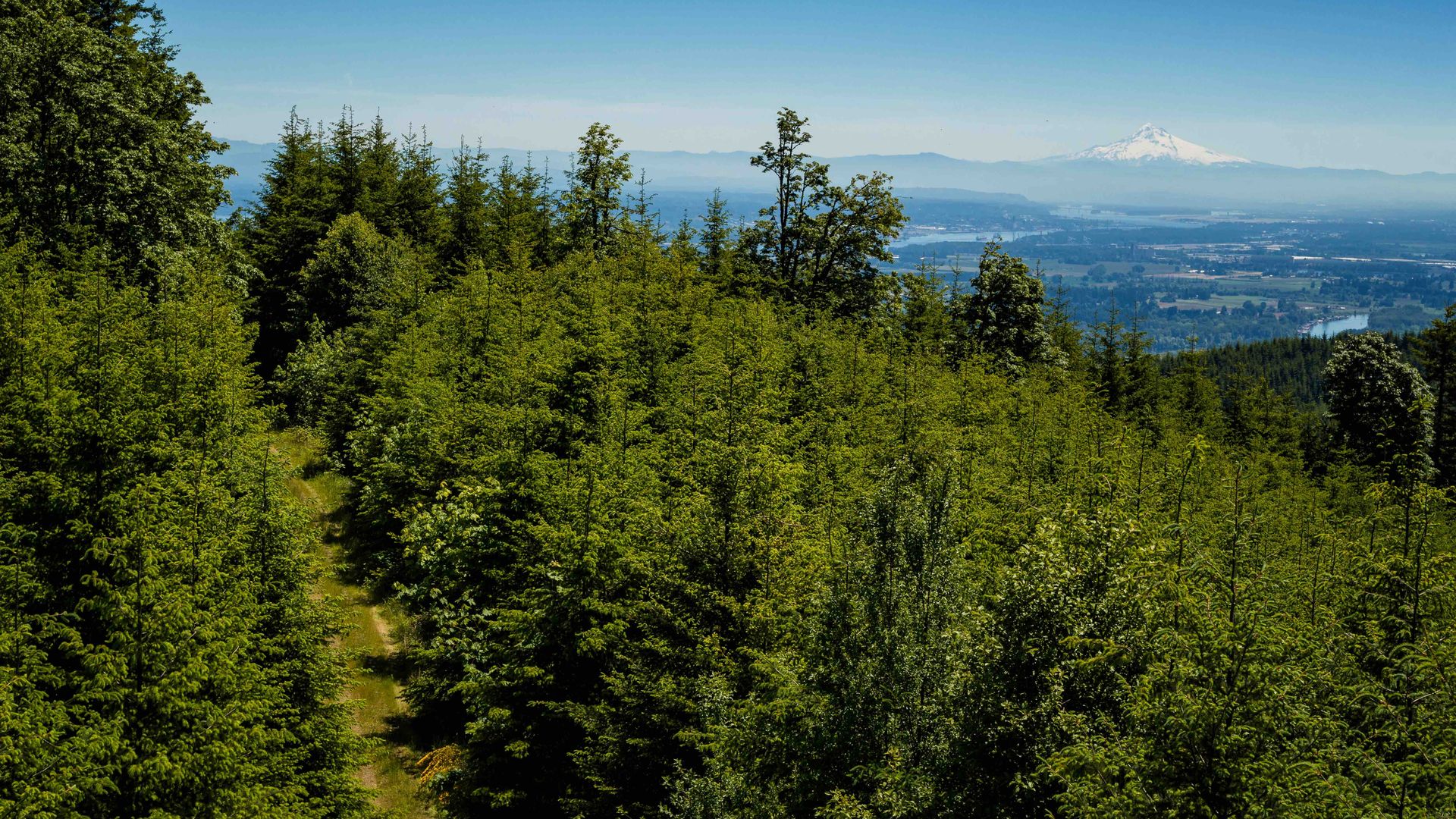
Part science lab, part playground for outdoor enthusiasts. Photo: Trust for Public Land/Nick Grier
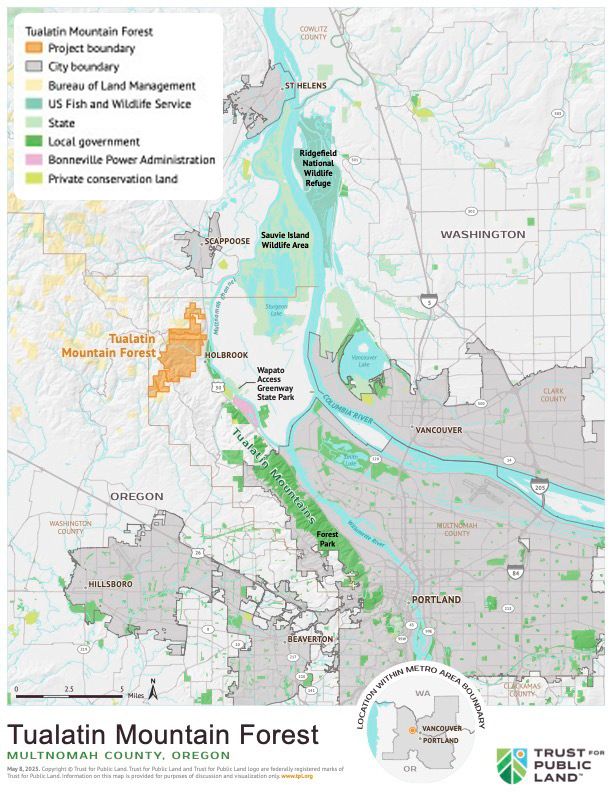
Oregon State University has acquired a massive tract of land near Forest Park that will become the school's newest research forest and, eventually, the home to dozens of miles of new public trails.
Why it matters: The land, known as the Tualatin Mountain Forest, will host a number of important research projects on forest management and will, the university hopes, become a new destination for outdoor recreation and education.
What they're saying: "This is good news for Oregon's outdoor tourism and recreation economy, which generates billions in revenue each year and relies on healthy ecosystems," the Trust for Public Land, which partnered with the university to acquire the land, said on its website.
State of play: Tualatin Mountain, formerly owned by timber company Weyerhaeuser, was the last large block of undeveloped forest within 10 miles of Portland.
- Aside from timber production, it has historically been home to more than 40 miles of mountain bike trails, but users have had to pay for access. Now, some or all will be converted to free hiking trails for the public.
- Oregon State partnered with the Trust for Public Land to acquire the land for $27 million, with funding from the U.S. Forest Service and proceeds from Metro's 2019 Parks and Nature Bond Measure.
- "It's the first major research forest land acquisition in over 60 years," Tom DeLuca, dean of the College of Forestry at OSU, told Axios.
By the numbers: The Tualatin Mountain Forest consists of more than 3,000 acres of mostly younger Douglas fir forest just north of Forest Park.
- Within it, there are roughly 20 miles of creeks and headwaters that feed into the Multnomah Channel and the Willamette.
Between the lines: DeLuca said researchers will look for the best ways to incorporate native hardwoods like bigleaf maple and alder into traditional timber plantations, which are dominated by Douglas fir.
- Forests with multiple species often stand up better to things like wildfire and drought, and DeLuca said he hopes the research at Tualatin Mountain can help inform policymakers on best practices for forestry on public lands.
What's next: The public will likely have access to some of the area as soon as this fall, with full access within a few years.