Invasive garlic mustard gains ground in Portland-area forests

Add Axios as your preferred source to
see more of our stories on Google.
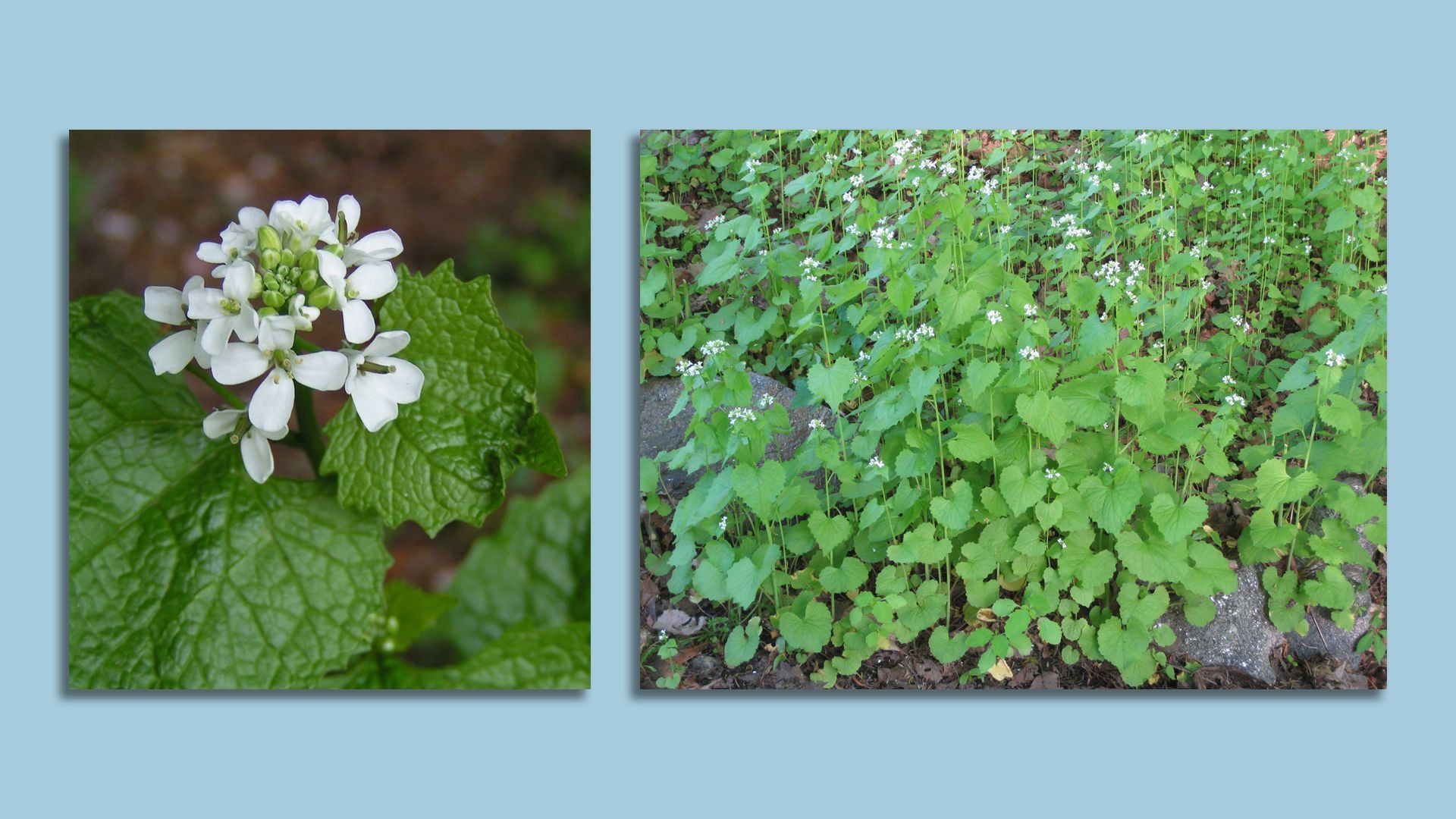
Despite its name, garlic mustard is more harmful than tasty. Photos: Creative Commons courtesy of Evelyn Fitzgerald (left) and Sannse (right)
Garlic mustard, a fast-spreading invasive weed, is threatening the understory of Portland-area forests, competing with native plants and potentially disrupting sensitive ecosystems.
Why it matters: Garlic mustard is already established in places like Forest Park and the Johnson Creek watershed. Officials are warning that if left unchecked, it could soon spread to forests in other parts of the Willamette Valley and the Coast Range.
Threat level: Garlic mustard grows in dense patches and survives well in shade, making it particularly well adapted to the forest floor.
- It can prevent wildflowers and new trees from taking root and has the potential to change soil chemistry in a way that can disrupt important fungus that's crucial for saplings to develop.
- While it exists only in patches around Portland for now, Michelle Delepine, invasive species program coordinator for the West Multnomah Soil & Water Conservation District, told Axios that some forests on the East Coast have essentially been taken over by the weed.
- "It's literally the only understory plant growing in these forests," she said. "It's what we call a monoculture."
How it works: Garlic mustard resembles many other plants in the winter, but it bolts in the spring, shooting stems up to 4 feet tall and developing white flowers.
- By summer, the flowers turn to seed pods, which, once dry, can explode at the slightest touch, shooting the tiny seeds out in all directions.
- The plant spreads easily as seeds can remain viable for several years and can often get stuck in the mud on boots or tires.
Fun fact: Despite its name, garlic mustard is not particularly tasty, Delepine said, and harvesting it can help spread the seeds.
What they're saying: "One of the most effective things the public can do is clean their gear and pets — both before leaving home and before leaving hiking or biking areas," Mitch Bixby, an ecologist with the city's Bureau of Environmental Services, told Axios.
What's next: The soil and water conservation district is hosting a free public "Weed Watcher" workshop Wednesday at Tryon Creek State Park from 6pm to 7:30pm, where experts will have live samples of invasive plants like garlic mustard to help people know what to look for.
- Delepine and Bixby said that anyone who sees garlic mustard, or any other invasive species, should report the sightings to the Oregon Invasives Hotline.