Portland's allergy season is getting longer


Add Axios as your preferred source to
see more of our stories on Google.
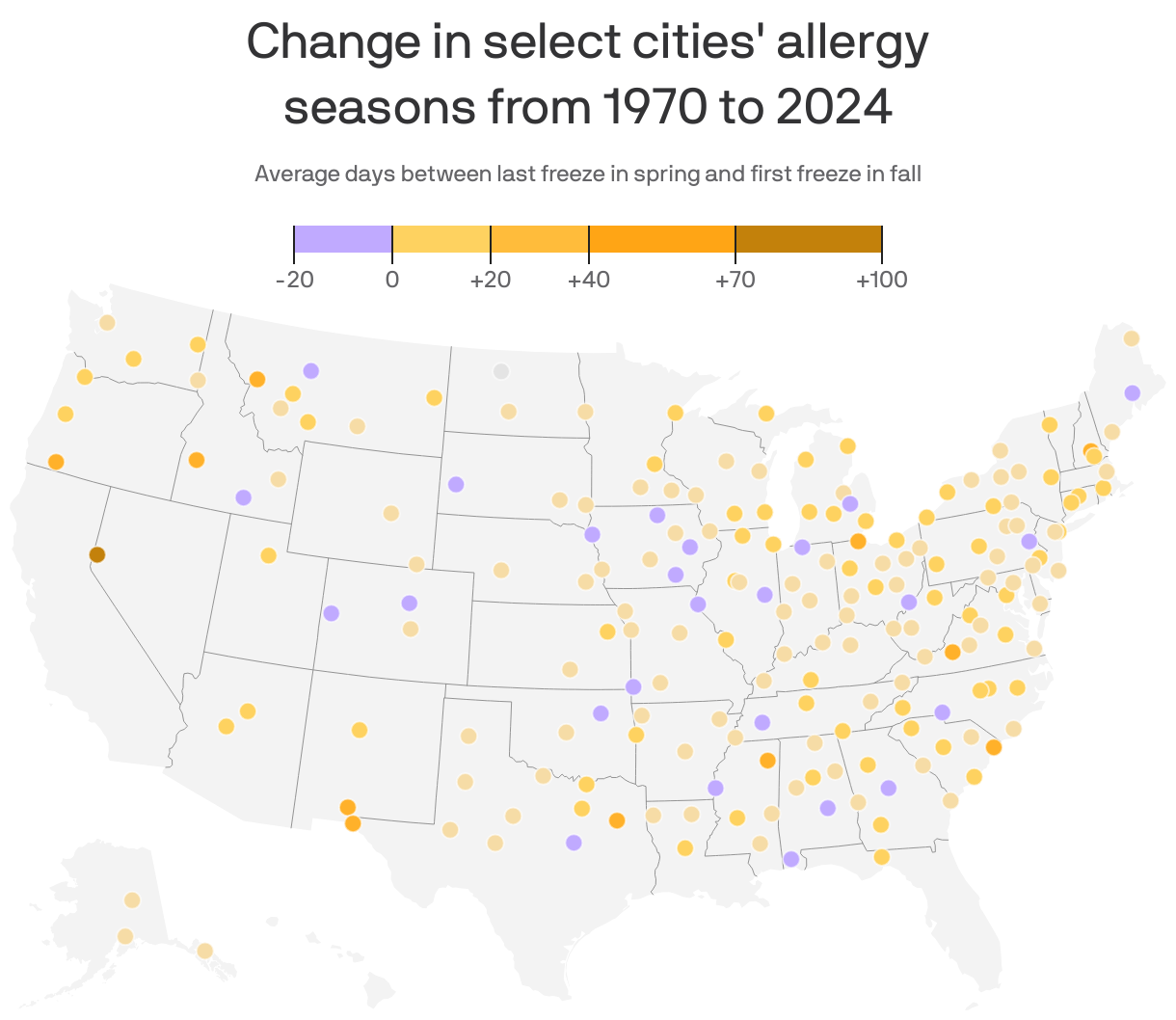
Most major U.S. cities — including Portland — are suffering from longer allergy seasons amid human-caused climate change, a new analysis finds.
Why it matters: Peeping the cherry blossoms is way less fun when you can't stop sniffling.
- Millions of Americans endure runny noses, itchy throats, and worse health effects each spring allergy season.
By the numbers: Portland's freeze-free growing season lengthened by 26 days between 1970 and 2024, per an analysis by Climate Central, a research and communications group.
- The increase was even larger for those in Eugene and Medford — cities with close proximity to Oregon's biggest grass seed producers — with the season extending by 39 and 63 days, respectively.
How it works: Climate Central uses the freeze-free period — the number of consecutive days with minimum temperatures above 32° F — as a proxy for allergy season.
Between the lines: "Higher levels of planet-warming CO2 in the air can boost pollen production in plants, particularly in grasses and ragweed," according to Climate Central's report.
- Nationwide pollen production stands to dramatically increase alongside high CO2 pollution, per a 2022 study highlighted in the report.
Go deeper: Allergy season is getting longer. Blame climate change