The legal fight over public access to Oswego Lake

Add Axios as your preferred source to
see more of our stories on Google.
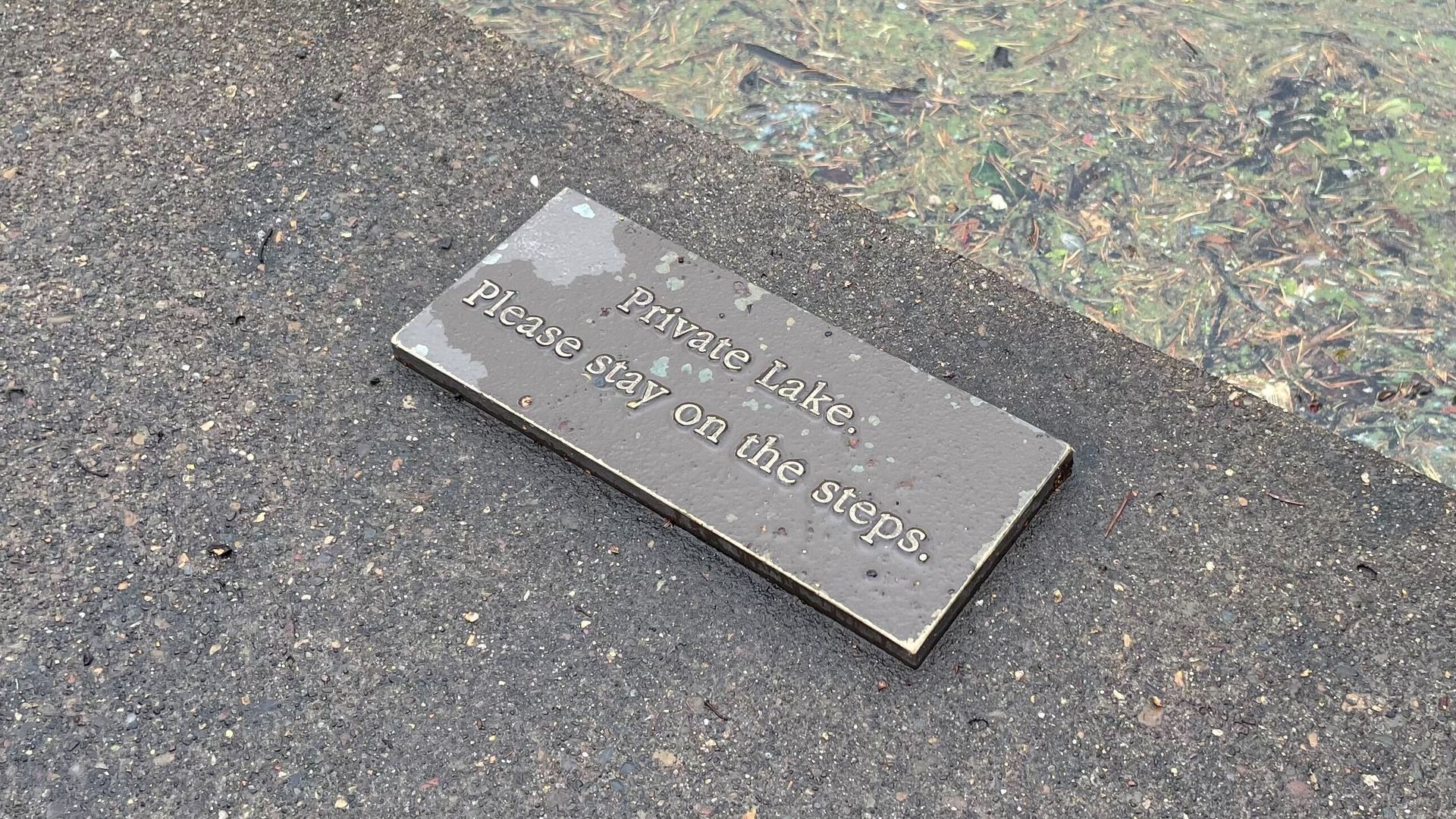
A case over public access to Oswego Lake was decided in November. Photo: Meira Gebel/Axios
For more than a decade, a legal fight over who gets access to Oswego Lake has pitted the wealthy enclave against two would-be lake users who argue the public should be able to swim and boat there.
Why it matters: After a judge ruled in favor of allowing public access to Oswego Lake, a lawyer involved in the case said the ruling could have wider implications for public access to public waterways in Oregon.
- The ruling could still be appealed, though.
Catch up quick: In 2012, open-water swimmer Todd Prager and kayaker Mark Kramer sued the city of Lake Oswego over rules that limited lake access to homeowners with waterfront property and to city residents at a seasonal swim park.
- The lawsuit takes issue with access at the only public areas along the water's edge: Sundeleaf Plaza, Headlee Walkway and Millennium Plaza Park.
- Since the case was filed, it's worked its way to the Oregon Supreme Court — which sent it back to circuit court for the most consequential parts of the lawsuit to be decided.
The intrigue: Public access to public bodies of water is enshrined in Oregon under the state's public trust doctrine.
- "The waters of Lake Oswego are public," attorney Nadia Dahab, who represents Prager and Kramer, told Axios. "Because they are public, members of the public have a right of access to that water from public property that is adjacent to the water."
The other side: The city, and the Lake Oswego Corporation, which joined the lawsuit on the city's side, argued that allowing public access at parks not designed for swimming could create safety hazards.
- They also said allowing public access could introduce invasive species to the lake.
- In 2018, as the case was headed to the Supreme Court, Scott Lazenby, the city manager at the time, told OPB the public had visual access to the lake while in city parks and restaurants but couldn't enter the water.
- "You can enjoy it from a distance," he said.
The latest: Clackamas County Circuit Court Judge Kathie Steele ruled in November that it was reasonable for the city to restrict access at two of the three parks — where physical impediments made access difficult — but that the city must allow the public to access the lake at Millennium Plaza, Park where steps lead down to the water.
- "The Court has the authority, based on the evidence and jury verdict, to tell the City to take down the 'No Access' sign and remove the restrictions," Steele wrote in her ruling.
What they're saying: Dahab said the ruling set a "really important precedent, protecting these resources from private landowners coming along and eliminating access for the public."
- Officials from the city and the Lake Oswego Corporation did not respond to requests for comment from Axios, but Justin Harnish, president of the corporation, told the Oregonian that the case would likely be headed back to court.
- "We think that it is wrong, and we hope that the Oregon Court of Appeals and Supreme Court will respect local governments and the long recognized property rights of Oregonians," he told the newspaper.
What's next: For now, signs prohibiting access remain at Millennium Plaza Park, but Dahab said guidance from Steele that should outline what changes the city must make to allow access was expected in the spring, unless the case is appealed again.