Some voters opt out of Portland's first ranked-choice election

Add Axios as your preferred source to
see more of our stories on Google.
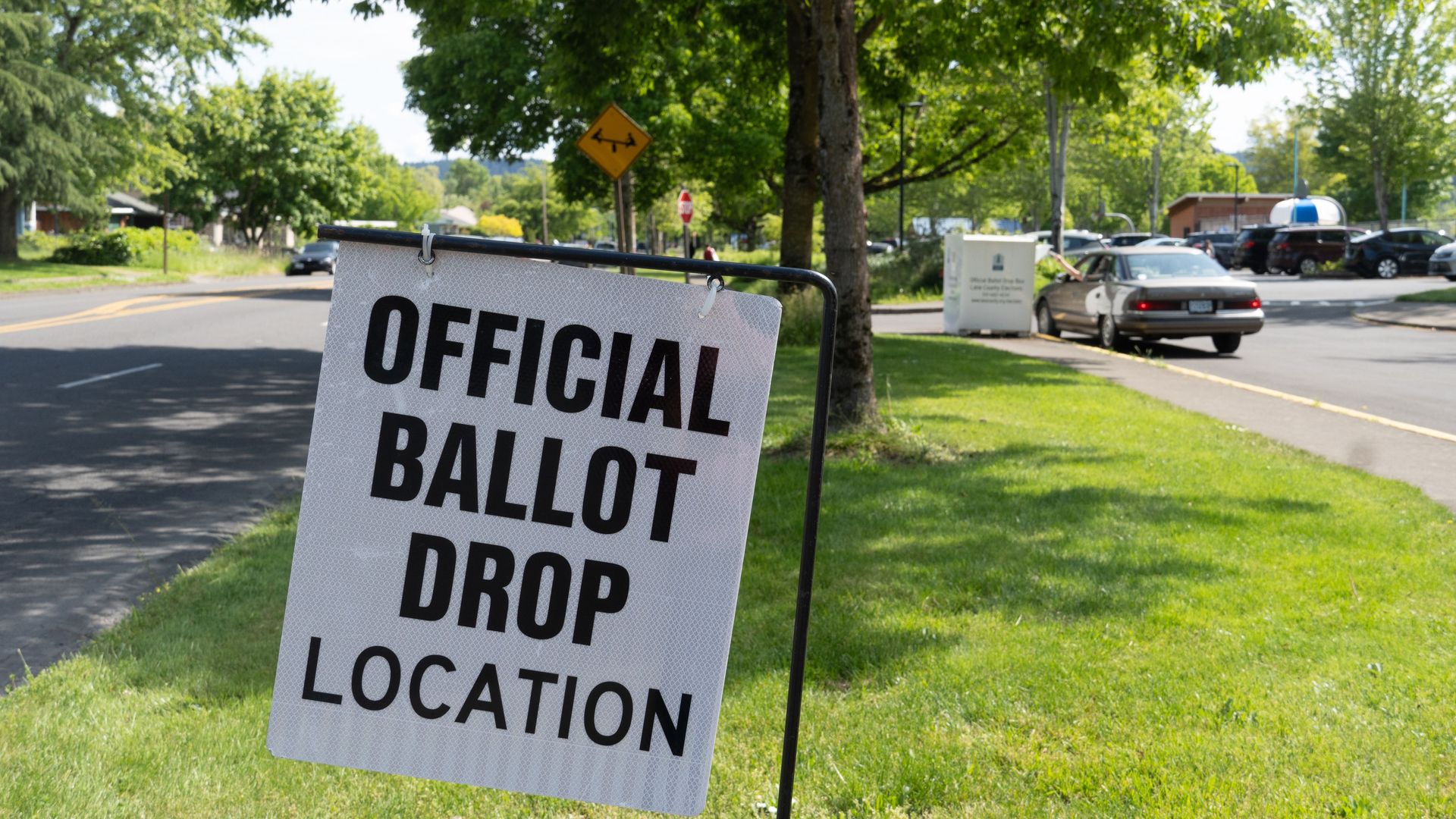
Ballots were dropped, but voter participation dropped, too. Photo: Marli Miller/UCG/Universal Images Group via Getty Images
It's been more than a week since Portland voters took part in the city's first ranked-choice election, and the results — at least in terms of voter participation — leave a lot to be desired.
Why it matters: An analysis by The Oregonian found that many voters — up to nearly 30% in some districts — declined to enter a vote in ranked-choice races, even while filling out the rest of their ballot.
Driving the news: Ballots in Portland for this voting cycle were massive, with 19 candidates for mayor and more than a dozen running for City Council seats in each of four new districts.
- Couple that with the fact that each district would feature three winners and you ended up with a ballot that was not only new, but also time consuming to research, and it appears many voters just opted out, experts told The Oregonian.
By the numbers: Across the city, an average of 20% of voters left all the bubbles blank in their City Council races.
- Districts 2 and 4 — comprising Northeast and West Portland, respectively — saw 18% of voters opt out of a City Council vote.
- District 3, with much of inner Southeast and parts of Northeast, had an opt-out rate of 17%.
- The highest rate of voter avoidance — 29% — was in District 1, which is also the city's poorest and most diverse district, which has rarely seen any representation in City Hall.
What they're saying: "My overall conclusion is that the voters were overwhelmed, found the system and number of candidates too hard, and didn't feel confident in their vote choice," Ellen Seljan, a political science professor at Lewis & Clark College, told The Oregonian. "The easier thing to do is to skip those races entirely."
Zoom out: Ranked choice was also on the ballot statewide as voters considered Measure 117, which would have brought the voting system to all of Oregon.
- The measure was soundly defeated statewide by 58% of voters.
- Across the country, ranked choice has seen a surge in popularity, with seven times more people living in areas using the electoral system now than in 2016, according to nonpartisan research nonprofit FairVote.
What's next: Ranked-choice voting was adopted as part of the new city charter, so it won't be going anywhere anytime soon.
- But if you're hoping the voting populace just needs some time to get used to it, there will be another chance soon.
- Races for countywide positions — like commissioners, chair and sheriff — will be using the system in 2026 after it was approved by voters in 2022.