Where Oregon's ballot measures stand

Add Axios as your preferred source to
see more of our stories on Google.
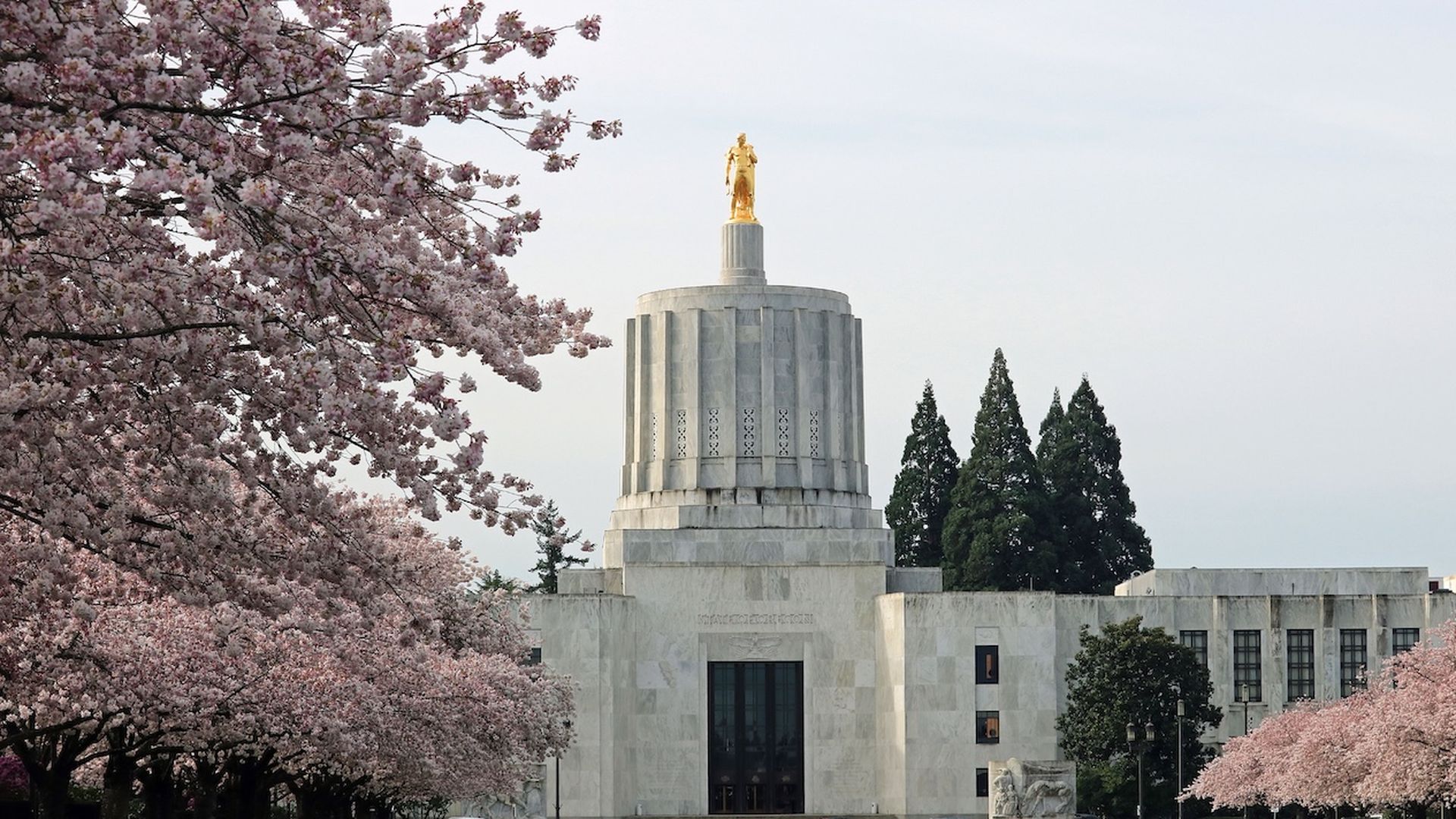
Photo: Education Images/Universal Images Group via Getty Images
Oregon voters are rejecting a measure in early returns that would give every resident a $1,600 annual rebate through an increase in the corporate sales tax, according to the Oregon secretary of state's office.
Why it matters: The controversial measure received fierce pushback from lawmakers, local businesses and labor unions alike.
The latest: Measure 118 had nearly 79% of votes against it as of Wednesday morning.
- The annual check would be paid for by a 3% gross receipts tax on all companies doing business in Oregon that have more than $25 million in annual sales.
State of play: Measure 118 is one of five initiatives put to Oregon voters this year.
- Here's a brief look at where the other four measures stand as of Wednesday morning, according to preliminary results from the Oregon secretary of state's office.
Between the lines: In vote-by-mail Oregon, fuller results may not be known until the end of the week.
Measure 115: Impeachment of Elected State Executives, with nearly 63% of votes in favor.
- It would amend Oregon's constitution to allow the Legislature to impeach statewide elected officials — if both the House and Senate reach an affirmative two-thirds vote.
Measure 116: Independent Public Service Compensation Commission, with 53% of votes against.
- It would establish a commission to study and set the salaries and compensation for statewide elected officials.
- Right now, the yearly base pay for Oregon lawmakers is around $35,000.
Measure 117: Ranked-Choice Voting for Federal and State Elections was defeated, with roughly 60% of votes against, the Associated Press reports.
- It would establish ranked choice voting for federal and statewide elected offices.
- Portland implemented ranked-choice voting this fall, while Multnomah County voters will use the system starting in November 2026.
Measure 119: Unionization of Cannabis Workers, with 55% of votes in favor.
- It would allow cannabis workers to unionize more easily by requiring cannabis retailers, processors and labs to submit a labor neutrality agreement to request or renew their operating license.
Editor's note: This is a developing story and will be updated.