Our loneliness problem


Add Axios as your preferred source to
see more of our stories on Google.
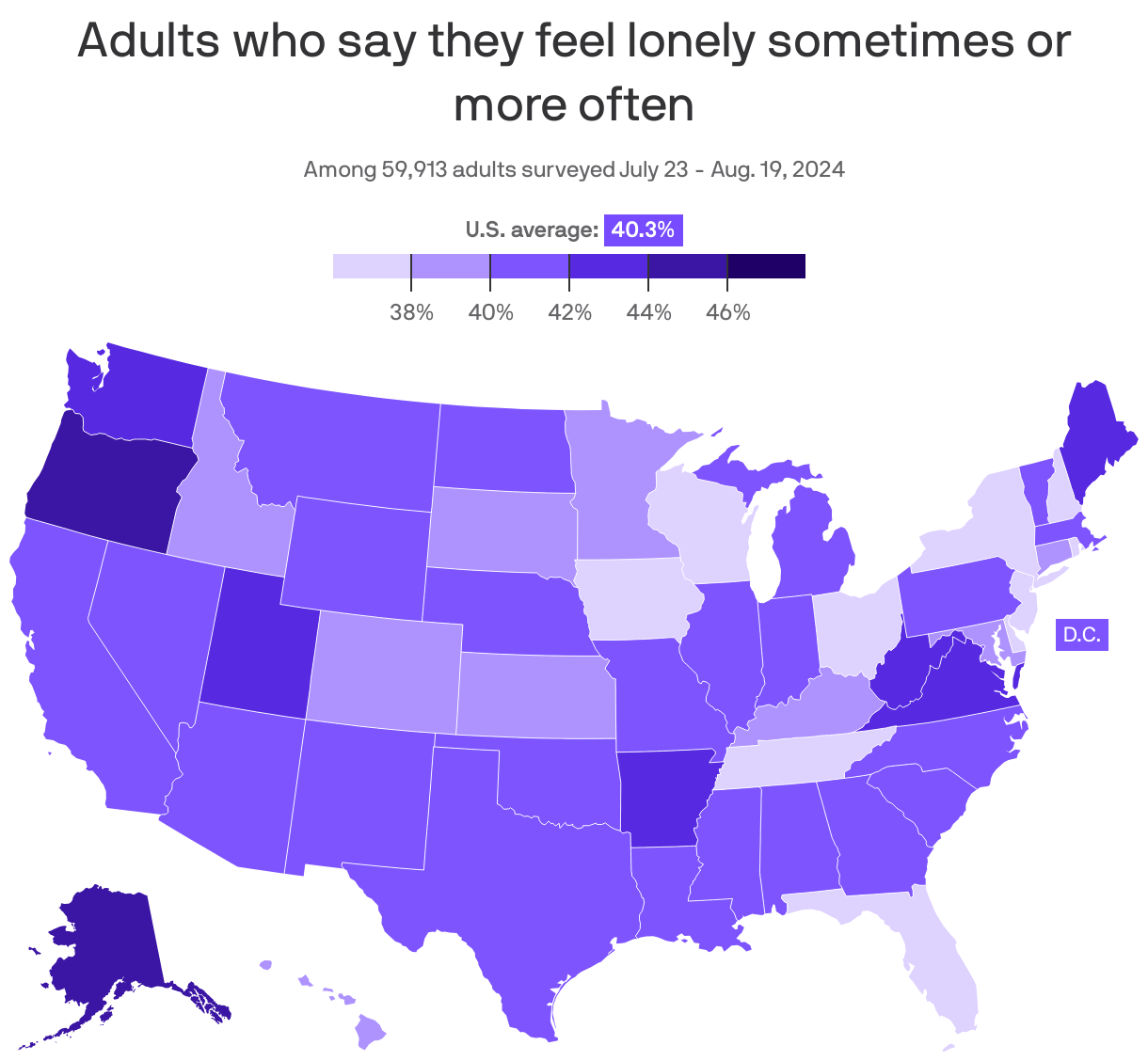
Oregonians need more companionship, with nearly 45% reporting feeling lonely at least sometimes — the second highest in US — according to the Census Bureau.
Why it matters: Loneliness isn't just a feeling, it's associated with serious mental and physical health impacts, including elevated odds of developing diabetes, cardiac risk, dementia, substance abuse, depression and anxiety, Sebastian Tong, a family physician with UW Medicine, told Axios.
Threat level: It's such a pervasive public health threat that Surgeon General Vivek Murthy declared loneliness an epidemic last year, comparing its health impact to smoking up to 15 cigarettes a day.
Driving the news: The newest Household Pulse Survey (HPS) by the Census Bureau showed only Alaska had a higher loneliness rate, with nearly 46% of those surveyed feeling lonely.
- The survey, from July 23 to August 19, had nearly 60,000 respondents nationwide.
- The national average was 40.3%.
Zoom in: Loneliness is more prevalent among young adults and older people than those in their middle years, said Tong.
What they're saying: "People may be connecting online, but not in person and it's hard to get anyone to take the initiative to make concrete plans," he said.
- The weather and social media may also play roles, he added.
Between the lines: About 38% of households in the Portland area consist of one person, per the Census Bureau — and while living alone doesn't automatically equate to loneliness, it's linked to higher rates of self-reported depression.