The future of native Willamette River fish is in limbo

Add Axios as your preferred source to
see more of our stories on Google.
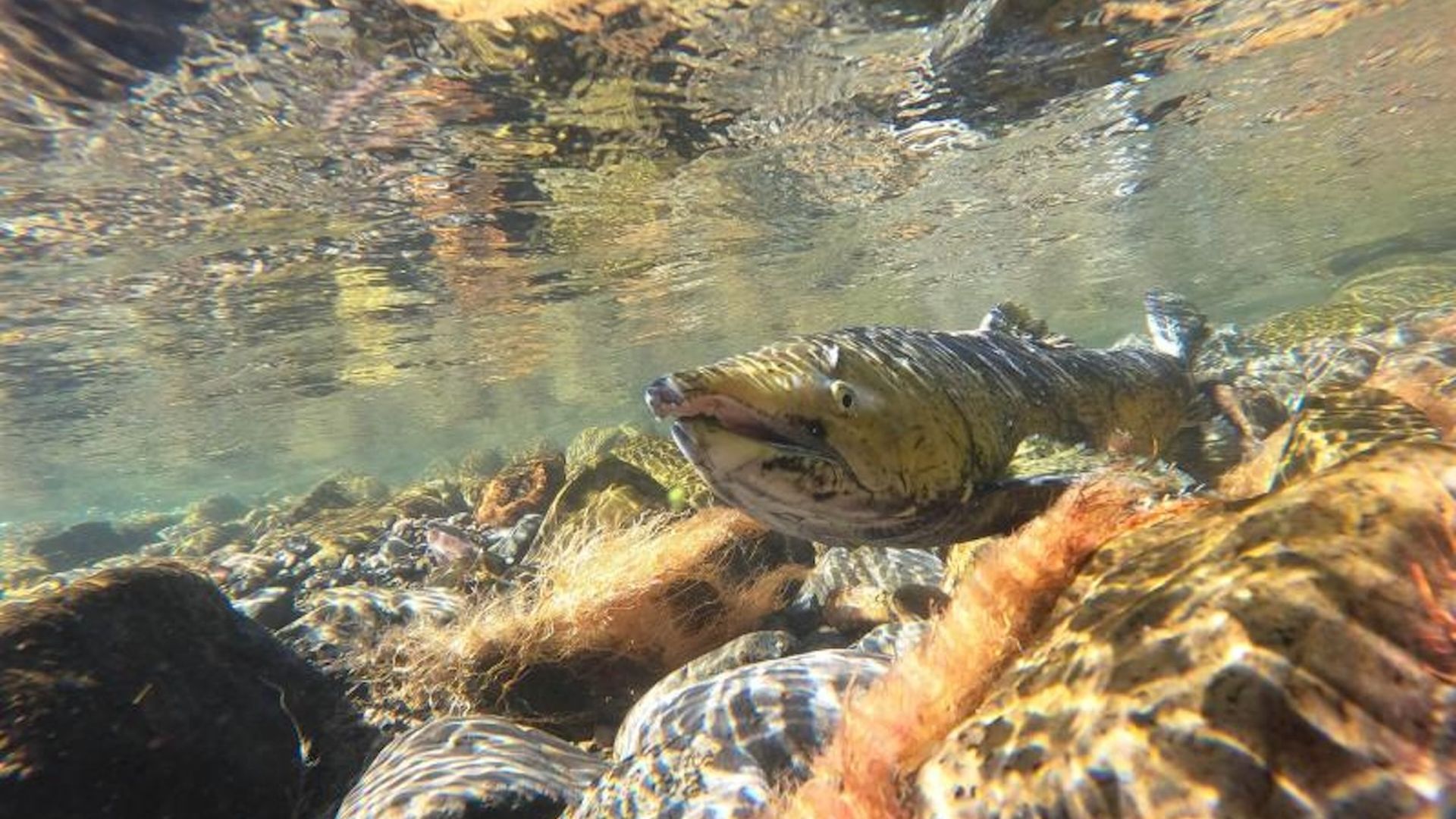
A Chinook salmon swims in the Santiam River. Photo: U.S. Geological Survey
The fate of threatened native fish in Oregon's Upper Willamette River Basin remains in limbo after a federal agency missed a key deadline to file a report to Congress on whether eight hydroelectric dams are still necessary.
Why it matters: Altered river flows and blocked spawning routes caused by the dams have put Chinook salmon and steelhead trout at increased risk for extinction by 2040, according to a National Oceanic and Atmospheric Administration report.
- Advocates say drawing down water levels will allow safer passage for fish and help rebuild dwindling populations.
The big picture: In 2022, Congress directed the U.S. Army Corps of Engineers to study the impact eight dams in the Willamette River Basin have on threatened native fish and whether ending hydropower generation would be necessary or economically beneficial. The report was due at the end of June.
- Though the Corps missed the original deadline, a spokesperson told Axios that the report is under administrative review with the assistant secretary of the Army for Civil Works.
Context: Thirteen dams were built along the Willamette River between 1942 and 1969 — stretching from rural Oakridge near Eugene up to Salem — primarily for flood control.
- Eight are hydroelectric dams part of the Columbia River Power System, which is operated by the Corps and the Bonneville Power Administration, and only contribute 2% of power generation for the entire system.
- Operating costs for the dams are projected to be $939 million over the next 30 years — far outweighing revenue — per a federal study from 2022.
What they're saying: Kathleen George, a member of the Grand Ronde Tribal Council, told Axios that less than 3,200 late-run winter steelhead native to Willamette Falls returned on average from 2008 to 2020 — a 70% drop from 1970, when data was first available.
- Bob Sallinger, the executive director of Willamette Riverkeeper, supports drawing down water levels so fish can reach the gates and continue downstream to spawn. He told Axios in an email statement it would be a "win-win" for the Corps and save the agency "nearly a billion dollars."
The other side: Because the dams' reservoirs provide irrigation for agriculture and recreation, the Corps previously suggested that native fish struggling to get past the dams could be sucked up in a vacuum collector and transported via truck to the other side.
- The estimated price tag for that would be $450 million — far more than the cost of lowering the dams, per OPB.
Yes, but: The Corps has done dam drawdowns before with success. Lowering the Fall Creek reservoir pool nearly a decade ago resulted in "roughly a ten-fold increase in the adult salmon."
What we're watching: If the Corps' delayed report suggests what it has previously fought back against — drawdowns. However, only Congress can authorize ending hydropower generation.
- Until then, the future of native fish hangs in the bureaucratic balance.