Kids' screen time can be a positive, pediatrician says


Add Axios as your preferred source to
see more of our stories on Google.
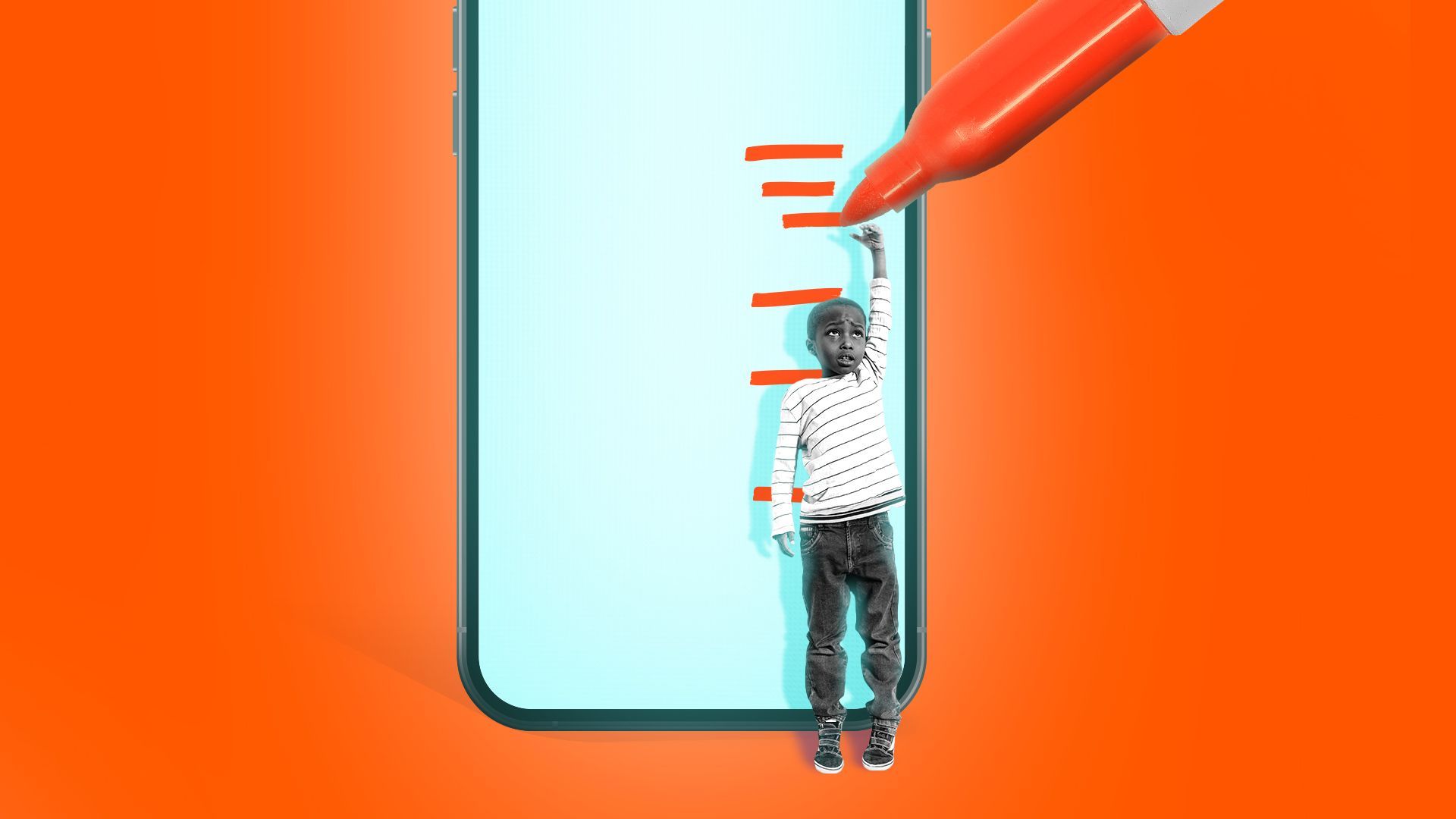
Illustration: Aïda Amer/Axios
Don't get hysterical about your child's screen time or yank away their cellphone protectively, says Michael Rich, who practices adolescent medicine at Boston Children's Hospital.
Why it matters: Amid calls to ban phones for children before high school and banish them from schools, Rich, who calls himself the "Mediatrician," aims to calm the debate over kids, screens and social media.
"There are lots of people who use these tools quite effectively, in ways that do enhance their humanity, education and connectedness," Rich tells Axios.
Driving the news: Rich's new book is "The Mediatrician's Guide: A Joyful Approach to Raising Healthy, Smart, Kind Kids in a Screen-Saturated World."
- The book is drawn from his experience as the founder and director of the Digital Wellness Lab at Boston Children's Hospital and the Clinic for Interactive Media and Internet Disorders, a treatment program for kids.
- Nearly all the children in Rich's clinic have underlying conditions that the devices are merely a symptom of, not the cause, he says.
What they're saying: Most parents should relax when it comes to their kids' screen time and phone use, Rich argues.
- "Let go of the illusion that you can enforce screen time limits or even measure screen time in today's media environment," he writes in his book.
- "That energy is better spent on helping your child learn to use screens in healthy and productive ways — and learning to replace daily screen time limits with daily non-screen minimums."
Zoom in: Nicholas Allen, a psychology professor and director of the Center for Digital Mental Health at the University of Oregon, agrees.
- Allen compares phones and devices to cars, saying we should understand the strategies to reduce the risks and improve the benefits.
- That includes "some regulation, some education and also improved design," he tells Axios.
- "Most young people who use social media, on balance, find it beneficial. They use it for connecting with friends, finding communities, finding information or being entertained."
Zoom out: Both Allen and Rich disagree with New York University social psychologist Jonathan Haidt, whose bestseller "The Anxious Generation," argues that phone-based childhoods are destructive.
- Allen acknowledges an increase in anxiety and depression problems among girls post-2010 when social media took off, but agrees with Rich that screen time exacerbates rather than causes depression and anxiety.
What we're watching: "PPS is in the process of creating a district-wide cell phone policy, but it is in the early stages," Sydney Kelly, a spokesperson for Portland Public Schools, tells Axios.