
Vancouver's waterfront is finally coming to fruition

Add Axios as your preferred source to
see more of our stories on Google.
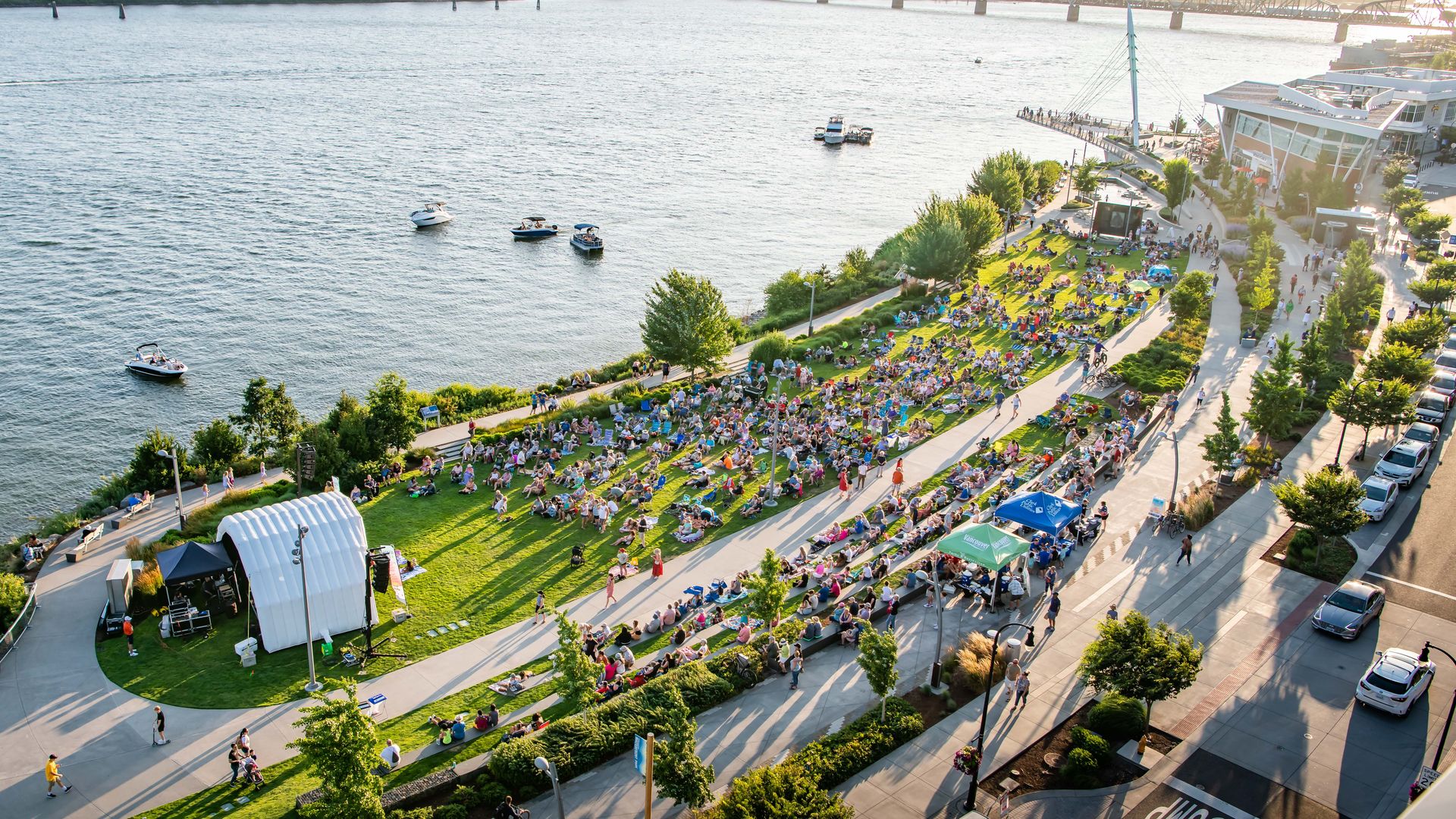
Public concerts are just one of the new developments at the Vancouver waterfront. Photo: Courtesy of City of Vancouver
After nearly two decades in the making, Vancouver's waterfront makeover is finally starting to materialize — allowing the public access to parks, restaurants, retailers and housing — with more to come.
Why it matters: Located west of the I-5 bridge, it's one of the largest developments to come out of the Portland metro area in recent memory.
- Plus: Local officials are betting the billion-dollar investment is a boon for the economy, and hope it defines Vancouver's identity as it continues to grow.
By the numbers: By 2030, the waterfront will be home to over 3,300 housing units, 1.5 million square feet of office and retail space, and a Pikes Place-esque market, according to Chad Eiken, Vancouver's director of city development.
The latest: Already open are five apartment buildings (including the luxury Rediviva and River West), six restaurants (like WildFin American Grill and Twigs Bistro), a five-mile paved pathway and a seven-acre park.
- ZoomInfo, one of several large tenants leasing space at Terminal 1, could be moving in as soon as September, Patrick Gilligan, a VP at real estate firm Lincoln Property, told Axios.
Flashback: Vancouver's waterfront was primarily used as a popular port for shipbuilding during World War II — most notably the USS George Vancouver.
- It was also used for shipping prunes across the globe back when Oregon and Washington dominated the market.
- Beginning in 1928, the western section of the waterfront was an active paper mill until Boise Cascade sold the property to a group of investors in 2007.
Context: Bureaucracy and paperwork are the main reasons it's taken so long to see tangible change in the last 15 years, Eiken told Axios.
- The 30-plus acre property had to be rezoned from heavy industrial to urban, mixed-use. Then, Portland-based developer Gramor was required to submit a master plan for building the site over 20 years. It was approved in 2010.
- Another roadblock was the 2008 recession, which made project financing "impossible," Eiken said.
- Then came $40 million infrastructure negotiations with the railroad, which splits downtown from the waterfront in half — to ensure there would be "more than just one access in and out."
What they're saying: Construction has stalled on several planned blocks due to high interest rates, but city officials are optimistic the development will still be completed on time.
The intrigue: What made the complicated process of developing (and delivering) a massive project such as this easier was Vancouver's "concerted effort to create the vision they had for the waterfront and push it into fruition," Gilligan said.
- "You would find it challenging to have the same experience in Portland," he said, citing notoriously complex permitting processes and hefty taxes.